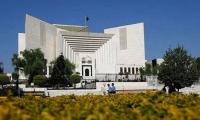
ISLAMABAD: The Supreme Court on Tuesday ordered all executive and judicial authorities, including high courts, throughout Pakistan to act upon its directions to ensure effective implementation of statutory mandates for regulating the judicial process.
A two-member bench of the apex court, comprising Justice Jamal Khan Mandokhail and Justice Malik Shahzad Ahmad Khan, issued judgment concerning illegal eviction of citizens from immovable property.
The petitioner, Raja Khan, had filed an appeal before the Supreme Court against an order passed by Sindh High Court’s Sukkur Bench on May 4, 2026.
The petitioner’s counsel argued under Section 5(2) of Illegal Dispossession Act, 2005, the trial court is required to conduct proceedings on a day-to-day basis and decide the matter within 60 days. However, despite more than ten years having passed, the complaint had still not been finally decided.
The counsel submitted if trial court was directed to decide complaint within 60 days, the petitioner would not press the petition.
After hearing the parties, the Supreme Court dismissed the petition as not pressed and directed the trial court to proceed with the case expeditiously on a day-to-day basis and conclude it within 60 working days from the date of receiving the order.
In its five-page judgment authored by Justice Jamal Khan Mandokhail, the court stated: “Under Article 187 of Constitution, Supreme Court possesses authority to issue such directions, orders, or decrees as may be necessary for doing complete justice in any case or matter pending before it”. The court held this constitutional authority obligates all executive and judicial authorities, including high courts throughout Pakistan, to comply with Supreme Court directions to ensure effective enforcement of statutory mandates regulating judicial proceedings.
The court noted in the present case, complaint under Sections 3 and 4 of the Act was filed in February 2016, yet more than ten years had passed without the trial court recording sufficient reasons for the delay. It held this excessive delay had denied speedy justice not only to complainant but also to the accused, undermining right to a fair trial and due process guaranteed under Article 10-A of Constitution and violating principles of policy contained in Article 37(d). The delay also constituted a clear violation of the Act itself.
The court described petitioner’s request as justified and proper, a position also supported by Additional Prosecutor General.
The Supreme Court issued directions not only to trial court concerned but also to all courts nationwide exercising jurisdiction under the Act to ensure strict compliance with its provisions.
The court directed: Every trial court handling a complaint under the Act must conclude proceedings within 60-day period specified in Section 5(2) and maintain a day-to-day record of proceedings. If a hearing cannot proceed on scheduled date, the trial court must specifically record sufficient reasons for the delay. Generic reasons such as “non-availability of witnesses” or “adjournment sought by counsel” will not constitute sufficient reasons under the Act. Adjournments must not be granted routinely and may only be allowed for justifiable reasons.
The court directed Member Inspection Teams of respective high courts and Directors General District Judiciary to periodically monitor all pending cases under the Act. Their monitoring should include the date complaint was filed; the date cognizance was taken and charges framed; status of proceedings and reasons for any delay exceeding the 60-day period.
The court also ordered complaints must be accompanied by a list of witnesses and that complainants must ensure their witnesses attend court whenever required. Both complainants and accused persons represented by counsel must ensure their lawyers appear on every hearing date.
The judgment clarified if any party challenges an interim order before a higher court, trial court must continue proceedings unless a higher forum specifically issues a restraining order.
Accordingly, the petition was dismissed as not pressed.