ISLAMABAD: Senate Functional Committee on Human Rights on Monday expressed serious concern over the persistently low conviction rates of gender-based violence (GBV) cases and questioned the effectiveness of the criminal justice system in prosecuting such crimes.
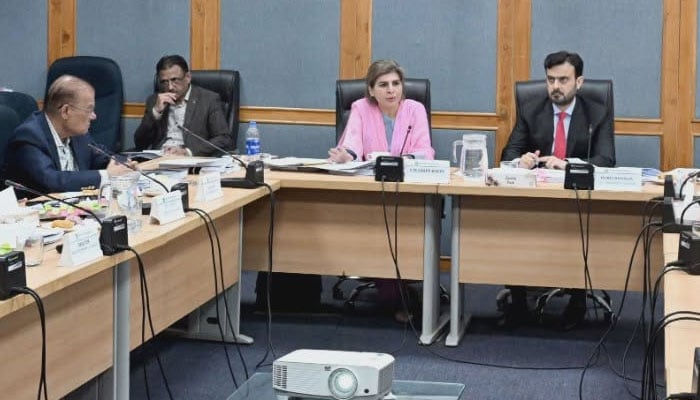
The Senate Functional Committee on Human Rights hold its meeting presided over by Chairperson Senator Samina Mumtaz Zehri here to examine critical human rights issues, including the legal and constitutional status of jirgas and panchayats, honour killings, the low conviction rate in gender-based violence (GBV) cases, challenges within the prosecution and criminal justice system, the targeted killing of Ahmed Javed in Lahore, and the investigation and prosecution status of the 2023 Jaranwala incident.
The Committee received detailed briefings from all four provinces on honour killing cases reported during past five years, including statistics, underlying causes, and vulnerable districts. Members expressed concern over the continued use of the term “honour killing” for what was described as a grave criminal act. It examined the ongoing role of jirgas in parts of Balochistan, Sindh, and Khyber Pakhtunkhwa, despite legal prohibitions, noting that such parallel justice systems undermine the rule of law. Civil society and officials pointed to evidentiary gaps, witness hostility, case reclassification, and misuse of legal provisions as major factors behind acquittals. The Committee was further briefed on the issue of witness hostility and withdrawal of testimony, a major factor contributing to acquittals. Members proposed the increased use of video-recorded witness statements to strengthen evidentiary integrity and improve conviction rates. During the discussion, some participants suggested formalizing jirgas as an alternative dispute resolution mechanism which was categorically rejected. It was reiterated that unconstitutional forums cannot be legitimized under any framework.
Senator Zehri directed authorities to ensure strict implementation of constitutional and legal provisions against such practices and reaffirmed the Committee’s commitment to upholding the rule of law. It also deliberated on the growing influence of social media in shaping narratives around gender-based violence and honour-related crimes. Concerns were raised regarding online misogyny, misinformation, and attempts to influence investigations and judicial proceedings. Senator Zehri directed authorities to present a practical and lawful framework for addressing harmful online content, particularly in sub judice matters. It also called upon mainstream media to exercise greater responsibility in reporting GBV cases, especially where sensationalized coverage may adversely affect children and vulnerable communities.
It expressed displeasure over the absence of representative from the National Cyber Crime Investigation Agency (NCCIA) and directed that the agency must ensure its presence at the next meeting. The Committee was also briefed on the targeted killing of Ahmed Javed in Lahore and members raised concerns regarding the grant of bail to the accused, non inclusion of accused name into ECL and allegations of character assassination of the victim during legal proceedings and public discourse.
The Senate Functional Committee on Human Rights reviewed the 2023 Jaranwala incident, receiving updates on investigations, arrests, compensation, and rehabilitation for affected churches and homes of the Christian community. Members expressed concern over delays in compensation, incomplete arrests, and reports of hate speech and the alleged nomination of victims in criminal cases, which they said could pressure the affected community. The Chairperson criticized the absence of the IG Punjab and directed his attendance at the next meeting. The Committee emphasized the need for accountability and transparency, unanimously declaring the Jaranwala case a test of justice and minority rights protection in Pakistan, and reaffirmed its commitment to fair compensation and prosecution of all perpetrators.The Chairperson of the National Commission for Human Rights termed the incident a national tragedy, noting progress in compensation for major churches but highlighting unresolved issues for smaller worship sites and individual victims.