KARACHI: The business community on Monday expressed disappointment over the status quo in monetary policy, saying high interest rates remain a major obstacle to economic growth.
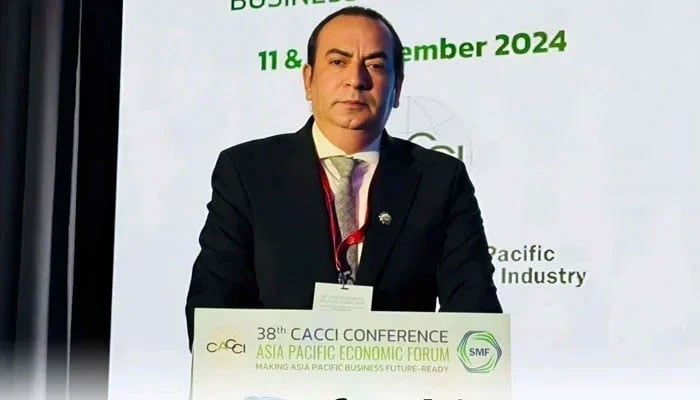
Atif Ikram Sheikh, president of the Federation of Pakistan Chambers of Commerce and Industry (FPCCI), criticised the State Bank of Pakistan’s (SBP) decision to maintain a contractionary monetary stance following its Monetary Policy Committee (MPC) meeting on Monday.
He said a double-digit policy rate was highly detrimental to economic stability, warning that continued high borrowing costs would accelerate deindustrialisation and undermine exporttargets, which are critical for foreign exchange earnings.
He expressed concern over what he described as the central bank’s disconnect from the challenges faced by trade and industry. He said the decision to hold the policy rate was unfortunate, despite expectations of easing inflation and improving global conditions, including signs of stabilising energy markets.
“The economy is facing a severe cost of doing business crisis across the manufacturing sector. The SBP’s overly cautious stance is starving the private sector of essential capital,” he said, reiterating the demand for a single-digit policy rate aligned with domestic economic realities and the vision of the Special Investment Facilitation Council (SIFC).
Acting President of the Karachi Chamber of Commerce and Industry (KCCI) Muhammad Raza also expressed disappointment over the SBP’s decision to keep the policy rate unchanged at 11.5 per cent. He said the business community had expected a reduction in view of improving economic indicators and easing global uncertainty.
He said the cost of doing business in Pakistan was already high, making it increasingly difficult for industries to remain competitive. He reiterated the KCCI’s long-standing demand for a single-digit policy rate to stimulate investment, economic activity and employment.
Raza said recent international developments and signs of easing geopolitical tensions, along with softer global oil prices, should have been reflected in monetary policy considerations.He added that persistently high interest rates were increasing financial pressure on businesses, discouraging industrial expansion and hindering export growth. He said affordable financing was essential for sustainable economic growth and called for a gradual reduction in rates.
President of the Korangi Association of Trade and Industry (KATI) Muhammad Ikram Rajput also criticised the decision to keep the policy rate unchanged, saying it would further strain industries and slow investment, particularly in the SME sector.
He said businesses had expected a more accommodative monetary stance amid easing inflation and improving stability. High borrowing costs, he added, were discouraging investment, industrial expansion and job creation.
Rajput said SMEs, the backbone of the economy, require easier access to affordable credit. He noted that many countries were adopting softer monetary policies to support growth, while Pakistan risked falling behind if high rates persisted.He urged the central bank and government to consider industry concerns in future policy decisions and adopt measures that support exports, investment and industrial activity.