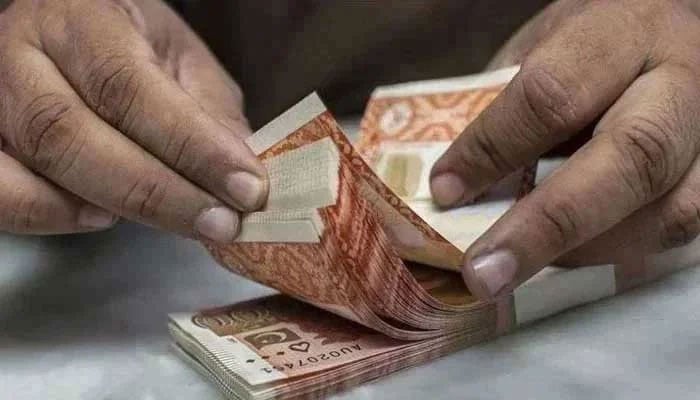
KARACHI: The government has announced a larger borrowing plan, intending to raise a total of Rs7.15 trillion from the sale of market Treasury bills and Pakistan Investment Bonds (PIBs) between June and August, according to the latest auction calendar issued by the SBP.
The government aims to raise Rs6 trillion through the auctions of T-bills, Rs1.05 trillion via fixed-rate PIBs, and Rs100 billion in floaters. That compared with Rs4.9 trillion in January–March and Rs6.5 trillion in March-May periods.
“The real story isn’t the size; it’s the composition. The Rs6 trillion T-bill target sits against Rs6,572 billion of maturing bills, so this is mostly a rollover exercise (bill stock actually shrinks slightly, net Rs570 billion retired),” said Saad Hanif, head of research at Ismail Iqbal Securities.
“And it’s heavily front-loaded: Rs2 trillion crammed into the very first auction (11-June settlement) against a Rs1,835 billion maturity the same day, then tapering to Rs350-400 billion by August. That’s cash-flow matching, not fresh demand for funds,” Hanif said. “The most important signal is the shift to the short end,” he added.
Hanif noted that the fixed PIB has been cut to Rs1.05 trillion from the Rs1.35 trillion the SBP ran for three straight quarters, and the floater target was slashed to Rs100 billion from Rs175-400 billion. The reason is clear: the rate cycle has turned, he added.
The SBP raised the policy rate by 100 basis points to 11.5 per cent in April, its first hike since June 2023, and inflation hit 11.7 per cent year-on-year (YoY) in May, the highest since June 2024. “That’s why the new fixed PIBs carry 12-12.5 per cent coupons versus 10.46 per cent on the January 10-year,” he said.
“Locking in long-dated fixed paper at those levels is expensive if rates fall back once this shock passes, so the play is borrow short and keep the long end light. Bottom line: the number is bigger, but it’s driven by maturities and a defensive shift to the short end out of fear of where rates are heading.”