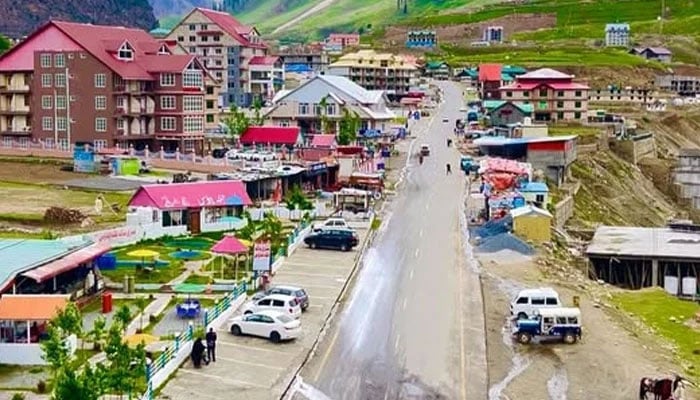
ISLAMABAD: A review of election manifestos and publicly available campaign narratives of major political parties contesting the 2026 Gilgit-Baltistan elections shows that climate change and climate resilience have received comparatively less attention despite the region’s high vulnerability to environmental risks.
While the narratives promised development, governance, infrastructure, employment and constitutional rights, climate change did not emerge as a prominent electoral issue during the campaign. A comparative review of the campaigns and manifestoes vis-a-vis climate change, made with the help of Zainab Naeem, associate research fellow at the Sustainable Development Policy Institute (SDPI), shows the way the PPP, PTI and PML-N approached this issue.
The PPP’s manifesto and campaign messaging included commitments related to environmental protection and sustainable tourism. The party’s Hunza chapter highlighted plans to regulate tourism to protect natural and heritage sites, promote eco-friendly and locally owned hospitality projects, strengthen waste management systems and introduce climate resilience measures, including glacier monitoring. The PML-N’s 2026-2031 manifesto focused on economic growth, youth empowerment, digital connectivity, tourism promotion, infrastructure development and social welfare. It promised investments in education and vocational training, expansion of 4G and 5G services, improved road networks, support for small businesses and freelancers and enhanced opportunities under the China-Pakistan Economic Corridor (CPEC). While the manifesto contained extensive development commitments, climate adaptation and environmental resilience did not feature prominently as standalone policy priorities. The PML-N’s manifesto was largely development-centric, emphasising roads, connectivity, tourism infrastructure and economic growth. While such investments can improve livelihoods, infrastructure, and market access, they often overlook the climate risks that threaten this very infrastructure, including glacial lake outburst floods (GLOFs), landslides, flash floods and slope instability.
According to Ms Naeem, climate-related issues appeared more integrated into the PPP’s broader policy narrative than in most competing parties, although they do not constitute a central election theme.
The PTI, contesting not as a party but through independent candidates, retained an association with environmental initiatives such as the Billion Tree Programme and conservation efforts. However, much of its current election messaging in GB has focused on governance, election transparency and political issues rather than specific climate-related commitments.
“GB is facing challenges of climate change, which have impacted agriculture, fueled migration and put lives at risk. Yet we have not seen the political representatives that have visited Gilgit during the election campaign prioritising climate change as a major agenda item”, said Ms Naeem. She added: “What is most striking is that, despite GB being one of the world’s most climate-vulnerable mountain regions with glaciers, increasing GLOF risks, water insecurity and climate-induced livelihood disruptions, climate adaptation remains largely absent from party manifestos”. According to her, “Political speeches often reference floods, disasters and relief efforts, but proactive measures such as climate-resilient infrastructure, glacier monitoring, district adaptation plans, resilient agriculture, climate-smart tourism and climate budgeting remain missing from the manifestos”.