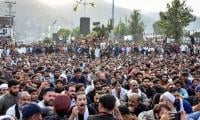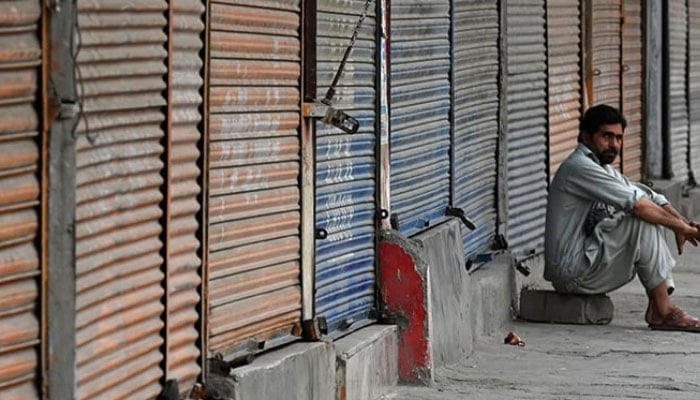
LANDIKOTAL: Demanding immediate and effective measures to restore lasting peace in the region, tribal elders and residents of Khyber district on Saturday announced an indefinite blockade of the Pak-Afghan Highway, closure of public and private educational institutions, and a boycott of anti-polio vaccination campaigns in protest against the growing violence in the district.
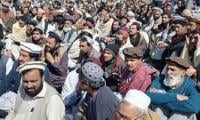
The decisions were made during a large tribal jirga held at Takia in Landikotal following the targeted killing of two residents, including a soldier who was on leave, in the Sultankhel area of Zakhakhel a day earlier.
The angry participants of the jirga expressed deep concern over the deteriorating security situation, stating that the latest incident was part of a disturbing trend of targeted attacks in the district.
They said that seven targeted killing incidents have occurred in recent months, claiming the lives of 10 people, including security personnel, civil society activists and other residents.
The jirga demanded that the government and security authorities take urgent and concrete steps to ensure the safety of local residents and bring those responsible for the attacks to justice.
The gathering was attended by a large number of tribal elders, political activists, civil society representatives and residents from Nekikhel, Sultankhel and other tribes in Landikotal.
Addressing the gathering, tribal elder Malik Abdullah Khan announced that armed local volunteers would be assigned responsibility for patrolling villages and protecting residents until lasting peace was restored.
He said the protest movement and road blockade would continue until the government and security institutions provide credible guarantees for complete and durable peace in Khyber.
Political Ittehad Landikotal president Murad Hussain Afridi read out the jirga’s decisions, stating that all government and private educational institutions in the affected areas would remain closed until peace is restored. He said teachers and other staff members of public and private educational institutions would not attend their duties until practical steps were taken to ensure the safety of students, teachers and residents.
The jirga also announced a complete boycott of the anti-polio vaccination campaign, declaring that no vaccination drive would be allowed in the area until the authorities address the community’s security concerns.
In another major decision, government employees belonging to the affected tribal areas and serving in various departments, including health, education, agriculture, forestry and other civil institutions, were asked to boycott official duties until further notice as part of the protest movement.
The tribal gathering imposed a ban on motorcycle riding and driving from the Parangsam Checkpost in Jamrid to Charwazgai checkpost in Landikotal. Elders warned that any person violating the restriction would be fined Rs50,000 and the motorcycle would be confiscated.
The jirga further decided that any individual or family refusing to participate in or support the peace movement would face a fine of Rs50,000. Elders also warned of civil disobedience measures against those tribesmen found violating collective decisions taken by the community.
The protesters maintained that the blockade of the Pak-Afghan Highway at Takia would continue indefinitely until the authorities demonstrate a firm commitment to ending insecurity and bringing those responsible for acts of violence and target killings to justice.
Speaking on the occasion, Murad Hussain Afridi urged residents to stop spying for the Taliban, saying the militants had brought suffering and instability to the region.
Other tribal elders, including Shakir Afridi and Malik Ibrar, said the people of Khyber could no longer remain silent in the face of persistent violence and insecurity. They announced that another jirga would soon be convened to decide the next phase of the protest movement and formulate a future strategy.