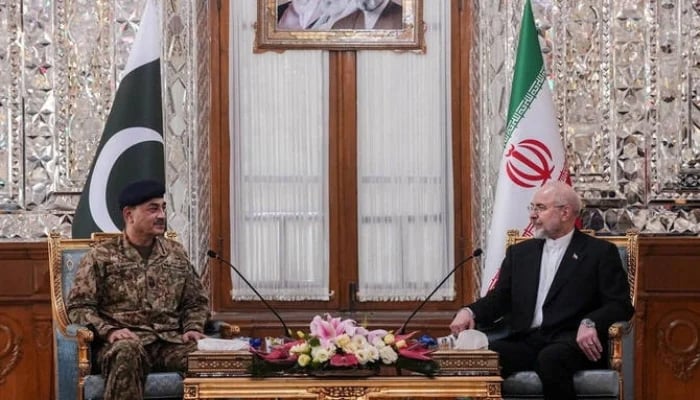
ISLAMABAD: Islamabad’s high profile in helping mediate between the United States and Iran has taken most of the observers by surprise. Pakistan might appear an unlikely candidate for a peacemaking role, given its history of conflict with India on its eastern border and current confrontation with Afghanistan on its western flank, writes the International Crisis Group (ICG) in its latest commentary, “Pakistan: A New Player in the Quest for a US-Iran Breakthrough”.
Islamabad, says the ICG, knows the risks it is taking as well as its limitations as it plays the role of a mediator.
Avowing neutrality, Islamabad swung into action as the war engulfed the Middle East in early March. Leveraging its links with both Tehran and Washington, and collaborating with regional partners, including Egypt, Saudi Arabia and Türkiye, Islamabad sought to dampen tensions between the warring parties. Its principal tool for doing so was quiet diplomacy aimed at supporting communication between the US and Iran.
“Despite its crucial role in initiating the first round of talks and its efforts since then at getting the two sides back to the negotiation table, Pakistan lacks the diplomatic leverage to convince the US and Iran to agree to end the war. But it has concluded that the stakes are high enough that persevering in this endeavour is worth it. By keeping the diplomatic window open and the ceasefire intact, Islamabad remains well positioned to at the very least prevent the resurgence of all-out war that would bear grave implications for domestic, regional and global security,” stresses the ICG commentary.
One of the reasons that Pakistan continues to take risks is because the country also shares a long, porous border with Iran, and its active involvement in efforts to end the war reflects both its worries about the potential for spillover and its standing as a go-between for all the main parties to the conflict.
“The war’s expansion to much of the Middle East threatens important Pakistani diplomatic and economic interests and has inflamed domestic tensions. But Islamabad has also found itself in a position of privilege, as one of the few capitals in the world that has close ties to the Trump administration, the ability to reach out to top Iranian leaders, and the backing of China, Pakistan’s longstanding strategic partner, which is equally concerned about the adverse implications of prolonged strife in the Middle East. China’s special relationship with Iran makes Islamabad’s close ties to Beijing all the more valuable,” explains the ICG.
Bilateral ties with Tehran had got considerably better after 2024, with the two sides entering agreements to counter common threats posed by Baloch militants along the border. The improvement was evident when Iran publicly sided with Pakistan during its May 2025 hostilities with India.
Islamabad’s relations with Washington have also warmed under the current US administration, with President Donald Trump acknowledging Pakistan’s role in enhanced counter-terrorism cooperation in his first second-term address to Congress.
“Pakistan’s mediation role has raised its global standing and attracted international acclaim, but there are also risks for Islamabad in raising its profile in the Middle East. Should the war resume, the diplomatic minuet that enabled it to shuttle between the US and Iran could soon screech to a halt,” warns the ICG.
Even short of that worst-case scenario, interlinked diplomatic, security and economic challenges are mounting. For Islamabad, preventing Iranian strikes on Saudi Arabia has taken precedence over tending to relationships with other Gulf states. High-level visits to Riyadh, including by Prime Minister Shehbaz Sharif and Field Marshal Asim Munir, have been aimed at assuring the Saudis of Pakistan’s support.