ISLAMABAD: Pakistan on Thursday categorically rejected reports claiming that Deputy Prime Minister/ Foreign Minister Ishaq Dar shared intelligence regarding Iran’s nuclear programme during his meeting with US Secretary of State Marco Rubio on May 29.
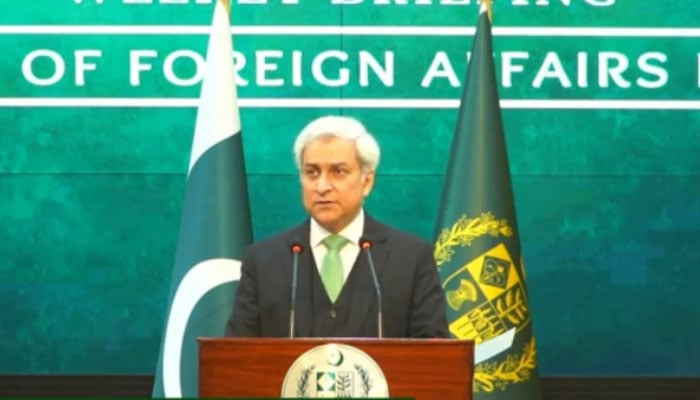
At the weekly briefing, Foreign Office Spokesperson Tahir Andrabi said Pakistan had neither exchanged nor shared any information related to Iran’s nuclear programme with the US, dismissing such reports as baseless, misleading and contrary to facts.
The spokesperson strongly rejected assertions that Ishaq Dar discussed or provided intelligence on Iran’s nuclear activities during his meeting with the US Secretary of State, saying the claims were entirely unfounded. “Pakistan firmly rejects reports suggesting that Deputy Prime Minister/ Foreign Minister Ishaq Dar shared intelligence concerning Iran’s nuclear programme during his meeting with the US Secretary of State on May 29,” the spokesperson clarified.
Reaffirming Pakistan’s foreign policy principles, the spokesperson stated that Islamabad’s diplomatic approach is guided by principled positions, regional stability and mutual respect, adding that speculation about Pakistan sharing intelligence against any country has no basis in reality.
The FO further said Pakistan remains actively engaged in efforts aimed at promoting peace and reducing tensions in the Middle East. During Ishaq Dar’s visit to the US, discussions with American officials focused on ongoing regional developments and the importance of resolving challenges through dialogue and diplomacy. He said the talks underscored the need for diplomatic engagement and peaceful solutions to regional disputes, rather than confrontation, as Pakistan continues to support efforts for stability and conflict resolution in the Middle East.
The FO spokesman stated that Islamabad would endorse the “optimism” expressed by US President Donald Trump on Wednesday, that there could be progress in negotiations with Iran to end the Middle East war, as soon as this weekend. “This probably is the latest statement. We should not be discouraged by the momentary hiccups in the peace process, like armed attacks to and fro. So, we will endorse the optimism expressed by the US President. We hope that an agreement is reached, hopefully sooner, this weekend, as stated by the US President. This is a positive spirit with which the interlocutors and the facilitator should work. This is in sync with what I said earlier, that we should not be discouraged by the obstacles that come in our way,” said Tahir Andrabi.
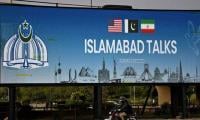
In this regard, he stated that Pakistan’s position to host the peace dialogue is quite clear; so if a fresh momentum is injected towards this process, Pakistan is ready to host the dialogue, as it wants an agreement to be reached sooner rather than later. “Our channels of communication with the relevant parties are open. We are working with a sense of optimism that ought to be there in a mediator or a facilitator. We should not be discouraged by emerging issues, which threaten the dialogue process,” he pointed out.
Referring to the ceasefire between Lebanon and Israel, the spokesperson said, “Pakistan (also) welcomes the positive role played by the United States in facilitating the ceasefire between Lebanon and Israel. Pakistan appreciates the continued engagement of the United States in this regard. We remain firmly committed to dialogue, diplomacy, and peaceful engagement as the most effective means of addressing complex regional challenges and resolving contentious issues.”
However, at the same time, the spokesperson admitted that the situation in the Gulf and the recent escalation is worrisome. “We hope that the parties will adhere to the ceasefire understanding – that the ceasefire will continue and hostilities will cease. These are definitely major obstacles towards reaching a settlement,” he added.
Pakistan also condemned the drone and missile attack that targeted the state of Kuwait and the Kingdom of Bahrain also. “We reaffirm our firm support to the sovereignty, security, and territorial integrity of all states in the region, and at a time of prevailing tensions in the region, Pakistan urges exercising maximum restraint, avoiding further escalation, refraining any action that undermine the safety and well-being of civilians, protecting civilian infrastructure, and pursuing dialogue and diplomacy,” he said.
Commenting on the public tender document issued by India, inviting bids for the Chenab-Beas Link Tunnel Project with the intention of transferring 1.9 million acre-feet water annually from the Chenab River into the Beas system, the spokesperson responded, “This acreage is an estimate right now. Such an inter-basin diversion of water from the Chenab into the Beas River system constitutes a grave violation not just of the Indus Waters Treaty, but also of the law of treaties, particularly the Vienna Convention on the Law of Treaties, as well as the broader framework of international water law, including the principles reflected in the 1997 UN Convention on Watercourses.”
He also mentioned a second project, which is the proposed silt flushing of the Salal Dam reservoir in Reasi district of Indian Illegally Occupied Jammu and Kashmir. “This is a deeply concerning development. It will provide water-control capability that is not permissible either under the Indus Waters Treaty or the 1978 Salal Agreement. India has neither officially communicated nor shared any notice of these projects, nor has it sought consultations in this regard. These projects confirm that India seeks to weaponise water. This carries dangerous implications not only for Pakistan’s economy, but also for regional stability and international peace and security,” he added.
While the EU High Representative Kaja Kallas on her recent visit had suggested that dialogue with Afghanistan was the preferred option than air strikes on Pakistan’s western neighbour, the spokesperson responded that no responsible state can remain passive when its civilians and security forces are repeatedly targeted. “Therefore, we reserve the right to take all necessary measures to safeguard the lives and property of our nationals, based on the principles of necessity and as a measure of last resort. While taking such actions, Pakistan adheres to the principles of distinction and proportionality. Any defensive action undertaken by Pakistan is directed against legitimate targets under international law, including sanctuaries and bases used for planning terrorism and launching terrorist attacks against Pakistan,” he added.
To another question, the FO spokesperson said that no action could be taken that would endanger the lives of Pakistani crew being held aboard an oil tanker hijacked by pirates in Somalia. He said the release of 10 Pakistani crew members had not yet been made, adding that efforts continue to secure the release. Andrabi said the situation has become more complicated because the vessel is carrying highly dangerous and explosive cargo, making any operation extremely sensitive.
He said that Pakistan has urged the Somali government and the ship’s owner to ensure that the hostages are provided with basic necessities, including food and drinking water. “The release of the hostages remains among the government’s top priorities,” the spokesman said.