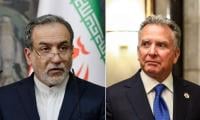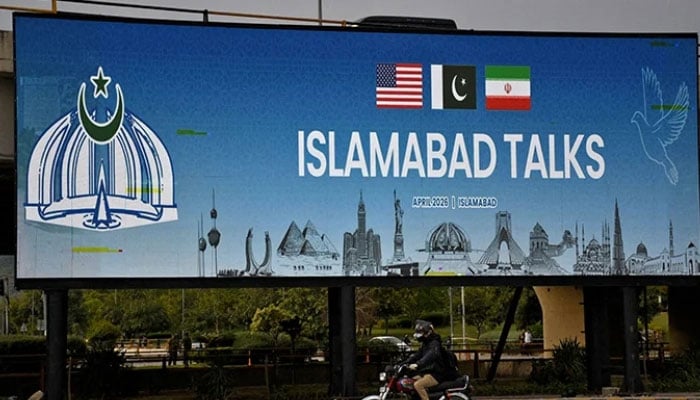
ISLAMABAD: Pakistan played a central role in ending the Iran war, with Prime Minister Shehbaz Sharif announcing the “Islamabad Memorandum of Understanding” as mediator, alongside US President Donald Trump and Iranian President Masoud Pezeshkian, the Bloomberg reported.
Pakistan’s role in the conflict has brought the country a level of political influence on the global stage it hasn’t had in decades, potentially smoothing the way for greater foreign and business investment.
The country’s newfound diplomatic status with the US has helped it in its rivalry with India, but Pakistan will need to turn this into an enduring relationship to gain the maximum benefit, according to Sheharyar Khan, executive director of the National Dialogue Forum. That role brought Pakistan a level of political heft on the global stage it hasn’t had in decades. It also helped pull the country out from the shadow of its larger, wealthier rival India, and potentially smoothed the way for greater foreign and business investment at a time when its war-shattered economy badly needs it. “Pakistan went from having virtually no influence in the Middle East in early 2025 to being a diplomatic and military player of consequence in the region today,” said Christopher Clary, associate professor of political science at the University at Albany and a former Defense Department official.
Throughout the nearly four-month Iran war, few countries were more visibly at the center of the efforts to end it than Pakistan, an unlikely actor thrust into the spotlight by US President Donald Trump. Prime Minister Shehbaz Sharif was the first to announce the US and Iran had struck a truce now known as the “Islamabad Memorandum of Understanding.” Sharif’s signature is on the document as mediator. Sharif and Pakistani military chief Asim Munir emerged as central figures as they huddled with Tehran, hosted the peace talks in Islamabad and passed messages between Iranian and American negotiators. In the end, it was a last-minute intervention from Qatar that got the interim deal over the line, but even so, that doesn’t change “this relative upgrade in Pakistani stature,” said Clary.
Although there’s uncertainty over whether the truce will hold, Pakistan already expects its peace-making role to deliver in several ways. For one, it helps cements Islamabad’s influence not just with Washington, but with the Gulf states, and with longtime partner Beijing, all of whom have publicly praised Pakistan’s actions. Pakistan’s closer ties with the US have helped it in its rivalry with India. For years India has been the favored regional partner of Washington, but in drawing closer to Trump, Pakistan has also pushed India away. Trump’s closeness with Islamabad is likely to remain a thorn in the relationship.
“A Pakistan that can pick up the phone and call its partners in parallel — whether Tehran, Washington, Riyadh or Beijing — is a Pakistan that has created strategic flexibility and the means to generate momentum around high-value international initiatives,” said Jay Truesdale, former chief of staff at the US Embassy in Islamabad who is now CEO of the risk-intelligence firm TDI. “Pakistan’s leadership weighs its importance in the Iran-US negotiations not only in absolute terms, but also relative to its rival India,” he said.
The personal ties between the Trump administration and Pakistan, as well as Islamabad’s working relationship with its neighbor Iran, made the country well placed to play a mediating role in the war, said Jauhar Saleem, a former Pakistani diplomat who is now president of the Institute of Regional Studies, an Islamabad think tank.
In the past year, the Trump administration has encouraged new US-linked investment in Pakistan, including in cryptocurrency and critical minerals, though most deals remain at the memorandum stage despite claims of multi-billion-dollar potential. The investment is seen as crucial for Pakistan, which continues to face slow growth, economic strain under a $7 billion IMF programme, and inflation driven by an energy shock linked to the US-Iran war.
Analysts say Pakistan will need to convert its improving US ties into a durable relationship to secure lasting economic benefits. “Trust will ultimately be shaped by sustained engagement and consistency rather than symbolic gestures or short-term diplomatic successes,” Sheharyar said.