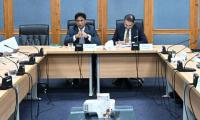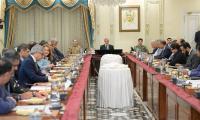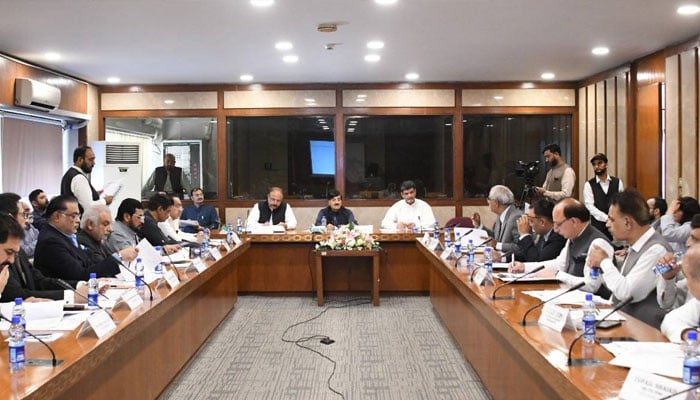
ISLAMABAD: The National Assembly’s Standing Committee on Power Wednesday approved two key electricity reform bills and ordered tighter scrutiny of load-shedding practices and power-sector irregularities.
The committee, chaired by Acting Chairman MNA Sheikh Aftab Ahmed, unanimously recommended passage of ‘The Regulation of Generation, Transmission and Distribution of Electric Power (Amendment) Bill, 2026’, and ‘The Electricity (Amendment) Bill, 2026’. The Power Division said the amendments were largely procedural and technical and aimed at aligning the law with administrative requirements.
Lawmakers also examined the controversial relocation of Haripur Grid Station. Raja Qamarul Islam demanded action against all officials found responsible and called for criminal proceedings under the law. Committee member Babar Nawaz Khan defended the project, saying the allocated funds had not been wasted because Hazara Electric Supply Company (Hazeco) would still acquire the land and no financial loss had occurred.
Load-shedding dominated the meeting. Syed Waseem Hussain questioned whether outages were being carried out in line with the National Electric Power Regulatory Authority (Nepra) regulations, noting that some feeders with losses above 70 per cent faced less than eight hours of load-shedding while others with losses around 40 per cent reportedly endured up to 16 hours. Muhammad Shahryar Khan Mahar raised concerns over “detection charges” imposed on consumers and alleged that residential areas were subjected to night-time outages to ensure uninterrupted electricity supply to industrial consumers. He also highlighted delays in repairing damaged infrastructure.
The Power Division officials admitted there were no specific rules governing detection charges, although a procedure existed under the Consumer Service Manual. They also said some feeders were suffering losses of up to 95pc due to theft and non-payment of bills. The committee directed the Power Division to submit feeder-wise data on load-shedding, theft and tariffs in Hesco and Sepco and decided to invite Nepra chairman for a briefing. It also reviewed the adjustment of 2,800 former Genco employees in Discos and recommended future placements, where possible, near employees’ domiciles.