DUBAI/WASHINGTON: Gulf hostilities flared again on Wednesday as Iranian attacks on Kuwait damaged its airport and injured dozens while the US military carried out strikes near the Strait of Hormuz, with diplomacy to halt the war showing little sign of progress.
The attacks are the latest to test a shaky ceasefire, sending oil prices up nearly 2pc, as the strait remains largely closed more than three months after the US and Israel launched strikes on Iran.
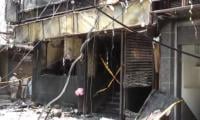
Flights at Kuwait International Airport were suspended after an Iranian drone and missile attack damaged airport facilities and diplomatic missions, killing one person and injuring more than 60 others, Kuwaiti authorities and state media said. Kuwait Airways and Jazeera Airways later resumed flights after taking safety measures, the civil aviation authority said.
Earlier, Iranian media reported that Iran’s elite Revolutionary Guards had attacked the headquarters of the US Fifth Fleet in Bahrain and a US airbase, as well as a vessel identified as Panaya. US Central Command denied its bases had been hit and said Iranian ballistic missiles failed to strike their targets in the region.
CENTCOM said it had carried out a new round of “defensive strikes” in southern Iran, targeted missile launch sites and Iranian boats seeking to lay mines, and conducted strikes on Qeshm Island near the Strait of Hormuz after attempted Iranian attacks.
The US military rejected Iranian claims that a US missile interceptor had damaged Kuwait International Airport, adding that Iran struck the civilian airport with drones in a “deliberate, calculated, and unjustified attack.”
Iranian Foreign Minister Abbas Araqchi later said in a post on X that his country’s armed forces were conducting “self-defense strikes on sites the US is permitted to use to attack civilian shipping and violate the ceasefire”.
“Any hostile act will be met with an immediate, decisive response,” he added.
Araqchi told Lebanese broadcaster Al Mayadeen on Wednesday that talks had not been cut off but no progress had been made.
“Communications with the Americans have not been cut off, and messages have been exchanged regarding the need to stop aggression against Beirut, but no tangible progress has been made in the negotiation process,” the Tasnim news agency quoted Araqchi as telling the TV.
“Returning to the negotiating table is conditional on ensuring the rights of the Iranian people, ending the war in Lebanon, and stopping tensions in the region.”
Since the US and Israeli strikes on Iran began on February 28, Tehran has repeatedly attacked targets in the Gulf region home to US military bases, hitting civilian and military targets.
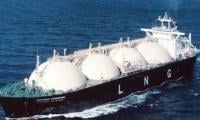
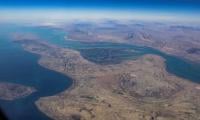
Hostilities have occasionally flared up in recent weeks despite a ceasefire agreed in early April, as the US has pushed to reopen the Strait of Hormuz, a route that handled roughly a fifth of global oil and liquefied natural gas shipments before the war.
Last week, Iran and the US signalled progress towards a tentative initial agreement to halt the war and reopen the strait, but the two sides have yet to sign off on the deal, which would leave more complex negotiations for later.
Mohsen Rezaei, military adviser to Iran’s Supreme Leader Ayatollah Mojtaba Khamenei, said Iran would not allow the US to “overreach” either in negotiations or ceasefire arrangements.
In a post on X, he warned that any aggression would be met with a barrage of missiles and drones.
Separately, Iran’s Foreign Ministry spokesman Esmaeil Baghaei rejected allegations by Marco Rubio that Iran is plotting to assassinate American officials, denouncing the claims as another example of Washington’s efforts to distort reality and deflect attention from its own actions.
The Iranian official said the unfounded allegations reflected a mentality that projects its own conduct onto others.
“Everyone imagines others according to their own creed,” Baghaei wrote in a post on his X account on Wednesday, stressing, “Playing the victim cannot whitewash the savage war crimes, genocide, and crimes against humanity that you have committed against the Iranian nation.”
Anwar Gargash, diplomatic adviser to the United Arab Emirates president, said repeated attacks on Kuwait and Bahrain required a firm and cohesive Gulf response. “The aggression does not target one country alone, but all of us,” he wrote on X.
Since mid-March, Trump has repeatedly said he is close to a deal to end the fighting and pave the way for negotiations on thorny issues including the future of Iran’s nuclear program.
In a podcast interview released on Wednesday, Trump said Iran had agreed to not have a nuclear weapon and that Khamenei was involved in negotiations.
Trump said Iran has agreed not to have a nuclear weapon and that he would probably meet with Supreme Leader Mojtaba Khamenei at some point if things “work out”. “They’ve already agreed they’re not going to have a nuclear weapon,” Trump added.
Asked about Khamenei’s involvement in talks with the US on ending hostilities, Trump said, “He’s involved, absolutely. ... I think they have a lot of respect for him.”
The war has killed thousands, mainly in Iran and Lebanon, while causing global economic pain by severely disrupting energy supplies and other shipping.
Dozens of ships have managed to sneak through the Strait of Hormuz in recent weeks, but attempts remain highly risky and are no substitute for a free and open waterway, industry experts have told The National.
Reports claim anywhere between 30 and 70 vessels have crossed the strait – some with US military guidance and even helicopter escorts – since early May. They have faced the triple threat of Iranian sea mines, missiles and fast attack boats. Analysts say crossings remain an exception and are not a sign that maritime traffic has returned to normal. “The transit of ships through the strait is extremely scant and for it to become mainstream, it will require agreement on both the sides – the US and Iran. Until the time there is a peace deal, we see reports of such transits as only exceptions,” Junaid Ansari, director and head of investment strategy and research at Kamco Invest, told The National.
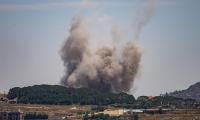
On Wednesday, Israeli drone strikes killed at least six people in southern Lebanon and targeted a car just south of Beirut, Lebanese security sources said, while Israel said it intercepted a hostile aircraft likely fired by Hezbollah.
There was no immediate response from the Israeli military to Reuters questions about the drone strikes, but the attack on the car appeared to mark the closest attack to Beirut since Trump asked Israel not to hit the Lebanese capital, under a US-mediated partial ceasefire announced on Monday.
In his podcast comments, Trump acknowledged having called Israel’s Prime Minister Benjamin Netanyahu “crazy” during a reportedly expletive-filled phone exchange over the fighting in Lebanon as he sought a deal over the wider war.
“At some point I said, Bibi, we got to stop this. We got to stop it,” Trump said, referring to Netanyahu by his nickname.
Netanyahu told CNBC in an interview that he and Trump sometimes had “tactical disagreements” but that they agreed on the main issues concerning Iran.
The fate of Iran´s highly enriched uranium stockpiles is at the center of talks with Washington, and Tehran has not yet agreed to a peace deal, US Secretary of State Marco Rubio said Wednesday.
“I think now, in some of the papers that have been exchanged back and forth, it´s clearly addressed, but we...still don´t have final sign off from their system as of this morning,” Rubio told the House Foreign Affairs Committee.
Rubio also doubled down on his assertion that the war in Iran was over, even as Iran attacked Kuwait´s airport, killing one and wounding 63 people on Wednesday, in a significant escalation.
“We´re no longer conducting sustained strikes inside of Iran to degrade their military, because Epic Fury is over,” Rubio told the panel, asserting that the United States has scored a victory.
“We define victory as destroying their defense industrial base, significantly reducing the number of missile launchers that they possess, significantly reducing their stockpile of drones,” Rubio said. “And we achieved all those, in addition to destroying what they had left of an air force and wiping out their entire conventional navy.”
Amid new escalation in the Middle East, Wall Street retreated from record highs on Wednesday as rising tensions in the Middle East and higher crude prices revived inflation concerns and prompted profit-taking.
All three major U.S. stock indexes fell, led by declines in financial and technology shares, while small caps underperformed. The S&P 500 software index dropped sharply, though chip stocks rose 1.7%, reflecting continued strength in artificial intelligence-related names. However, most of the “Magnificent Seven” megacap tech stocks declined.
Oil prices climbed nearly 2 per cent as renewed hostilities between the U.S. and Iran raised fears of supply disruptions, reinforcing expectations of persistent inflation pressures. Investors also reassessed interest rate outlooks, with markets increasingly pricing a higher chance of a Federal Reserve rate move later this year.
Analysts said markets remain vulnerable due to high valuations and narrow leadership. While some economic data pointed to steady labor and services activity, elevated input costs and geopolitical uncertainty continued to weigh on sentiment. Declining stocks outpaced advancers across both the NYSE and Nasdaq, underscoring broad-based weakness in equities.