GILGIT/SKARDU: Political activity in Gilgit-Baltistan (GB) reached its peak on Tuesday ahead of the elections as senior leaders of major parties arrived in the region to campaign.
Pakistan Muslim League-Nawaz (PMLN) President Nawaz Sharif reached Gilgit on a short visit, while PPP leader Aseefa Bhutto Zardari arrived in Skardu to address an election rally in constituency GBA-7. Elections for 24 seats of the Gilgit-Baltistan Assembly are scheduled to be held on June 7, with major political parties stepping up their campaigns across the region.
Addressing party workers in Gilgit, former prime minister Nawaz Sharif questioned the neglect of GB’s development following his removal from office in 2018, saying many key infrastructure, energy and connectivity projects remained unfinished despite having been initiated during his tenure. Nawaz said he was saddened by the condition of roads in GB and questioned why major development projects launched during his government had not been allowed to complete. “I wanted Gilgit-Baltistan to witness significant development. Seeing potholes on roads and unfinished projects causes me great pain,” he said. Without naming any political party, he questioned why successive governments had ignored development priorities in the region. “We seek votes based on performance, not by criticising opponents,” he said, adding that the resources meant for the welfare of Gilgit-Baltistan’s people should have been spent on their development.
Nawaz claimed that major projects in the region, including hospitals, hydropower project, were completed during the PMLN government, while many subsequent projects remained incomplete. He said GB deserved modern infrastructure, including a larger airport and announced that he would discuss airport expansion with Prime Minister Shehbaz Sharif. Noting that he had travelled to Gilgit on a small aircraft, Nawaz said the region should have at least 30 weekly flights instead of the current limited operations.
He highlighted his government’s efforts to reduce travel time to Skardu from nine hours to three hours. The PMLN president also expressed concern over prolonged electricity shortages in GB, saying a region blessed with abundant water resources and sunlight should not be facing severe power outages. He said load-shedding lasting up to 20 to 22 hours in some areas was unacceptable and stressed that solar energy projects could help address the crisis. “Whether we receive votes or not, the people of GB should not be deprived of basic facilities,” he said. Referring to the Diamer-Bhasha Dam, Nawaz said his government had allocated Rs100 billion in 2015 for land acquisition, but the project had yet to be completed despite the passage of more than a decade. “The shortcomings lie with governments that failed to pay attention. We fulfilled our responsibility,” he said, adding that future PMLN governments would launch new development projects to address the region’s longstanding issues.
Nawaz also announced plans to visit the region regularly every few months to monitor development initiatives. Referring to a committee formed during his government to address constitutional and financial issues related to the region, Nawaz said the initiative could not be completed because he was removed from office in 2017. He said the committee’s work would be taken to completion and expressed confidence that its final recommendations would benefit the people of GB.
Describing Gilgit-Baltistan as the centre of the China-Pakistan Economic Corridor, Nawaz said expanded trade with China would generate prosperity and employment opportunities for local residents. He called for the construction of a motorway from Mansehra to Gilgit and said all pending development projects would be pursued under his personal supervision. The former premier said better healthcare facilities should be established so residents would not have to travel to Islamabad or other cities for treatment. Nawaz proposed housing loans for residents, noting that many people in the region still lacked homes of their own. Drawing a comparison with Punjab’s housing initiatives, he said similar schemes should be extended to Gilgit-Baltistan. He further called for interest-free loans for young people, scholarships and laptops for talented students, and announced plans to establish a women’s university in the region. Pakistan Peoples Party (PPP) Chairman Bilawal Bhutto Zardari has said that the incumbent coalition government led by the PMLN was planning to abolish the Benazir Income Support Programme (BISP), pledging that his party would protect the scheme.
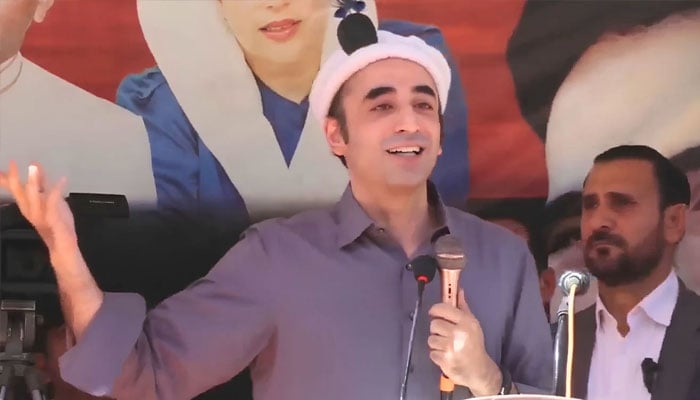
Addressing an election rally in Shigar, Bilawal declared it unfortunate that the rulers want to end the Benazir Income Support Programme. We will save the Benazir Income Support Programme. He said the PPP would ensure an increase in BISP funding by discussing the matter with Prime Minister Shehbaz Sharif during the budget process.
However, Bilawal also warned against proposals to devolve the scheme to the provinces, saying that handing BISP over to provincial governments would effectively amount to ending it. “Across the world, these responsibilities are undertaken by the federal government,” he said during an election rally in Shigar on Monday. The PPP Chairman said BISP had become a model that other countries sought to emulate.
According to Bilawal, his party’s politics differed from those of other political parties because of its focus on the welfare of ordinary citizens. He credited the PPP leadership with introducing welfare and empowerment measures for workers and farmers. He said former prime minister Zulfikar Ali Bhutto had made farmers owners of land and workers owners of mills, while former prime minister Benazir Bhutto had created employment opportunities.
Addressing Gilgit-Baltistan’s constitutional and governance issues, Bilawal said granting the region powers similar to those provided under the 18th Amendment would help resolve many of its problems. He also said the PPP leadership had introduced subsidies and reforms that benefited the people of the region.
Referring to the regional situation, Bilawal expressed hope that the efforts of Chief of Army Staff (COAS) and Chief of Defence Forces (CDF) Field Marshal Syed Asim Munir to promote peace in the Middle East would succeed. He said every Pakistani was praying for CDF Munir’s efforts to bear fruit, adding that Pakistan’s peace initiatives were a matter of pride for the nation. He said, the Muslim world was bearing the burden of the war in the Middle East, which had contributed to economic difficulties for the public.
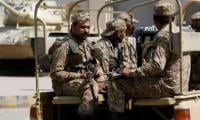
First Lady Aseefa Bhutto Zardari arrived in Skardu, where she was scheduled to address an election rally in GBA-7 constituency, Skardu algonside Chairman Bilawal. Aseefa was received at the airport by Syed Mehdi Shah and other local leaders before being taken to Skardu. Authorities have also decided to deploy 5,000 Punjab Police personnel to GB for election duty. According to sources, the Gilgit-Baltistan Election Commission had requested Punjab Police personnel for security arrangements.
In a related development, PPPP Central Information Secretary Shazia Marri alleged that the federal government was using its influence and state resources to affect the GB election campaign, warning that such actions could undermine the credibility of the electoral process. “A level playing field is essential for ensuring free, fair and transparent elections in Gilgit-Baltistan,” she said in a statement, urging all stakeholders to refrain from interfering in the democratic process.
Responding to criticism of PPP Chairman Bilawal Bhutto Zardari’s recent remarks regarding Forms 45 and 47, Ms Marri said his statement was being taken out of context. she said Chairman PPP had merely reminded voters that the PPP had allegedly been deprived of nine seats in the previous Gilgit-Baltistan elections. She said the PPP chairman had urged the public to safeguard their votes and Form 45, adding that duly protected Form 45 would leave no room for anyone to manipulate the public mandate. She noted that Form 45 forms the basis of election results.
Shazia Marri maintained that the PPP had always upheld democratic principles and had never sought power through selection or non-democratic means. She said the people of Gilgit-Baltistan had continued to place their trust in the PPP for three generations. Recalling the legacy of former Prime Minister Zulfikar Ali Bhutto and former Prime Minister Benazir Bhutto, she said both leaders had consistently raised their voices for the rights of underprivileged and marginalised communities. She reiterated that the PPP would continue its struggle for democratic rights, the sanctity of the vote, and the supremacy of the people’s mandate.
In a related development, Pakistan Tehreek-e-Insaf (PTI) Information Secretary Sheikh Waqas Akram slammed the ongoing “blatant rigging and grave violations” of the electoral process in Gilgit-Baltistan, drawing strong parallels with the alleged electoral fraud witnessed during the 2024 polls.
He pointed out that PTI Secretary General Salman Akram Raja and other party leaders were barred from entering Gilgit-Baltistan and were sent back, which he described as a repeat of the suppression tactics used against the party leadership ahead of, and during, the 2024 elections. He further claimed that police personnel were stopping PTI-affiliated individuals from entering the region. “This action constitutes a clear violation of the Constitution and democratic principles. A systematic campaign is being carried out and the PTI candidates and leadership were being deliberately denied NOCs to restrict their election campaign. “The denial of permission for public rallies, processions and corner meetings clearly shows that the government machinery is working on a pattern identical to the pre-poll rigging, selective permissions and suppression of PTI activities,” he said.
Waqas Akram charged that in constituencies where PTI candidates are in a strong position, the administration and the Election Commission were attempting to divide votes and influence the results. He further claimed that independent candidates were being pressured to support government-backed parties, raising serious questions about the transparency of the electoral process. The party had no confidence left in postal ballots, the pre-poll environment, or the polling-day process, he added. Responding to PPP leader Bilawal Bhutto Zardari’s recent statement that he would “take care of Form 47”, Waqas Akram remarked that the entire nation knows how they came to power on the basis of Form 47. He described the remark as a clear and open admission of pre-poll rigging by the PPP and its allies. He further alleged that the PMLN and PPP were enjoying full state patronage.