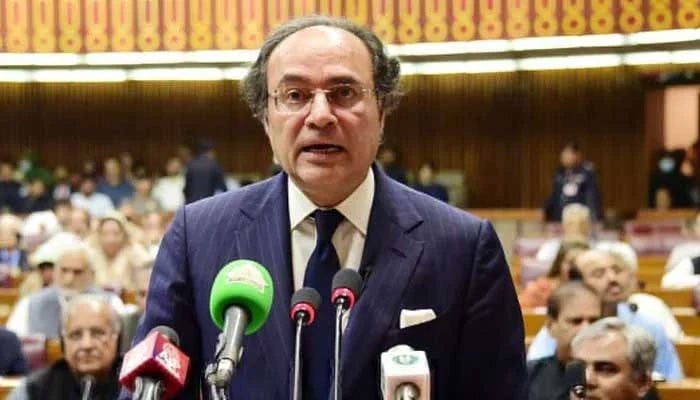
ISLAMABAD: Following the postponement of the scheduled National Economic Council (NEC) meeting on June 3, the formal announcement of the federal budget for fiscal year 2026-27 has faced delays, primarily driven by two underlying challenges: convincing the provinces to align their higher development allocations with overarching national priorities and the inability to finalise budgetary figures with the International Monetary Fund (IMF).
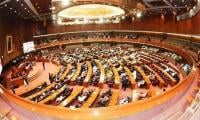
The upcoming annual budget is now expected to be presented before the parliament by June 10 or 12, 2026, though a definitive final date has yet to be officially confirmed.
The financial shares allocated to the provinces have expanded manifold in the aftermath of the 7th National Finance Commission (NFC) Award. Without introducing structural changes to the framework, the Centre desires to persuade the provincial administrations to voluntarily contribute resources toward defence expenditures and national security requirements.
With the annual provincial development outlay currently projected at Rs3.138 trillion—led primarily by Punjab with a proposed allocation of Rs1.41 trillion—and the federal development budget tightly restricted to Rs1.126 trillion, an internal debate has been triggered regarding how the provinces can be convinced to assume greater fiscal responsibilities and shift resources to support the Centre’s structural requirements.
Secondly, official sources indicated that Pakistan and the IMF have so far been unable to evolve a consensus on critical revenue mobilisation measures and necessary expenditure cuts required to generate a primary revenue surplus of 2 percent of the Gross Domestic Product (GDP), which equates to approximately Rs2.9 trillion for the upcoming budget.
The IMF has thus far flatly refused to scale down the Federal Board of Revenue’s (FBR) tax collection target for the upcoming 2026-27 budget, which remains fixed at Rs15,264 billion for the next fiscal year. After downwardly revising the outgoing fiscal year’s FBR target from Rs13,979 billion to Rs13,428 billion for the period ending June 30, 2026, expectations had risen within the revenue authority for a corresponding re-adjustment in next year’s target; however, the IMF made it clear that the FBR must fetch the full Rs15,264 billion in 2026-27.
The challenge confronting budget makers multiplies significantly as the FBR’s real tax collection is projected to hover around Rs13,000 billion by the end of June 2026. In this scenario, the FBR will be required to accumulate an additional Rs2,264 billion during the next fiscal year. Even with a projected nominal growth rate of 12.2 percent (comprising a real GDP growth rate of 4 percent and Consumer Price Index-based inflation of 8.2 percent), the FBR’s standard collection might only touch Rs14,560 billion, making it a monumental challenge for the bureau to generate the remaining Rs700 billion required to match the desired fixed target. According to an official notification issued by the Cabinet Division on Tuesday, the high-level meeting of the National Economic Council scheduled for June 3, 2026, stands postponed, with the new date to be communicated in due course. Top official sources, speaking to The News during a background briefing on Tuesday, revealed that the comprehensive calendar for the 2026-27 budget cycle had been issued just 12 to 15 hours prior on June 1, 2026, according to which the budget was originally slated for presentation in the parliament on June 5. Furthermore, the Pakistan Economic Survey for 2025-26 was scheduled to be launched on June 4. The Ministry of Finance had initially proposed a forwarded summary to formally unveil the upcoming 2026-27 budget on June 5, 2026.
Following a virtual meeting held between the Pakistani authorities and the IMF on Monday night, officials ultimately decided to alter the budget announcement schedule. While one official noted that the budget delay was probably influenced by the Gilgit-Baltistan legislative election, senior officials within the Finance Division countered that the budgetary numbers could simply not be finalised either internally or externally, causing the announcement to be delayed beyond June 5 with the next date remaining fluid.