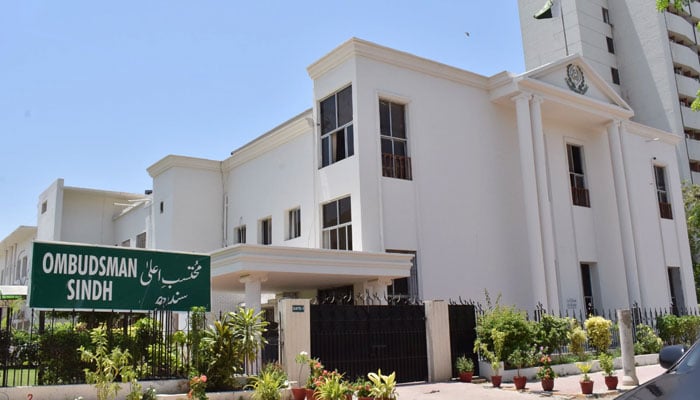
The Office of the Sindh ombudsman received a record 25,217 public complaints during 2025 -- an unprecedented 236 per cent increase over previous years -- while providing relief in 8,789 cases and securing monetary benefits of Rs4.29 billion for citizens.
This was revealed in the institution’s Annual Report 2025, presented to Chief Minister Syed Murad Ali Shah by Provincial Ombudsman Dr Sohail Rajput at the Chief Minister’s House on Monday.
According to the report, the office of the provincial ombudsman received a record 25,217 complaints in 2025, reflecting a 236 per cent increase over the average annual intake of around 7,500 complaints in previous years. Of the total complaints received, 8,854 were disposed of after preliminary scrutiny, while 16,363 were admitted for investigation. The office decided 12,591 cases after investigation and provided relief in 8,789 cases, resulting in monetary benefits of Rs4.29 billion for aggrieved citizens.
The report highlighted the growing success of the Complaint Management System (CMS), a fully web-based platform launched to facilitate online complaint registration and tracking. As of March 31, 2025, the system had already registered more than 7,611 complaints. The CMS enables complainants to file cases online, monitor progress in real time, and receive timely updates, thereby improving transparency, accountability, and institutional efficiency.
The report showed that the highest number of complaints was lodged against local government institutions, with 10,000 complaints registered against union councils and town committees. Other departments receiving significant numbers of complaints included the Revenue Department (3,345), School Education and Literacy Department (2,261), Police Department (1,965), Karachi Water and Sewerage Corporation (1,685), Karachi Metropolitan Corporation and defunct District Councils (1,510), Irrigation Department (604), Accountant General Sindh (598), Health Department (554), and Public Health Engineering and Rural Development Department (521). To improve accessibility to justice, the ombudsman’s office organised 423 Khuli Katcheries (open public forums) at union council and taluka levels and conducted 120 awareness sessions in schools and colleges. These outreach efforts resulted in the informal resolution of 2,660 grievances and extended the institution’s reach to remote and underserved areas of the province.
Digital transformation remained a key focus during the year. The office redesigned its website, enhanced its presence on social media platforms, including Facebook, TikTok, YouTube, and LinkedIn, and upgraded its mobile application. In addition, approximately 31 million public awareness SMS messages were sent to citizens explaining the complaint registration and redressal process. The report highlighted the growing success of the Complaint Management System (CMS), a fully web-based platform launched to facilitate online complaint registration and tracking. As of March 31, 2025, the system had already registered more than 7,611 complaints. The CMS enables complainants to file cases online, monitor progress in real time, and receive timely updates, thereby improving transparency, accountability, and institutional efficiency.
Presenting the report, Dr Sohail Rajput said that the institution remained committed to providing timely, free-of-cost administrative justice to the people of Sindh while promoting transparency, accountability, and responsive governance.
One of the major achievements highlighted in the report was the expansion of the Brand Ambassador Programme in collaboration with leading universities, including NED University, IBA Sukkur, SZABIST, Hamdard University, Sindh Madressatul Islam University, Salim Habib University, and the University of Karachi. Under the initiative, 10 students from each institution were selected to raise public awareness of the Ombudsman’s services.
The report also underscored the success of the Internship Programme, through which 32 undergraduate students from across Sindh received practical exposure to complaint-handling procedures and the operational functions of the Ombudsman’s office. In a bid to strengthen outreach and legal support, the Ombudsman’s office entered into Memorandums of Understanding with prominent civil society organisations and non-governmental organisations, including Transparency International Pakistan, HANDS Welfare Foundation, Legal Aid Society Pakistan, and Helping Hand for Relief and Development. These partnerships focused on complaint referrals, legal assistance, and awareness campaigns, particularly for marginalised and vulnerable communities.
The report further revealed the establishment of two standing committees to address issues relating to persons with disabilities. The committees are tasked with monitoring the implementation of the five per cent employment quota in both public and private sectors and promoting inclusive education for differently abled children in educational institutions. The committees also assisted the Department of Empowerment of Persons with Disabilities in developing comprehensive guidelines and training programmes on inclusive education. Another landmark initiative during 2025 was the establishment of the Climate and Disaster Justice Unit (CDJU), described as a pioneering platform for addressing grievances arising from climate-related and man-made disasters. The unit aims to ensure swift complaint resolution, improve coordination with international organisations and civil society groups, and protect vulnerable communities affected by disasters.