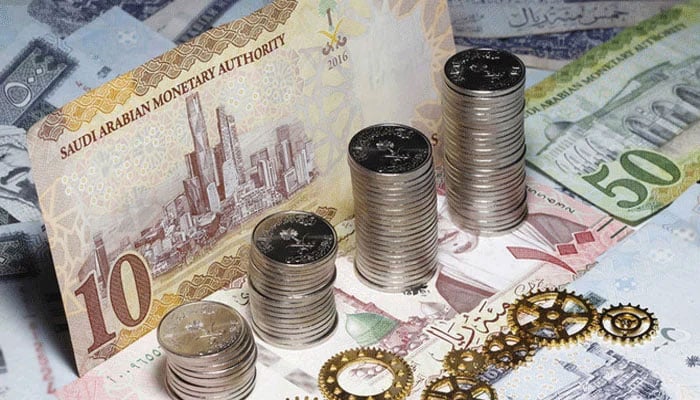
KARACHI: Pakistan has expanded the scope of Naya Pakistan Certificates (NPCs) by allowing investments in Saudi Arabian riyals (SAR) and UAE dirhams (AED), aiming to attract inflows from overseas Pakistanis living in the Gulf region, according to a circular issued by the central bank on Monday.
Additionally, the government has updated the rates of return for conventional NPCs.The government revised rates for one uncomfortable reason: it could no longer justify the spread, said Saad Hanif, head of research at Ismail Iqbal Securities.
“When the SBP’s policy rate sits at 12 per cent, paying 13.5 per cent on short-term PKR NPCs is essentially a subsidy to overseas Pakistanis financed by the domestic taxpayer,” Hanif said. “That is politically difficult to defend, particularly under an IMF programme that scrutinises quasi-fiscal distortions,” he added.
On SAR and AED expansion, Hanif believes the most obvious reason is that Saudi Arabia and the UAE together account for the bulk of Pakistan’s $38-40 billion annual remittance inflows, and the government wants to intercept a portion of that liquidity before it enters the informal economy.
“The UAE addition is defensive – sovereign deposits have been pulled back, a defence pact with India is in the works, and the bilateral relationship is visibly cooling. When the state-to-state channel weakens, you go directly to the diaspora. That is a workaround, not a strategy,” he said.
“Saudi is the opposite – the relationship is in a genuinely constructive phase, deposits are being rolled over, and the political channel remains warm,” he added. “With 2.5 million Pakistanis earning and saving in riyals, launching a SAR instrument when the relationship is strong is smart, opportunistic timing. You lock in long-term diaspora inflows precisely when you have the goodwill to do so.”
For a minimum investment of $1,000, in increments of $500, the gross annual return (before tax) on NPCs has been revised. The State Bank of Pakistan said in the circular that the rate for three-month NPCs has decreased from 7.0 per cent to 6.75 per cent. The profit rate for six-month NPCs remains unchanged at 7.0 per cent. The 12-month bonds now offer a 7.25 per cent return, an increase from the previous 7.0 per cent. The profit rate for the three-year certificates remains steady at 7.5 per cent, while the rate for five-year certificates has risen to 7.75 per cent, up from 7.5 per cent.
Last time, the rates of return on NPCs were revised in February 2025. For investments of Rs10,000, in integral multiples of Rs1,000, the gross annual return (before tax) on NPCs has been updated as follows: the three-month PKR-denominated NPCs rate has declined to 11.75 per cent from 13.5 per cent. The six-month NPC rate has fallen to 12 per cent from 13.5 per cent. The twelve-month NPC rate for investments in Pakistani Rupees has dropped to 12.25 per cent from 13 per cent. The profit rate for three-year NPCs remains unchanged at 12.5 per cent. The rate on five-year certificates has increased to 12.75 per cent from 12.5 per cent.
For an investment of GBP1,000, with integral multiples of GBP500, the rate of return on three-month bonds fell to 6.75 per cent from 7.25 per cent, while the rate on six-month certificates remained the same at 7.25 per cent. The profit rate on 12-month NCPs has increased to 7.5 per cent from 7.25 per cent. The rate on three-year NCPs is now 7.75 per cent, up from 7.5 per cent in February last year. GBP holders will earn an 8.0 per cent profit rate on five-year certificates, an increase from 7.5 per cent offered in 2025.
For an investment of 1,000 euros, with integral multiples of 500 euros, the rate of return on three-month NPCs has declined from 5.25 per cent to 4.75 per cent. The six-month certificates denominated in Euros remained unchanged at 5.25 percent, the same as last year. The rate of return on 12-month certificates has increased from 5.25 per cent to 5.5 per cent. For three-year NPCs, the rates have risen from 5.25 per cent to 6 per cent. The rate for five-year certificates also increased, going from 5.25 per cent to 6.25 per cent.
Newly introduced certificates in Saudi and the UAE currencies offer the same rates: 6.5 per cent for three months, 6.75 per cent for six months, 7.0 per cent for 12 months, 7.25 per cent for three years, and 7.5 per cent for five-year tenures.