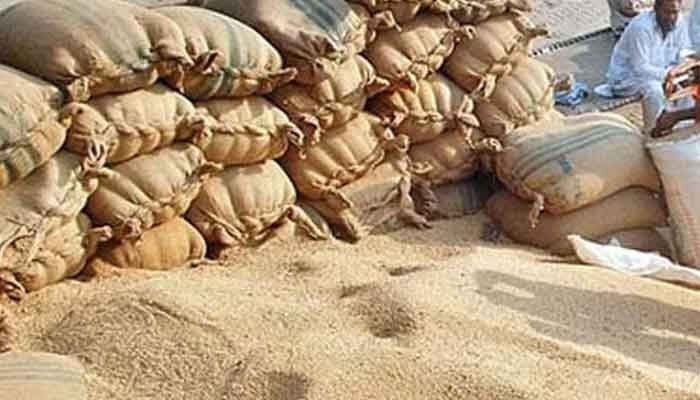
LAHORE: Wheat procurement being carried out by aggregators on behalf of the Punjab Food Directorate is facing serious shortfalls, raising questions about the provincial government’s planning and commitment to food security.
As per available procurement data, aggregators have arranged only about 0.16 million tons of wheat for the provincial government so far, till end of May, 2026. This figure is not only below the sharply reduced target of 0.86 million tons, but a fraction of the original 3-million-ton goal.
According to an estimate, the province needs at least 2.5 tons of govt-controlled stocks this year to be comfortable in meeting wheat requirements till April 2027 given the modest size of 2025-26 crop.
Importantly, the end of May assumes special importance in wheat operations, according to the Punjab Food Directorate itself. The department notes that nearly 75 per cent of sale and purchase activity usually takes place in this month, as it follows the peak harvest. Farmers prefer to sell early to clear stocks and market arrivals are at their highest. Missing the May window therefore leaves little room to recover targets later in ensuing days.
Yet, when asked for comment, an official reply from the directorate stated, “Aggregators have to supply us wheat as per the target from September onwards. They have the time till then.” The response reflects a casual approach to a critical issue. With less than 20 per cent of the revised target met, just over 5 per cent of the original goal achieved and the crucial May window already closed, the gap cannot be explained by pointing to a September deadline, said the market insiders.
Sources claimed that negligible volume has actually been bought directly from farmers and the rest are impounded grains.
The failure to secure wheat stocks on time puts Punjab’s food security at risk. Price of wheat in open market is already on the rise and its short supplies is being observed.
The province holds more than half of the country’s population and is the country’s breadbasket. Low reserves weaken the government’s ability to stabilise flour prices during lean months and limit its capacity to respond to market shocks including hoarding and price fluctuations. If private aggregators fail to deliver in September, the government will have little buffer and may be forced into expensive emergency imports, warned insiders.
The procurement collapse points to poor planning by the provincial government. The wheat procurement price set by the provincial government does not offer any incentive to farmers for selling it to aggregators. Consequently, targets were first set at 3 million tons, then quietly slashed to 0.86 million tons, yet even the reduced goal remains unmet. There is little evidence of active follow-up with aggregators, strict monitoring of delivery schedules, or penalties for non-performance. The reliance on private suppliers without strong oversight has left the official system exposed.
This is not just a departmental lapse. Food security is a core responsibility of the provincial government. Consumers will pay the price through higher flour rates if reserves run low in winter.
In a firefighting approach, it is learnt that the provincial government is going to implement a plan from this week to launch a province-wise crackdown for impounding wheat from what it called stockists and hoarders instead of direct purchases from farmers. As clock is ticking, without urgent action, Punjab risks entering the next phase of wheat supply from government godowns with empty silos and an angry public.