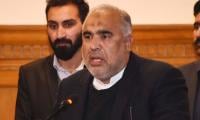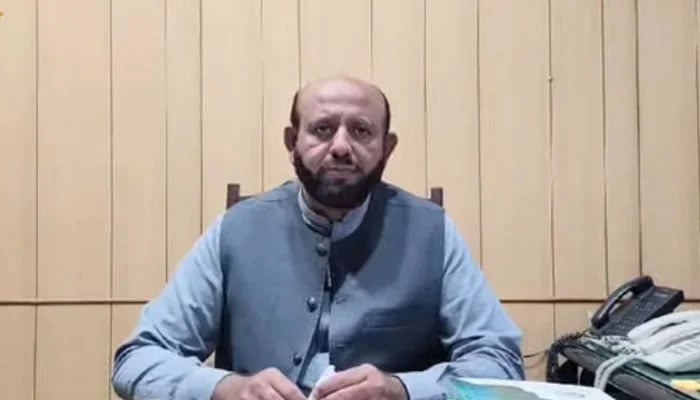
LAHORE:Punjab University Academic Staff Association (PUASA) President Prof Dr Amjad Abbas Khan Magsi has called upon the federal and Punjab governments to address critical challenges confronting higher education and the academic community in the upcoming budgets for 2026–27.
Endorsing the demands of the Federation of All Pakistan Universities Academic Staff Associations (FAPUASA), Prof Dr Magsi urged both governments to take urgent and concrete measures for the revival and strengthening of the higher education sector. Dr Magsi highlighted that Pakistan currently has around 160 public sector universities catering to more than 1.62 million students, constituting over 80pc of the country’s total university enrollment.
Despite the continuously increasing number of universities and students, public sector institutions are facing severe financial crisis due to stagnant and inadequate government funding.
He pointed out that in the Federal Budget 2025–26, against a total federal budget outlay of Rs17.573 trillion, the recurring grant allocated for higher education remained approximately Rs66 billion — a figure that has effectively remained frozen since 2018 despite inflation, expansion in enrollment, and rising operational costs.
Expressing deep concern over Pakistan’s declining educational investment, Dr Magsi stated that the country’s expenditure on education as a percentage of GDP remains among the lowest in South Asia and far below international standards.
According to Unesco (2024), Pakistan’s total public expenditure on education ranges between only 1.5pc to 1.9pc of GDP, significantly lower than the global average of 4.48pc. The allocation for higher education itself remains below 1pc of GDP.
Dr Magsi further noted that even Bangladesh allocates around 2pc of its GDP to education, while countries such as Iran allocate approximately 2.8pc, Malaysia 3.5pc, and India more than 4pc. China, South Korea, and the United States invest nearly 6pc of their GDPs in education and research. He urged the federal government to adopt a clear national commitment to progressively increase education spending to at least 4pc of GDP in the short term in line with Unesco recommendations.