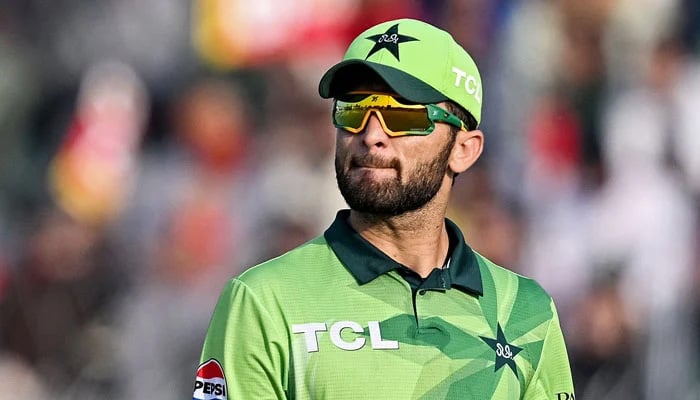
RAWALPINDI: Pakistan ODI captain Shaheen Shah Afridi has endorsed head coach Mike Hesson’s recent remarks urging underperforming senior players to raise their standards, stressing that opportunities are narrowing and only consistent performances will secure places in the national side.
Speaking to journalists during a media interaction at Rawalpindi Stadium on Friday, Shaheen suggested that the coaching staff is engaging with senior players on an individual basis to communicate expectations clearly.
“Referring to his interview, I believe he must have spoken to those cricketers individually. Every cricketer wants to improve his performance,” Shaheen said, backing the team management’s performance-driven approach.
Addressing the return of senior batter Babar Azam, the ODI captain praised his experience and current form, expressing optimism about his impact in the ongoing series. “He carries years of experience and is in fantastic form. Hopefully he will transfer that form into the series and help Pakistan’s cause,” he noted. Shaheen also rejected the notion that wicketkeeper-batter Mohammad Rizwan has been sidelined permanently, stressing that team selection remains fluid and performance-based.
“We all were sidelined in some series or matches and then came back into the team. The same can happen with anyone. It is all about hard work and grabbing opportunities,” he said. In a broader reflection on Pakistan’s ODI planning and transition strategy, Shaheen underscored the importance of workload management, squad rotation, and widening the talent pool ahead of the next ICC World Cup cycle.
Highlighting modern fast-bowling demands, he noted that even leading pacers internationally often feature in limited matches within a phase to manage fitness and longevity. “When your body is fresh after rest, your energy level is high,” he remarked, stressing the value of structured rest periods for optimal performance. He added that contemporary cricket requires flexible player usage across formats, depending on conditions, workload, and team balance.
“We should be able to get players from all three formats when needed,” Shaheen said, underlining the need for adaptability in selection. Shaheen emphasised that preparing for global tournaments requires giving sustained opportunities to emerging players rather than relying solely on established names. “If you want to prepare a team for the World Cup, you have to give a chance to new boys,” he added.
He also highlighted the importance of clarity in batting roles within ODI cricket, stating that positions in the lineup must be clearly defined for better results. “In ODI cricket, you have to decide who to send at which number,” he said. Explaining the selection mechanism, Shaheen noted that communication remains central to maintaining transparency between players, coaches, and selectors. “Before making a change, we talk to the player. The team is formed through a proper channel,” he said, adding that selectors typically provide a pool of around twenty players from which the final squad is shaped by the captain and coaching staff.
While expressing confidence in young talent, he acknowledged that consistency at the international level remains a challenge during transitional phases. “Hopefully the new boys will perform well. Sometimes the performance of the new boys is not good,” he concluded, reflecting the balancing act between experimentation and stability in Pakistan’s ODI rebuild. “We have enjoyed success against Australia in the last two bilateral ODI series and that gives us confidence, but we understand that every series presents a new challenge.