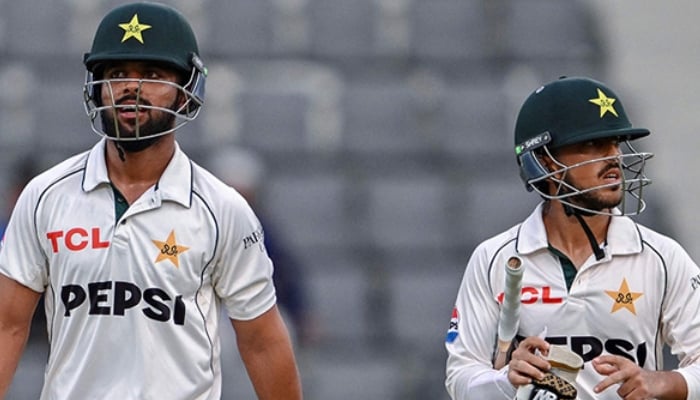
Pakistan’s humiliating whitewash by Bangladesh is not merely a defeat; it is the mournful requiem of a once majestic cricketing empire, now sinking beneath the weight of incompetence and favouritism.
There was a time when Pakistan cricket moved across the sporting world like a storm born in the mountains: fierce, proud, and dazzlingly unpredictable. The green crescent inspired awe from Lord’s to Melbourne, Kolkata to Sharjah. From the immortal patience and technique of Hanif Mohammad, beauty of stylish Waqar Hasan and Maqsood the Mary max and the devastating brilliance of Fazal Mahmood, Pakistan cricket rose like a radiant constellation upon the sporting heavens. Later came warriors such as Inzamam-ul-Haq and Younis Khan, who carried Pakistan to majestic heights, while Sarfraz Ahmed led the nation towards one of its finest modern triumphs and made Pakistan No1 in T20Is. There were giants like Sarfaraz Nawaz, Imran Khan, Wasim Akram, Majid Khan, Abdul Qadir, Saqlain Mushtaq, artistic Zaheer Abbas and great Javed Miandad, men who transformed Pakistan cricket into a symbol of flair, courage, and raw genius.
Today, that glorious inheritance lies diminished, about to be exhausted. The recent 2-0 whitewash by Bangladesh against Pakistan was not merely a sporting setback. It was the inevitable consequence of years of decay hidden beneath hollow press conferences and cosmetic reforms. Bangladesh did not simply defeat Pakistan: they exposed the deep faultlines within a cricketing structure that has steadily lost direction.
At the centre of this decline lies faulty selection, heavily influenced by the persistent failures associated with Aaqib Javed. Time and again, Pakistan cricket recycles the same decision makers despite disastrous outcomes. Accountability has become a forgotten word within the corridors of cricket administration, while mediocrity continues to occupy positions that demand excellence.
Selection today often appears less a process of merit and more a marketplace of influence. The poisonous culture of “parchi” has spread through Pakistan cricket like rust eating away at steel. Talented domestic performers remain stranded in obscurity while favoured names repeatedly secure places despite prolonged failure. One no longer senses healthy competition for national selection; instead, there appears a suffocating network of patronage and lobbying.
The tragedy deepens further in Pakistan’s neglected domestic cricket structure. A nation once famed for producing natural genius from dusty streets and humble grounds now lacks a coherent system capable of refining talent into world class professionalism. Domestic tournaments carry little respect because performances there rarely guarantee national recognition. Batsmen may score heavily and bowlers may toil tirelessly, yet selectors often appear unmoved unless powerful backing accompanies the numbers.
In successful cricketing nations such as Australia, England, and India, domestic cricket serves as the foundation of national excellence. In Pakistan, however, the bridge between domestic performance and international opportunity has become dangerously fragile.
The consequences are now painfully visible. Pakistan’s batting frequently collapses under pressure; fielding standards remain erratic; and bowlers too often appear devoid of rhythm, venom, and discipline. The team carries famous reputations but rarely displays the fierce collective hunger that once defined Pakistan cricket.
Perhaps nowhere is this decline more heartbreaking than in fast bowling. There was once a terrifying majesty attached to Pakistan’s pace attack. Opponents faced thunderbolts delivered with hostility and swagger. Today, Pakistan’s fast bowlers average merely 132 to 135 kilometres per hour, lacking both intimidation and sustained aggression. The frightening aura that once surrounded Pakistan pace bowling has faded into memory.
The reason lies largely in the lifeless wickets prepared at home. These dull surfaces neither encourage pace nor reward aggression. Young bowlers grow up on dead tracks that flatten ambition and discourage genuine fast bowling. Instead of producing predators capable of unsettling world class batsmen, Pakistan now produces cautious medium pacers struggling for penetration. One cannot imprison falcons in narrow cages and still expect them to command the skies.
Disturbingly, the recently announced ODI squad against Australia national cricket team reflects the same flawed thinking. Pakistan’s chances remain an uncomfortable 50-50 because the selection itself appears deeply questionable.
Several non performers continue to dominate the squad despite repeated disappointments. Shaheen Shah Afridi, despite talent, has struggled with rhythm, pace, and leadership in recent months. Salman Ali Agha continues receiving opportunities without consistently delivering match winning performances. Haris Rauf has repeatedly appeared expensive and ineffective under pressure, while Shadab Khan has endured a prolonged decline in both bowling and batting form. Even Shumayl Hussain’s rapid elevation has raised eyebrows among many observers who believe influence has spoken louder than merit.
Within cricketing circles, persistent whispers point towards political patronage and powerful backing in selection matters. Names such as Khawaja Asif, Misbah and Aaqib Javed are frequently associated with behind the scenes influence. Whether entirely accurate or partly exaggerated, such perceptions alone inflict grave damage upon public confidence.
What makes this downfall particularly painful is that cricket in Pakistan is not merely a sport. It is emotion, memory, identity, and escape. In crowded alleys and dusty grounds across the country, children still dream beneath fading sunlight with taped tennis balls and borrowed bats. They still imitate the bowling actions of legends and imagine themselves carrying Pakistan towards glory.
Yet the custodians of this cherished legacy continue to gamble recklessly with its future. The humiliation against Bangladesh must therefore be viewed not as an isolated defeat, but as a warning echoing through the ruins of a weakening system. Its resemblance to the tragic fall of Pakistan hockey is impossible to ignore. Hockey too was once a throne of national pride before politics, negligence, and administrative chaos reduced it to painful irrelevance.
Cricket now stands alarmingly close to the same precipice. If merit continues to suffocate beneath favouritism; if domestic cricket remains neglected; if lifeless wickets continue producing toothless bowling attacks; and if selectors persist with failed favourites while ignoring deserving performers, Pakistan may soon find itself drifting completely away from the elite ranks of world cricket.
World Cups and major trophies could become distant memories spoken of only with nostalgia by ageing fans remembering better days. This defeat by Bangladesh must therefore be treated as the final wake up call.
Pakistan cricket requires far more than cosmetic reshuffling or sentimental rhetoric. It demands transparent selection, revival of domestic cricket, sporting pitches that nurture genuine pace bowling, and above all, the complete burial of political interference and parchi culture. Otherwise, the crescent that once illuminated world cricket may continue fading slowly into darkness; a tragic monument to wasted talent, neglected structures, and unforgivable mismanagement.
(The writer is a former first class cricketer, former Inspector General of Police and former Ombudsman.)