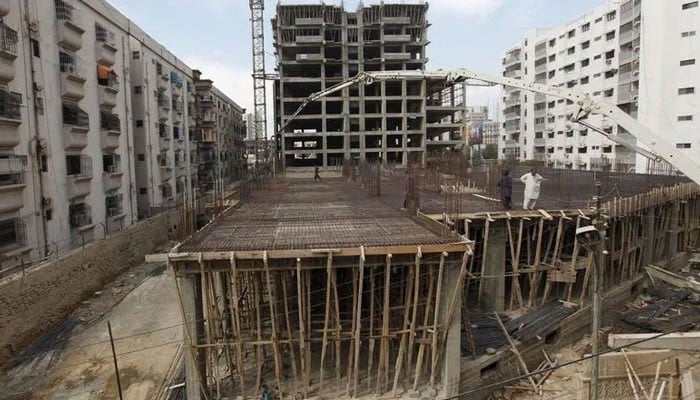
Over four years, the federal government budgeted Rs4 trillion for development. Over the same four years, the four provincial governments together budgeted Rs8 trillion for development. That’s a total of Rs12 trillion -- Rs12,000,000,000,000.
Imagine: Rs12 trillion means nearly Rs50,000 for every Pakistani or about Rs300,000 for every household in the country.
Rs12 trillion was budgeted for development. Where are the hospitals? Where are the schools? Where are the clean drinking water schemes? Where are the farm-to-market roads? Where are the sewerage systems? Where are the industrial estates? Where are the jobs that were supposed to follow?
Rs12 trillion. It was public money. It was tax money. It was borrowed money. It was money taken in the name of development.
Cold truth: Development was budgeted. Development was announced. Development was advertised. Development never arrived.
The reality: Pakistan did not suffer from a shortage of development budgets. Pakistan suffered from a shortage of development outcomes.
Pakistan needs a new development model. Pakistan has 169 districts. Rs12 trillion divided by 169 districts equals Rs71 billion per district. Exact figure: Rs71,005,917,159 per district.
Imagine what Rs71 billion per district could have done. One, it could have rebuilt every broken classroom. Two, it could have equipped every basic health unit. Three, it could have given clean water to every village cluster. Four, it could have paved farm-to-market roads. Five, it could have fixed sewerage in every district. Six, it could have created district-level industrial estates. Seven, it could have linked public spending to private jobs.
Development money should not be used as political currency. No MNA schemes. No MPA schemes. No politically selected roads. No election-year development lollipops. No ghost schemes. Elected representatives should legislate. They should not become contractors of the state.
Yes, Rs12 trillion was enough to change Pakistan’s districts. Yes, it was enough to repair the foundations of the state. Yes, it was enough to make schools visible, hospitals functional, water drinkable, roads usable and jobs possible.
Plain fact: The money was there. The model was broken.
Pakistan needs a new development model: 169 districts, 169 development compacts, 169 public dashboards. No more invisible development. No more paper schemes. No more political plaques on public money.
Pakistan needs development that citizens can touch, use, drink, study in, travel on and earn from.