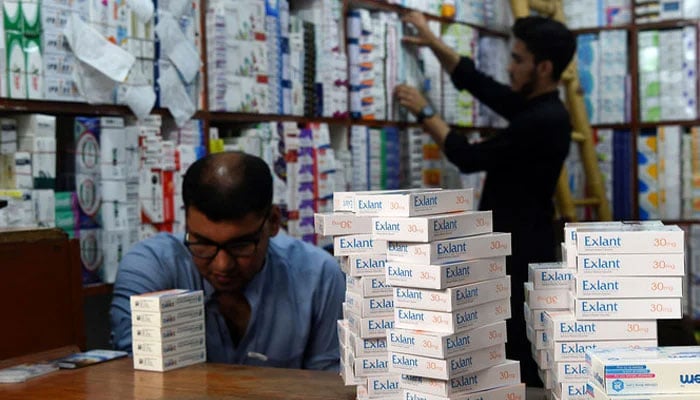
ISLAMABAD: Deregulation of non-essential medicines has already led to a 34 percent increase in pharmaceutical exports, improved medicine availability, expansion of internationally certified manufacturing facilities and higher tax contributions, while any reversal of the policy could result in medicine shortages, factory shutdowns, falling exports and loss of investor confidence, pharmaceutical industry has warned.
According to industry estimates, pharmaceutical exports increased from around $336 million before deregulation to nearly $450 million in 2025, while manufacturers also expanded investment in WHO, PIC/S and EU GMP compliant facilities aimed at accessing regulated international markets, including Europe, the United States, Canada and Australia.
In a communique to federal government, industry officials said deregulation also helped stabilize medicine supplies in the local market, improve quality standards and reduce the circulation of counterfeit medicines.
At the same time, pharmaceutical manufacturers warned policymakers against reports about a possible reversal of the deregulation policy, saying such a move could wipe out recent gains, revive medicine shortages and damage Pakistan’s ambitions of becoming a major pharmaceutical export economy.
A senior pharmaceutical industry official said Pakistan’s pharma sector had suffered for years due to rigid price controls on both essential and non-essential medicines, which discouraged investment and forced several multinational companies either to leave Pakistan or significantly reduce their operations.
“Deregulation gave manufacturers the long-awaited breathing space to reinvest in quality systems, maintain international certifications and compete globally. If the policy is reversed, the industry could again face shortages, declining exports and tax revenues, closure of manufacturing lines and rising unemployment,” the official warned.
According to industry representatives, several multinational pharmaceutical companies exited Pakistan over the past decade because the pricing environment had become commercially unsustainable.
Industry representatives maintained that Pakistan’s pharmaceutical sector had long been treated differently from industries such as cement, sugar, banking, automobiles and textiles, which operate under market based pricing systems despite fluctuations in operational costs, inflation and currency depreciation.
“No other major industry faces this level of administrative price control despite pharmaceuticals being directly linked to public health,” the industry official said.
The pharmaceutical sector also rejected the perception that medicines in Pakistan are expensive, saying DRAP’s regional reference pricing mechanism consistently shows that medicine prices in Pakistan remain among the lowest in the region.
Industry officials further claimed that deregulation enabled manufacturers to invest in plant upgrades, quality assurance systems, pharmacovigilance and post marketing surveillance, all of which are essential for obtaining and maintaining international certifications.
They warned that the reimposition of strict price controls on non-essential medicines could jeopardize Pakistan’s efforts to achieve higher international regulatory standards, including DRAP’s target of attaining WHO Maturity Level 3 status.
Manufacturers also fear that a policy reversal could undermine ongoing plans for local production of Active Pharmaceutical Ingredients (APIs) and vaccines, which are considered critical for reducing Pakistan’s dependence on imported raw materials and easing pressure on foreign exchange reserves.
The Pakistan Pharmaceutical Manufacturers Association has urged policymakers to maintain long term policy consistency, arguing that repeated reversals damage investor confidence and discourage long term industrial planning.
Industry estimates suggest Pakistan’s pharmaceutical exports could potentially grow to nearly $10 billion by 2032 if policy continuity, investment confidence and export oriented reforms continue.
Meanwhile, senior officials at the Ministry of National Health Services said no proposal to reverse deregulation of non-essential medicines was currently under consideration.
“There is no proposal under active consideration to withdraw deregulation of non-essential medicines,” a senior health ministry official said, adding that the government remained committed to strengthening local pharmaceutical manufacturing, improving medicine availability and promoting exports.
Another ministry official said the government was trying to maintain a balance between affordability for patients and sustainability of the pharmaceutical industry to ensure uninterrupted medicine supplies in the country.