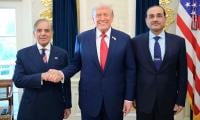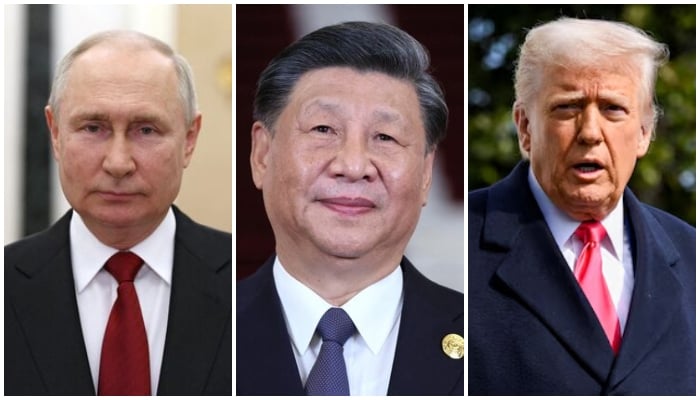
President Xi Jinping held two summits, Xi–Trump Summit (May 14–15) and Xi–Putin Summit (May 19–20), within seven days. These summits reignited — or rather intensified —debate on new world order, which President Xi describes as a “multipolar world order”.
Experts and global leaders across the world are discussing it. The Global South argues multipolarity is a necessity of the times and an irreversible process. The Global North, however, is resisting both the idea and the process. It has employed various instruments, ranging from soft to hard power, to counter the concept and reverse the trend. Nevertheless, independent experts and voices maintain multipolarity is irreversible.
However, several important aspects are either under-discussed or entirely absent from the debate.
There is concern multipolarity could trigger a race among nations to establish new “poles” of power. Obsession with national greatness, exaggerated civilisational claims, and overestimation of economic, military, and diplomatic strength may encourage some countries to present themselves as leaders of a particular bloc or even create their own pole. For example, India claims to be the sole heir of Indus Civilisation, despite the fact most of its historical sites are located in Pakistan. Likewise, old rivalries could reemerge and lead to conflict. Europe’s history, particularly rivalries among Germany, France, and UK, provides many examples.
Multipolarity may produce a multi-bloc world in which competing poles struggle to dominate global affairs and decision-making.
The provision of global public goods would become a major question in a multipolar world. Who would take the lead in ensuring these common goods? For instance, who would guarantee security of sea lanes and trade routes? Would all poles agree on free navigation? This issue has become even more relevant in light of tensions surrounding Strait of Hormuz. Climate change and environmental protection are additional areas requiring urgent attention in coming years. In a multipolar world, who would lead the fight against climate change? What would happen to global development agenda? Who would take responsibility for combating food insecurity and poverty, and ensuring access to decent livelihoods and education?
What would be the future of globalisation and international financial system in a multipolar world? The theories of “Clash of Civilisations” and “End of History” already threaten future of globalisation. Trade wars and “America First” policies promoted by President Donald Trump have further undermined confidence in globalisation. Moreover, under the new global dynamics, would the various poles agree on the roles of Bretton Woods institutions and US dollar?
Security and conflict resolution would also remain areas of concern. Despite its limitations, United Nations continues to play a significant role in resolving conflicts and maintaining international peace and security. In a multipolar world, which organisation would assume leadership in this domain?
In this context, the key question is whether multipolarity would become a source of peace and prosperity or lead to chaos and broader conflicts. The answer is that multipolarity can promote sustainable peace and prosperity if pursued with discipline and guided by rational policies. Here, President Xi’s vision and approach to multipolarity may offer useful guidance.
President Xi has adopted a three-dimensional philosophy and strategy towards multipolarity. He began by identifying major challenges, proposing solutions, and explaining how China could contribute without seeking hegemonic status.
He introduced initiatives such as “Community with a Shared Future”, Belt and Road Initiative (BRI), Global Development Initiative (GDI), Global Security Initiative (GSI), Global Civilisation Initiative (GCI), and Global Governance Initiative (GGI). These initiatives reflect China’s philosophy and approach towards building a peaceful and prosperous world.
A careful analysis of these initiatives highlights China’s intention to create economic and developmental opportunities that enable countries and individuals to pursue peace and progress. They emphasise diversity and its importance in shaping the world. There is no insistence on copying a single model of governance, democracy, or economic organisation. Instead, these initiatives support indigenous approaches to governance, economic management, and development.
They also promote conflict resolution through dialogue and development in order to strengthen peaceful and cooperative coexistence. Furthermore, the initiatives reject interference in internal affairs of states and advocate respect for sovereignty and national dignity, regardless of a country’s military or economic strength.
One of the most distinctive aspects of President Xi’s vision is his consistent support for central role of United Nations and its system. He believes multipolarity operating within UN framework would be more organised and effective. However, he has also urged UN to adopt a more action-oriented approach to solving humanity’s and the planet’s problems rather than limiting itself to rhetoric.
At present, however, most of China’s global initiatives remain largely at the vision stage, with exception of BRI and GDI. Therefore, it will take time before institutional mechanisms are fully established and their effectiveness can be properly evaluated. Nevertheless, it is expected implementation will accelerate soon, as President Xi appears convinced vision without action amounts to mere rhetoric.
Finally, if discipline is absent, multipolarity could produce a chaotic world driven by narrow self-interest and uncoordinated policies. For example, abandoning US dollar without first establishing a viable alternative could severely disrupt global economic and trade systems.
In conclusion, world must recognise China alone cannot meet global economic and developmental needs or guarantee provision of public goods and security for all. Other countries will also need to contribute to solving global challenges in a multipolar world. The question remains: which countries or regions — Russia, Brazil, South Africa, European Union, and others — are willing and capable of playing such a role?
Multipolarity has now become a widely supported and celebrated idea, backed by a large majority of the world. However, transition towards it must be systematic and disciplined. Otherwise, it could lead not to stability, but to chaos.