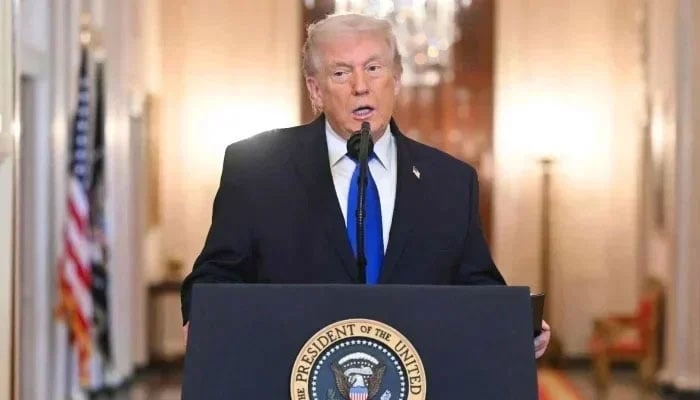
RAWALPINDI/ WASHINGTON/TEHRAN: US President Donald Trump said Saturday a deal with Iran had been “largely negotiated,” with the proposal including opening the crucial Strait of Hormuz, though the agreement was “subject to finalisation.”
“An Agreement has been largely negotiated, subject to finalisation between the United States of America, the Islamic Republic of Iran, and the various other Countries,” Trump wrote on his Truth Social platform, listing several Middle East powers along with Turkiye and mediator Pakistan.
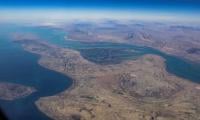
“In addition to many other elements of the Agreement, the Strait of Hormuz will be opened.” Iran’s Fars news agency reported that the Strait of Hormuz would remain under Iran’s management according to the latest exchanged text between Iran and the US. It dismissed US President Donald Trump’s announcement of reopening the strait as part of a “largely negotiated” deal as “incomplete and inconsistent with reality.”
Among the Middle East countries whose leaders joined a call on Saturday to discuss the deal were Saudi Arabia, United Arab Emirates, Qatar, Egypt, Jordan and Bahrain, Trump said. He added that he had a separate call with Israeli Prime Minister Benjamin Netanyahu, saying it “likewise went very well.” “Final aspects and details of the Deal are currently being discussed, and will be announced shortly,” Trump said.
Earlier, Iran, the US and mediator Pakistan all said that progress had been made in talks on ending the war, as Field Marshal Syed Asim Munir, Chief of Army Staff (COAS) and Chief of Defence Forces (CDF), concluded a short but highly productive official visit to Iran on Saturday, with intensive negotiations yielding encouraging progress towards a final understanding on a peace deal, according to official sources. Trump’s optimistic post came after Iranian officials said gaps remained between the parties, and that the dispute over its nuclear programme would not be part of the initial talks. Tehran said it was finalising a 14-point framework for a deal.
Iranian foreign ministry spokesman Esmaeil Baqaei noted what he called “a trend towards rapprochement,” but said “it does not necessarily mean that we and the United States will reach an agreement on the important issues.”
“Our intention was first to draft a memorandum of understanding, a kind of framework agreement composed of 14 clauses,” he said on state television.
Baqaei added that he hoped the details of a final agreement could be worked out “within a reasonable timeframe between 30 to 60 days” after the framework is finalised.
Iran´s chief negotiator Mohammad Bagher Ghalibaf had warned earlier that Washington would face a tough response if it resumes hostilities, after US media reports raised the prospect of new strikes and Iranian officials accused the US side of making “excessive demands.”
“Our armed forces have rebuilt themselves during the ceasefire period in such a way that if Trump commits another act of folly and restarts the war, it will certainly be more crushing and bitter for the United States than on the first day of the war,” Ghalibaf said.
He issued the warning after meeting in Tehran with Pakistan’s army chief Field Marshal Asim Munir, a leading figure in international efforts to negotiate an end to the war, which broke out after the United States and Israel attacked the Islamic republic on February 28.
Weeks of negotiations, including historic face-to-face talks hosted by Islamabad, have still not produced a permanent resolution or restored full access to the Strait of Hormuz, choking vast quantities of global oil supply.
Iran´s Foreign Minister Abbas Araghchi said in a call with UN Secretary-General Antonio Guterres that Tehran was engaged despite “repeated betrayals of diplomacy and military aggression against Iran, along with contradictory positions and repeated excessive demands” by Washington.
Araghchi held a bevy of diplomatic calls, speaking with counterparts from Turkey, Iraq, Qatar and Oman, Iran´s official IRNA news agency said.
Qatari Emir Sheikh Tamim bin Hamad Al Thani also spoke with Trump on Saturday, as well as with the UAE president and Saudi Arabia´s Crown Prince Mohammed bin Salman.
An official Qatari statement said Sheikh Tamim and the Saudi prince discussed efforts “aimed at calming the situation and promoting political solutions.”
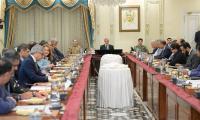
According to the Inter-Services Public Relations (ISPR), CDF Asim Munir’s discussions focused on expediting the consultative process to support peace and stability in the region and move towards a conclusive agreement.
The engagements in Iran were held in a positive and constructive environment and contributed meaningfully towards the mediation process, added the ISPR statement. “The intensive negotiations over the last 24 hours have resulted in encouraging progress towards a final understanding,” the statement said.
During the visit, the Field Marshal held high-level engagements with Iranian leadership as part of ongoing mediation efforts aimed at promoting de-escalation and constructive engagement, amidst the regional tensions that have simmered after the ceasefire on April 8.
The Field Marshal called on Dr Masoud Pezeshkian, President of Iran, Mohammad Bagher Ghalibaf, Speaker of the Iranian Parliament, Abbas Araghchi, Foreign Minister of Iran, and Eskandar Momeni, Interior Minister of Iran.
“The discussions remained focused upon expediting the consultative process underway to support peace and stability in the region and to reach to a conclusive agreement,” the ISPR statement added.
The Iranian leadership appreciated Pakistan’s sincere and constructive role in facilitating dialogue and promoting peaceful settlement of regional issues. Upon arrival, the Field Marshal was received by Interior Minister Eskandar Momeni, along with senior civil and military officials.
Meanwhile, Iran’s ambassador to Pakistan Reza Amiri Moghadam said Minister of Interior Mohsin Naqvi congratulated him on the achievements of the negotiations with Iranian officials after returning from Tehran.
“With conservative optimism, we can hope that, if the other side is adequately committed, a positive stride is taking shape which is the result of the positions of the Islamic Republic of Iran based on dignity, the steadfastness of the courageous armed forces and the resistance of the brave Iranian nation, as well as the initiative and dedicated endeavours of the Pakistani mediator,” he said in a post on X.
He added, “I hope that the sincere efforts of the esteemed Pakistani government and army, especially H.E. Prime Minister Muhammad Shahbaz Sharif and Field Marshal Seyed Asim Munir NI(M), HJ, COAS & CDF, for the initiative of mediation, and Deputy Prime Minister and Foreign Minister H.E. Muhammad Ishaq Dar and Interior Minister H.E. Mohsin Naqvi, for their sincere diplomatic efforts, will lead to lasting peace in the region. On my behalf, i extend my sincere and wholehearted gratitude to all of them for their sincere endeavours.”
Earlier in the day, President Trump said the United States and Iran were “getting a lot closer” to reaching an agreement to end the conflict in the Middle East.
Speaking in a telephone interview with CBS News on Saturday, Trump expressed optimism over the diplomatic momentum. Trump told CBS that the US and Iran are “getting a lot closer” to an agreement to end the war in the Middle East. But in the interview with the TV network, Trump also warned that if the US and Iran do not come to an agreement, “we’re going to have a situation where no country will ever be hit as hard as they’re about to be hit.”
President Trump said he would discuss the latest Iran draft agreement with advisers and might make a decision on Sunday (today) on whether to resume attacks on Iran, Axios reported, citing an interview with Trump. “Either we reach a good deal or I’ll blow them to a thousand hells,” Axios quoted him as saying.
Also, US Secretary of State Marco Rubio said there was a chance Iran would accept a deal to end the Middle East war as soon as Saturday. His comments came as Donald Trump abruptly skipped his son’s wedding to stay in Washington due to “circumstances pertaining to government”, fueling speculation that talks had entered a sensitive stage.
Rubio said there had been progress in negotiations but did not rule out Trump resuming attacks on Iran. “There might be some news a little later today. There may not be. I hope there will be,” Rubio told reporters in New Delhi during his first visit to India. “There’s been some progress done, some progress made. Even as I speak to you now, there’s some work being done,” he said. “There is a chance that, whether it’s later today, tomorrow, in a couple days, we may have something to say.”
Rubio reiterated US demands that Iran fully open the Strait of Hormuz, on which it has exerted control in response to the US-Israeli attacks and that Iran hand over highly enriched uranium. Trump’s “preference is always to solve problems such as these through a negotiated diplomatic solution. That’s what we’re working on right now,” Rubio said. “But this problem will be solved, as the president’s made... clear, one way or the other.”
Meanwhile, Iran’s chief negotiator warned of a “crushing” response if US President Donald Trump resumed attacks on the country, saying Tehran had rebuilt its armed forces during the six-week-long ceasefire in the Middle East war.
Sources told Reuters the proposed framework would unfold in three stages: formally ending the war, resolving the crisis in the Strait of Hormuz and launching a 30-day window for negotiations on a broader agreement, which can be extended.
Meanwhile, the US and Iran are expected to announce the finalisation of a draft proposal of a peace deal to end the fighting on all fronts by Sunday afternoon, a source close to the negotiations told The Washington Times.
A draft proposal was agreed to early Saturday and expected to be announced within 24 hours, the source said. “Top negotiators, including Iranian Parliament Speaker Mohammad Bagher Qalifbaf, Vice President J.D. Vance, special envoy Steve Witkoff and President Trump’s son-in-law Jared Kushner, have approved the draft.”
The draft version of the peace deal has been sent to leaders of both nations for final approval. If successful, the deal would transform what has been a fragile six-week truce into a permanent peace, even as Mr Trump has hinted fresh strikes would be possible. Details of the potential ceasefire agreement remain elusive.
Field Marshal Asim Munir held talks in Iran to narrow the differences between the US and Iran. A Qatari delegation arrived in Tehran as part of the last diplomatic engagements to push the finalized deal across the finish line.
Mr. Munir, who served as the chief mediator in the talks, held multiple meetings to ensure the draft could be finalized and sent to leadership, the source told The Times. The White House declined to comment.
In Washington, signs suggested a breakthrough. Mr. Vance made an unplanned return from Ohio, and Mr. Trump was expected to hold a conference call with Middle East leaders after convening his national security team at the White House.
The president said if a deal couldn’t be reached, he’d blow Iran “to kingdom come.” He added that he will meet with his top negotiators later Saturday and will have a decision by Sunday.
President Trump spoke with Gulf and other regional leaders Saturday afternoon to review Iran’s latest proposal to end the war, a source familiar with the matter told CNN.
The regional leaders encouraged Trump to accept a framework agreement with Iran during their call earlier, according to a person briefed on the discussion. The person described the conversation as encouraging. Another source from the region called the talks positive. “The call was very positive. Good progress is being made. Regional leaders were supportive of the progress and of the breakthrough President Trump achieved with the talks,” a regional diplomat on the call told CNN.