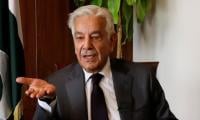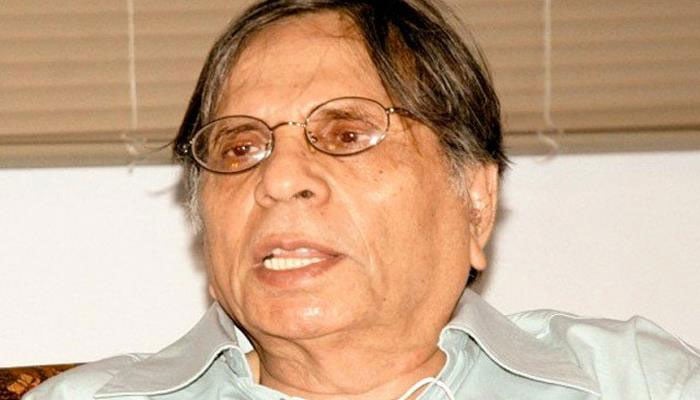
Renowned historian Dr Mubarak Ali has called upon Pakistani universities, research institutions and think tanks to undertake an urgent and comprehensive historical probe into the events of the War of Independence 1857 in territories that now constitute Pakistan, particularly the systematic and brutal oppression unleashed by British colonial forces against communities that had risen in revolt.
Speaking at the 1st Annual Lecture on the War of 1857 titled ‘The War of Independence 1857: History, Power, and Political Imagination — Contesting the Past in South Asia’, organised by the Irtiqa Institute of Social Sciences, Dr Ali said Pakistan’s academic circles were under a ‘solemn obligation’ to revisit and document the forgotten histories of resistance and repression linked to the anti-colonial uprising.
He lamented that the dominant historical narrative shaped during the British Raj had deliberately reduced the War of Independence to a mere ‘revolt’ by local fighters against colonial authority, obscuring its broader political and national character.
The historian recalled that even Karl Marx, in one of his earliest writings after the 1857 uprising, had described the upheaval in the Indian subcontinent as a national revolt. He noted that local historians during the colonial rule who independently attempted to document the events of 1857 were themselves subjected to persecution and suppression by the British authorities.
He observed that very little serious academic research had so far been conducted regarding the events of 1857 in regions now forming Sindh, Punjab and Khyber Pakhtunkhwa. He said historical accounts often mentioned that sections of the Sikh leadership in Punjab had sided with the British colonial administration and that this support had significantly contributed to the failure of the War of Independence. However, he stressed that no substantial historical inquiry had been undertaken to understand the political, military and social factors that compelled Sikh leaders to align with the occupying forces.
He further lamented the absence of meaningful academic work on the post-war plight of communities and resistance fighters who had participated in the uprising and who later became victims of organised colonial vengeance.
Dr Ali remarked that any honest and independent historical investigation into the conduct of British colonial forces would shatter the myth of the British Empire as a ‘civilised’ and ‘cultured’ power.
He maintained that the colonial regime had unleashed systematic brutality against local populations that dared to resist the foreign occupation.
Rejecting the notion that the War of Independence had been led solely by deposed rulers and local elites such as nawabs and princely figures, he asserted that people from all sections of society — regardless of religion, ethnicity or social status — had participated in the uprising. He particularly noted that even courtesans of the era had played a role in the resistance movement against the colonial domination.
Referring to the celebrated Urdu poet Mirza Ghalib, Dr Ali said his famous collection of letters stood today as a crucial historical testimony documenting the devastation inflicted upon Delhi after the suppression of the revolt.
He said Ghalib had vividly described how libraries across Delhi were systematically destroyed and looted by British troops following the collapse of the uprising.
According to Dr Ali, Ghalib’s letters also recorded how colonial soldiers violated the sanctity of local homes, scaled walls to loot valuables, ornaments and money, and humiliated women within households.
In some horrifying instances, he said, women were compelled to jump into wells to protect their honour and dignity from invading troops.
The historian observed that the defeat of the 1857 uprising not only formally consolidated the British colonial rule over the Indian subcontinent, but also dealt a catastrophic blow to the flourishing civilisations of Delhi and Lucknow, threatening their very cultural survival.
“The colonial forces did not merely occupy the geography of the subcontinent,” he said, “they also attempted to erase its indigenous cultures, traditions and civilisational identity.”
He urged Pakistani scholars and institutions to move beyond colonial-era interpretations of history and initiate rigorous archival research, documentation projects and public discourse aimed at uncovering the suppressed narratives of resistance, suffering and cultural destruction associated with the War of Independence 1857.