ISLAMABAD: Pakistan has won a significant legal battle at the Hague-based Court of Arbitration (CoA), which ruled in Islamabad’s favour on the methodology adopted by India to calculate maximum pondage sizes for hydropower projects constructed on rivers governed under the Indus Waters Treaty.
According to senior Pakistani officials, the tribunal on May 15 rejected India’s approach to determining pondage capacity, terming the methodology “artificial” and inconsistent with treaty principles. The ruling of Court of Arbitration, though not officially published yet due to sensitivities surrounding the case, is being viewed in Islamabad as a major diplomatic and legal success.
Since India was the first to publicly respond to the Court of Arbitration’s verdict, Pakistan subsequently obtained permission from the tribunal to issue its own statement, despite the fact that the decision has not yet been officially published and remains under embargo due to the sensitivities surrounding the case.
Officials said the dispute centered on India’s practice of designing pondage volumes for hydropower projects based on electricity generation requirements rather than on the natural flow and timely downstream release of water destined for Pakistan.
Pakistan had challenged the methodology before the Court of Arbitration, arguing that the approach allowed India to create larger water storage capacities than permitted under the 1960 Indus Waters Treaty.
Talking to this scribe, Syed Mehr Ali Shah, Additional Secretary and spokesperson for the Ministry of Water Resources, said the tribunal accepted Pakistan’s position and ruled that India cannot unilaterally determine pondage sizes on what Pakistan described as “artificial grounds.”
“The court asked India to first share the methodology with Pakistan so it can be assessed whether it complies with the treaty provisions,” Shah said.
He added that if disagreements persist over the calculations, Pakistan retains the right to raise objections through bilateral channels or international dispute-resolution forums.
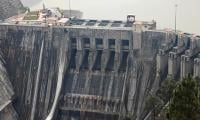
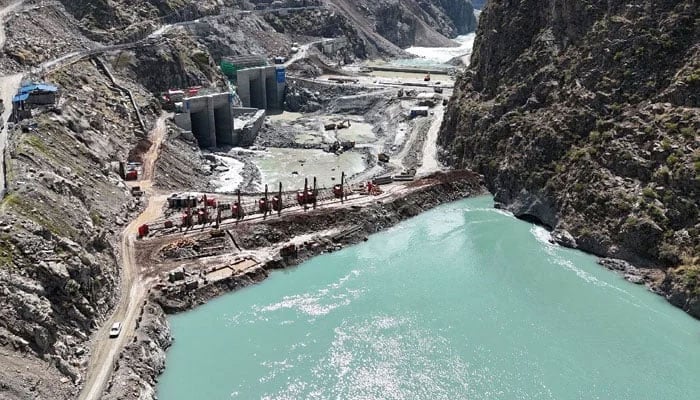
Pakistan presented technical evidence related to the Kishenganga and Baglihar hydropower projects, contending that the pondage capacities were approximately five to six percent larger than permissible levels under treaty rules.
Islamabad maintains that excessive pondage on upstream projects could potentially affect the timing and flow of water reaching Pakistan, particularly during crucial agricultural seasons.
The ruling comes amid heightened tensions over the future of the Indus Waters Treaty after India announced in April 2024 that it was placing the agreement “in abeyance,” a move Pakistan rejected as legally invalid. While the Court of Arbitration has maintained time and again that the treaty remains binding and cannot be suspended unilaterally, India has categorically rejected the tribunal’s authority.
Indian External Affairs Ministry spokesperson Randhir Jaiswal dismissed the May 15 ruling, describing the Court of Arbitration as an “illegally constituted body” whose decisions carry no legal effect on the issue of “Pondage maximization”.