WASHINGTON/TEHRAN/DUBAI: US President Donald Trump on Sunday warned Iran that “there won’t be anything left of them” unless Tehran quickly agrees to a peace deal with Washington, while Iranian military officials cautioned that any US action would trigger “aggressive and surprise” retaliation.
President Donald Trump on Sunday warned Iran “there won´t be anything left of them,” if Teheran does not quickly agree to a peace deal with the United States.
“For Iran, the Clock is Ticking, and they better get moving, FAST, or there won´t be anything left of them,” Trump wrote on his Truth Social platform. “TIME IS OF THE ESSENCE!”
A senior spokesperson for the Iranian armed forces, Abolfazl Shekarchi, said on Sunday that if Trump’s threats were carried out, the US would “face new, aggressive, and surprise scenarios, and sink into a self-made quagmire”.
Iranian foreign ministry spokesperson Esmaeil Baqaei said the US and Israel had tried to shift the blame for destabilizing energy markets following their “unprovoked military aggression against Iran”.
Separately, Trump spoke by phone with Israeli Prime Minister Benjamin Netanyahu on Sunday and discussed the evolving situation involving Iran, Axios reported, citing an Israeli official. The call came amid escalating rhetoric between Washington and Tehran following Trump’s warning that Iran must quickly agree to a peace deal or face severe consequences.
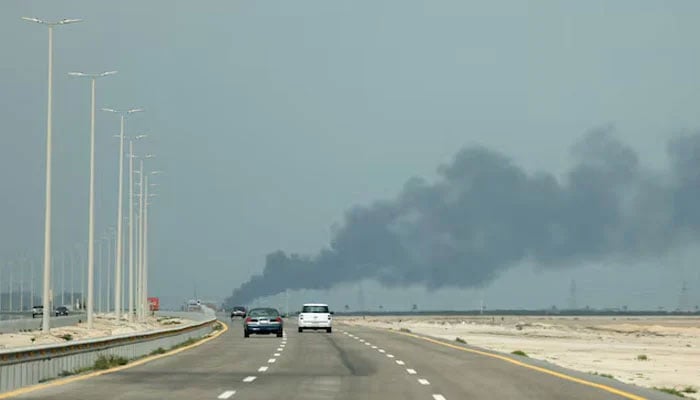
A drone strike caused a fire at a nuclear power plant in the United Arab Emirates, officials in Abu Dhabi said on Sunday, at a time when progress appears to have stalled in efforts to end the US-Israeli war with Iran and restart shipping in the Gulf.
Emirati officials said they were investigating the source of the strike and that the UAE had the full right to respond to such “terrorist attacks”. The UAE has previously accused Iran of attacking its energy targets in what it has called an escalation of the conflict in the region.
The drone hit an electrical generator outside the inner perimeter of the Barakah Nuclear Power Plant, the Abu Dhabi Media Office said. Radiological safety levels were unaffected and there were no injuries, it said.
The UAE nuclear regulator said there was no radioactive leak or risk to the public following the Barakah incident.
The International Atomic Energy Agency said emergency diesel generators were providing power to the plant’s “unit 3”, and called for “maximum military restraint” near any nuclear power plant, adding that it was following the situation closely.
The UAE defence ministry said two other drones had been “successfully” dealt with, and that the drones had been launched from the “western border”. It did not elaborate.
Saudi Arabia on Sunday said it intercepted three drones after they entered its territory from Iraqi airspace.
The kingdom’s defense ministry said it would take the necessary operational measures to respond to any attempt to violate its sovereignty and security.
Saudi Arabia’s Defence Ministry said it reserves the right to respond at the “appropriate time and place.”
During the war that began with US and Israeli strikes against Iran on February 28, Iran has repeatedly targeted the UAE and other Gulf states that host US military bases, hitting sites that include civilian and energy infrastructure.
Iran stepped up such attacks on the UAE earlier this month after US President Donald Trump announced a naval mission to try to open the Strait of Hormuz, which Trump suspended after 48 hours.
More than five weeks after a tenuous ceasefire in the conflict took effect, US and Iranian demands remain far apart despite diplomatic efforts to end the war and reopen the strait, the world’s most important shipping route for oil and gas.
The disruption to shipping through the Strait of Hormuz has caused the biggest oil supply crisis in history, pushing up prices. The US has imposed its own blockade of Iranian ports, and said that as of Sunday it had redirected 81 commercial vessels and disabled four vessels to ensure compliance.
Ebrahim Azizi, who heads the Iranian parliament’s national security committee, said on Saturday that Tehran had prepared a mechanism to manage traffic through the strait along a designated route that would be unveiled soon.