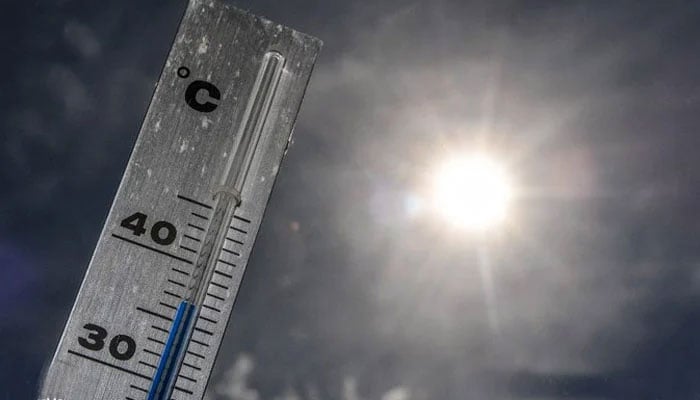
Islamabad : The National Disaster Management Authority (NDMA) has cautioned that temperatures are set to rise across much of the country from May 18, even as several regions are likely to receive scattered rain, thunderstorms and windstorms in the coming days.
In a weather advisory, the NDMA’s National Emergency Operation Centre (NEOC) said parts of Punjab could witness scattered rainfall, thunderstorms, windstorms and isolated hailstorms between May 19 and 22.
Areas likely to be affected include Rawalpindi, Islamabad, Murree, Attock, Chakwal, Gujranwala, Multan, Sahiwal, Okara, Sialkot, Kasur and Lahore, along with adjoining localities.
The authority said temperatures in Punjab are expected to continue climbing until May 23.
According to the advisory, Sindh is likely to remain mostly hot and dry from May 18 to 23, with temperatures forecast to rise steadily across the province.
In Khyber Pakhtunkhwa, isolated rainfall, thunderstorms, windstorms and hailstorms are expected in Chitral, Dir, Mingora, Batkhela, Thal, Karak, Bannu, Mansehra, Abbottabad, Swat, Peshawar and Landi Kotal, as well as nearby areas. The NDMA said temperatures in the province are also likely to increase gradually.
For Balochistan, it forecast scattered rain, thunderstorms, windstorms and isolated hailstorms from May 19 to 22 in Quetta, Zhob, Ziarat, Chaman and Khuzdar, along with adjoining areas.
The province is otherwise expected to remain mainly hot and dry, with temperatures continuing to rise during the period, the advisory said.
In Gilgit-Baltistan and Azad Jammu and Kashmir, isolated rain and storm activity is expected in Gilgit, Skardu, Hunza, Ghizer, Diamer, Astore, Neelum Valley, Muzaffarabad, Poonch, Bhimber, Kotli, Bagh, Garhi Duppatta and Kahuta, including surrounding areas.
The NDMA said temperatures in these northern regions are also expected to trend upward in the coming days. The advisory pointed to a mixed weather pattern across the country, with intermittent rain and storm activity likely in some areas despite an overall rise in temperatures nationwide.