My father was born in Bombay (now Mumbai) in 1932. He spent his youth there as a young left-wing activist, in a city that was then one of the great centres of working-class politics, trade-union struggles, progressive writing and anti-colonial ferment. He died in Karachi in 2024 at the age of 92.
One of his last wishes was simple and impossible: to travel once more to his native city without a visa. My mother was born in Hyderabad Deccan in 1938, under the Nizam of Hyderabad. She is 88 now and still recalls the echoes of the Telangana movement, when anti-feudal activists challenged the Nizam’s order and gave the poor a language of resistance. For people of my generation, India is not merely a neighbouring state. It is memory, loss, literature, family, ideology and unfinished history. That is why India’s latest state elections deserve attention in Pakistan beyond the usual obsession with Modi, Hindu nationalism and military rivalry.
These elections have rearranged the political map, weakened some familiar opposition certainties and reminded South Asia that democracy, even when strained, still has the capacity to surprise. The results from West Bengal, Tamil Nadu, Kerala, Assam and Puducherry, together with the BJP’s earlier return to power in Delhi after 27 years, suggest a country moving in several directions at once. Narendra Modi’s BJP is stronger than it looked after the 2024 general election, Congress has found relief but not revival, regional parties have been humbled and the left has been forced to confront a question it has postponed for too long.
How does one speak to the poor without sounding like yesterday’s sermon? The most dramatic result came from West Bengal. For decades, Bengal was treated as a difficult frontier for the BJP. First, the communists ruled it, then Mamata Banerjee made it her fortress. The BJP has now broken through that wall. Its victory is a symbolic conquest in a region with a strong linguistic, cultural and secular self-image. For Modi and Amit Shah, Bengal proves that Hindutva can travel beyond the Hindi belt when mixed with welfare promises, caste arithmetic, organisational patience and a language of order against alleged lawlessness.
The party’s decision to name Suvendu Adhikari as chief minister gives the victory a local face, which is precisely what the BJP often does well: it centralises authority but regionalises presentation. Mamata Banerjee’s defeat is equally significant. She had long presented herself as the fiercest anti-BJP fighter in India. Her fall weakens the emotional centre of the opposition. It also shows the limits of personality-driven resistance. Charisma can defeat a wave once or twice, but it cannot substitute for institutional renewal. Her complaint that the election was stolen may resonate with her supporters, particularly in a climate of disputed voter rolls and communal suspicion, but the larger lesson is harsher.
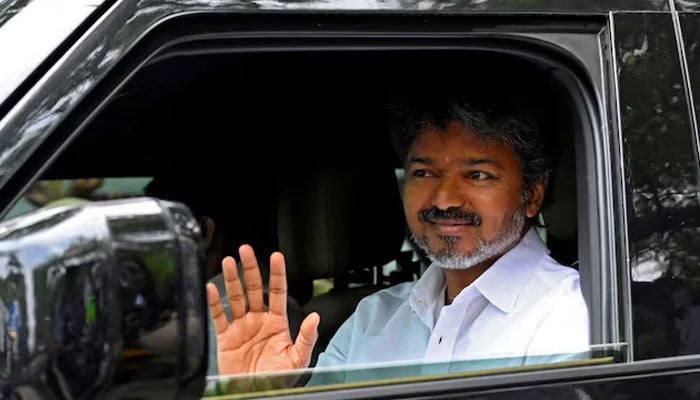
A party that grows around one leader eventually struggles to hear what voters are saying beneath the noise of loyalty. Tamil Nadu delivered the other shock. M K Stalin’s DMK, heir to one of India’s most sophisticated ideological traditions, was pushed aside by C Joseph Vijay’s Tamilaga Vettri Kazhagam. Vijay’s rise should not be dismissed as merely cinematic. Tamil politics has long blurred the line between screen and stage. Yet this result suggests something more than celebrity appeal. A younger electorate, impatient with old Dravidian rivalries, appears to have responded to a promise of employment, dignity and cleaner administration.
Vijay’s need for support from Congress and communist parties may moderate him, but it also shows that even a new face must work within old arithmetic. For progressive politics, Tamil Nadu is both a warning and an opportunity. The Dravidian movement once combined social justice, linguistic pride, rationalism and welfare. Over time, many such movements become managerial machines. They still speak the language of justice, but voters begin to hear entitlement. Vijay has entered through the gap between memory and performance.
The left and progressive groups should note this carefully. People do not abandon progressive language because they suddenly become reactionary. Often, they abandon it when those who speak it appear comfortable, dynastic or distant. Kerala offers Congress its consolation. The Congress-led United Democratic Front defeated the Left Democratic Front and chose V D Satheesan as chief minister. This is a major gain for a party that has been reduced to a supporting actor in much of India. Yet Kerala is also a reminder of the limits of Congress revival. The state has a long tradition of alternating power.
The Congress victory there does not automatically mean that the party has rediscovered a national message. It has won a state where institutions, literacy, welfare politics and coalition habits remain strong. That is important, but not enough to rebuild national opposition politics. The defeat of India’s last communist-led state government is more troubling for the left. Kerala’s left has achievements that South Asian progressives rightly admire: public health, education, decentralisation and social welfare. But achievement can harden into complacency. A left government that cannot renew its leadership, address youth aspirations, respond to corruption charges or speak to new forms of work will eventually sound like an old bureaucracy defending its pension.
The communist parties still have cadres and seriousness. What they lack is imagination equal to the age of platform work, artificial intelligence, ecological danger and insecure, educated youth. Assam and Puducherry complete the BJP’s consolidation. Assam confirms the party’s strength in the north-east, where nationalism, migration anxieties, welfare delivery and regional alliances have been woven into a durable formula. Puducherry is smaller, but symbolically useful. The BJP can now claim a broader geographic footprint and a post-2024 recovery. The national election had dented its aura by denying it a majority of its own. These state results restore momentum. The opposition can no longer comfort itself with the thought that Modi has peaked.
Delhi had already shown the same pattern in miniature. Earlier, the BJP defeated the AAP after 27 years, while the Congress failed to win seats but damaged the AAP in enough constituencies to matter. That election exposed a central weakness of the opposition INDIA alliance: it is more a defensive arrangement than a shared political project. Anti-BJP votes do not automatically add up. They require discipline, generosity and a common minimum programme that voters can understand. Without that, the BJP benefits from every quarrel among its rivals.
The larger Indian picture is therefore paradoxical. The BJP is dominant but not invincible. Congress is alive but not yet convincing. Regional parties remain powerful but vulnerable. The left is morally relevant but electorally diminished. New populist entrants can upset old certainties. Voters are willing to punish incumbents, reward welfare and try unfamiliar options. They may accept majoritarian politics, but they still demand jobs, services and visible leadership. Indian democracy is not healthy in any simple sense. Institutions are under pressure, minorities feel vulnerable and money power is immense. Yet the voter has not become passive.
For me, the decline of the Indian left carries a personal sadness. The Bombay of my father’s youth and the Hyderabad Deccan of my mother’s childhood were not abstract places on a political map. They were part of a wider South Asian world in which peasants, workers, writers, students and anti-feudal activists imagined justice beyond borders. Partition broke many lives, but it did not erase that shared vocabulary. Today, when the left weakens in India, Pakistan too loses something. We lose a mirror in which our own failures become clearer. Pakistan should therefore study these elections without envy or smugness.
The most significant lesson is for the establishment. Managed politics produces short-term obedience and long-term decay. India’s ruling party has used state power aggressively, but it still must face voters in competitive arenas. Pakistan’s establishment has repeatedly tried to design outcomes before citizens can speak. This has weakened parties, corrupted institutions and produced public cynicism. If those who claim to guard the state keep treating the electorate as a problem, they should not be surprised when the state loses legitimacy.
The writer is dean of the faculty of liberal arts at a private university in Karachi. He tweets/posts @NaazirMahmood and can be reached at: [email protected]