ISLAMABAD: Pakistan’s latest review under the International Monetary Fund’s Extended Fund Facility (EFF) reveals an economy that has regained short-term macroeconomic stability but remains trapped in a deeply fragile and politically combustible energy structure, with the IMF flagging the alarmingly rapid rise in gas-sector circular debt as one of the country’s most serious emerging fiscal threats.
While the power sector is showing measurable operational improvement after years of chronic dysfunction, gas-sector circular debt surged to Rs3.4 trillion by December 2025 — equivalent to 2.7 per cent of GDP — exposing deep structural weaknesses that tariff hikes alone are failing to resolve.
The IMF’s assessment presents two sharply contrasting trajectories inside Pakistan’s energy economy. On the one side, the electricity sector is showing signs of operational stabilisation after years of mounting circular debt and governance failures. On the other, the gas sector is sliding deeper into crisis, weighed down by expensive LNG import contracts, weak domestic demand, financing costs, and policy contradictions that continue compounding financial liabilities despite repeated tariff adjustments.
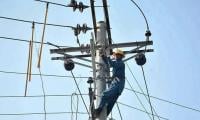
The Fund credited Pakistan for meeting its end-December 2025 power-sector circular debt flow target, largely due to stronger bill recoveries, improved management of distribution companies (DISCOs), and stricter enforcement against theft and losses. Industrial electricity consumption remained exceptionally strong through February 2026, averaging around 25 per cent year-on-year growth. According to the IMF, the increase was largely driven by industries transitioning away from captive power plants and reconnecting to the national grid, although stronger underlying industrial activity also appeared to play a role. Overall electricity consumption rose 9 per cent year-on-year during December-February, suggesting broader improvement in economic activity and greater reliance on grid-based power.
However, the IMF review makes clear that much of this stabilisation has come through aggressive pricing reforms and cost transfers rather than through deep structural reductions in system inefficiencies. In February 2026, the government reduced tariffs for industrial consumers by unwinding part of the cross-subsidy burden historically imposed on industry to support residential users. Policymakers argued that expensive electricity had undermined industrial competitiveness, weakened exports, and pushed manufacturers toward self-generation.
But while industry received relief, households absorbed much of the adjustment burden. To maintain overall system cost recovery, authorities increased fixed charges on residential consumers, including some previously protected categories. The IMF supported the industrial tariff rationalisation but cautioned that future reforms must preserve the progressive nature of electricity pricing and better protect vulnerable consumers. The warning reflects growing concern that repeated tariff increases may become socially and politically destabilising at a time when households are already struggling with inflation and elevated living costs. The review also underscored that Pakistan has slowed the accumulation of new power-sector circular debt but has not resolved the deeper liabilities embedded within the system. The government has now set a FY27 circular debt flow target of PKR 300 billion, down from PKR 400 billion in FY26, based on expectations of continued operational improvement. Lower projected debt accumulation has also allowed planned power subsidies to decline from 0.7 per cent to 0.6 per cent of GDP.
Yet the IMF stressed that major non-operational debt pressures remain unresolved, particularly delayed settlements involving Independent Power Producers (IPPs), including penalty payment arrears under previous contractual agreements. The electricity sector may now be more disciplined operationally, but it remains structurally burdened by expensive capacity payments, legacy contracts, transmission bottlenecks, technical losses, and debt servicing obligations accumulated over many years.
While the power sector is gradually stabilising, the IMF review paints a far more alarming picture of the gas sector. Gas-sector circular debt climbed to Rs3.4 trillion by December 2025 despite regular tariff adjustments intended to recover operational costs. According to the IMF, the debt stock continues expanding because financing costs and late-payment surcharges are compounding faster than operational corrections.
The gas sector’s crisis stems from a deeply contradictory structure. Pakistan continues to face periodic gas shortages and LNG shipment disruptions from the Gulf, yet simultaneously struggles with surplus RLNG volumes tied to expensive long-term import contracts signed during periods of much higher demand expectations. Demand patterns have shifted sharply over recent years. Power-sector gas consumption has weakened, captive power transition policies have reduced industrial gas dependence, and overall domestic consumption growth has remained sluggish. Even though industrial gas consumption rose 29 per cent year-on-year during the first half of FY27, overall demand remains well below the assumptions underpinning earlier LNG procurement decisions. As a result, Pakistan now faces the unusual situation of dealing simultaneously with supply insecurity and surplus contractual commitments.
The IMF acknowledged that authorities have continued timely tariff adjustments to prevent fresh accumulation of principal debt, but the report suggests that Pakistan’s gas crisis is no longer simply a pricing problem. Even if operational losses are contained, the existing circular debt stock has become self-expanding because financing charges attached to the debt continue generating new liabilities. This is one reason why the IMF increasingly views the gas sector as a systemic fiscal vulnerability rather than merely a utility-sector issue.
The government has taken several administrative measures that the IMF welcomed, though the Fund indicated these steps remain insufficient on their own. Authorities finalised an audited dataset of gas circular debt and committed to quarterly dissemination of debt figures to improve transparency. Islamabad also established a National Integrated Energy Plan Secretariat jointly overseen by the petroleum and power ministries to improve coordination between gas procurement, electricity planning, and energy demand forecasting.
The IMF described the initiative as a positive development because Pakistan’s energy policymaking has historically been fragmented, with gas and electricity decisions often made independently despite their deep financial interdependence. Ongoing efforts to reduce Unaccounted for Gas (UFG) — including theft, leakages, and technical losses — are also continuing. Still, the review makes clear that Pakistan has yet to develop a fully credible long-term restructuring plan for the gas sector’s growing liabilities.