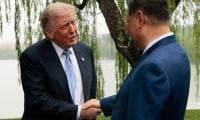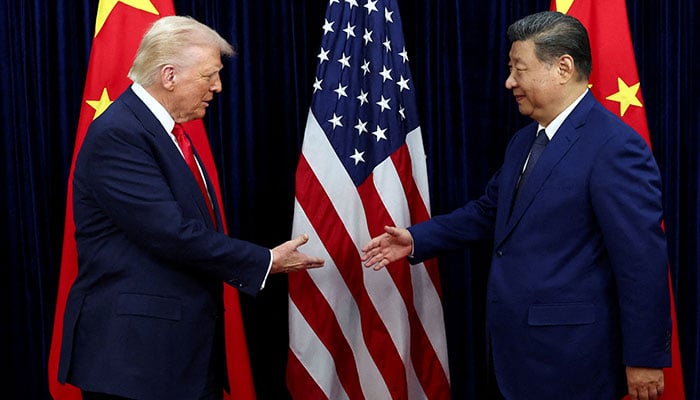
The world appears to be entering a period of profound geopolitical transition. US President Donald Trump’s just concluded visit to China and the carefully calibrated messaging that emerged from his meetings with Xi Jinping make one thing clear: the era of uncontested American dominance is fading, while a more complex and competitive global order is taking shape. For decades after the cold war, the US enjoyed unrivalled influence in international affairs. It shaped global institutions, dictated economic rules and projected military power with little meaningful resistance. But history rarely remains static. China’s extraordinary rise – economically, technologically and militarily – has fundamentally altered the balance of power. Beijing is no longer merely a manufacturing hub for the global economy; it is now a strategic actor capable of challenging Washington across multiple fronts. The language emerging from Beijing during Trump’s visit reflected this shift. China’s emphasis on ‘constructive strategic stability’ suggests a long-term approach aimed not at direct confrontation, but at managing competition while protecting its expanding interests – and this is China’s usual approach as well. The fact is that, unlike earlier decades, when Washington largely dictated the terms of engagement, the US must now negotiate with a rival that possesses both confidence and leverage. Even the tariff wars showed the world that China was neither willing nor compelled to simply yield to American pressure.
At the same time, recent global crises have exposed the weaknesses and contradictions of the old international order. The continuing devastation in the Gaza Strip, the inability of the international community to halt mass suffering and the broader regional escalation involving Iran and Israel have severely damaged the credibility of a system that long claimed to uphold international law and human rights. Many countries increasingly view global governance structures as selective in their application of justice and accountability. This disillusionment is accelerating the movement towards a multipolar world. China and Russia are already central players in this emerging landscape, while regional powers such as Saudi Arabia, Turkiye, Qatar and Pakistan are seeking greater strategic autonomy. Nations no longer wish to remain passive participants in a system dominated by a single power centre. Instead, they are exploring new alignments based on economic interests, regional security and political pragmatism.
Yet the transition to multipolarity carries dangers as well as opportunities. Competition among major powers can create instability, proxy conflicts and economic disruption, particularly when diplomacy gives way to coercion. The lesson of recent years should not be that one hegemon must simply be replaced by another, but that international relations require greater balance, restraint and respect for sovereignty. A stable world order cannot be built on unilateral wars, selective morality or economic intimidation. The US, despite its immense influence, must recognise that coercion alone is no longer sufficient in a world where power is increasingly dispersed. And it needs to also realise that China has arrived and is here to stay. Equally, rising powers must show that a multipolar order will be more just and responsible than the one now being challenged. Whether this emerging order produces cooperation or deeper fragmentation will depend on whether states choose dialogue over domination and mutual respect over endless confrontation.