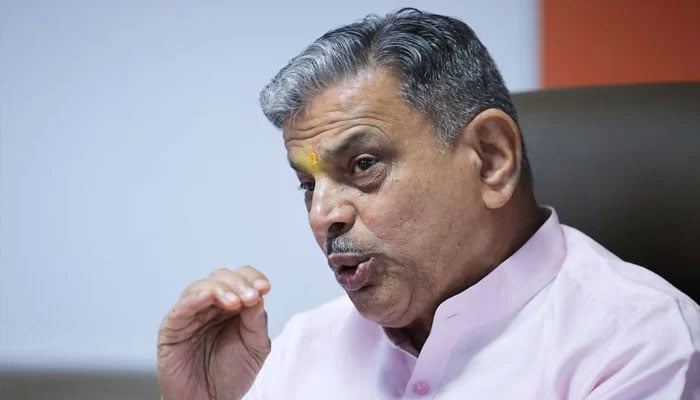
India’s political discourse on Pakistan has long been trapped in a cycle of hostility, hyper-nationalism and mutual recrimination. That is why recent statements by senior figures linked to the Indian establishment calling for dialogue with Pakistan deserve attention, even if they fall short of an official policy shift. When Rashtriya Swayamsevak Sangh (RSS) General Secretary Dattatreya Hosabale and former Indian army chief Manoj Mukund Naravane speak of maintaining diplomatic engagement and strengthening people-to-people contact, they are not speaking from the political margins. Their remarks carry weight because both represent institutions deeply influential in shaping India’s strategic and ideological outlook. For years, India has attempted to frame Pakistan internationally through the singular lens of terrorism while steadily shrinking diplomatic space for engagement. The suspension of dialogue, the downgrading of ties, the revocation of Article 370 in Indian Illegally Occupied Jammu and Kashmir and the increasingly militarised rhetoric emerging from New Delhi all reflected a policy rooted more in coercion than coexistence. Yet such an approach has not brought stability to South Asia but rather deepened mistrust between two nuclear-armed neighbours while inflaming regional insecurity.
Against this backdrop, even limited calls for dialogue matter. Reports of back-channel contacts between Pakistani and Indian officials, former diplomats and strategic experts suggest that, despite public hostility, both sides recognise the dangers of perpetual confrontation. Serious states do not entirely shut the door on communication, particularly in a volatile region where escalation can carry catastrophic consequences. Still, scepticism remains understandable. The statements did not come from Prime Minister Narendra Modi, Home Minister Amit Shah or External Affairs Minister Subrahmanyam Jaishankar. Nor has there been any indication of a substantive rethink in New Delhi’s policies towards Kashmir or regional security. Critics also point to India’s support for destabilising elements inside Pakistan and its aggressive regional posture as evidence that rhetoric alone cannot substitute for meaningful change. Yet perhaps the more worrying development is the reaction within India itself. That voices advocating dialogue can be branded ‘traitorous’ by opposition politicians reveals how toxic and polarised Indian politics has become. The reaction by Congress has been alarmingly jingoistic and anti-Pakistan.
Pakistan must approach these developments with realism rather than naive optimism. One statement does not erase years of hostility, nor does it guarantee a new beginning. But dialogue, however tentative, remains preferable to silence. South Asia cannot afford endless cycles of escalation fuelled by domestic political theatre on either side of the border. Ultimately, sustainable peace between Pakistan and India will require political courage, consistency and a willingness to move beyond the politics of perpetual enmity.