ISLAMABAD: The Federal Board of Revenue (FBR) will be empowered to scrutinise and investigate civil servants for possessing assets beyond legitimate means in case of filing a declaration in three consecutive years.
An Artificial Intelligence-based monitoring system will generate “red flag” alerts over an abnormal increase in wealth and asset holdings by the civil servants.
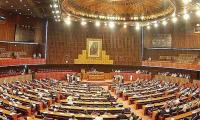
It was the crux of information shared by the Secretary Establishment Division and other senior officials while giving a briefing to the Senate Standing Committee on Finance and Revenues, which met under the chairmanship of Senator Saleem Mandviwalla here at the Parliament House on Thursday.
Federal Secretary Establishment Division Nabeel Awan informed the parliamentarians that from December 2026, assets and financial details of all government officers from Grade 17 to Grade 22 would be made publicly accessible through a digital declaration system being developed in consultation with the FBR.
Under the proposed mechanism, government officials would also be required to provide details of family assets and foreign visits. Senior FBR officials, including the chairman and member inland revenue, would have the powers to initiate inquiries where discrepancies or suspicious increases in assets were detected through AI-assisted scrutiny.
The Senate panel was told that it was the demand of International Monetary Fund (IMF) for filing of a declaration of assets by civilian officers and their families, but the government had opted for what it termed a “safe and balanced” approach.
“A digital form will be developed within the next one-and-a-half months through which details of government officers’ assets will be publicly available, like FBR asset declarations,” secretary Establishment Division told the committee.
Committee Chairman Saleem Mandviwalla observed that members of parliament already submit detailed financial declarations before the Election Commission of Pakistan. He also directed lawmakers to immediately inform the committee if they receive notices from the FBR.
The Senate Standing Committee on Finance and Revenues was also informed that the IMF had recommended sweeping restrictions on the Pakistan Sovereign Wealth Fund (PSWF), including a complete ban on borrowing, extending guarantees, mortgaging assets or lending money to public or private entities and individuals. The government has approached parliament for extensive amendments to the Pakistan Sovereign Wealth Fund law in line with international standards and IMF requirements. Officials said the amended law would clearly define the sovereign wealth fund as a state-owned enterprise whose role would remain limited to the management of state-owned assets and promotion of foreign investment.
Meanwhile, in a separate meeting, the National Assembly’s Standing Committee on Finance approved the Financial Institutions Amendment Bill 2026, under which banks would be allowed to take possession of mortgaged properties in cases of loan default.
The committee was informed that the banks would issue three notices to defaulters within 90 days before initiating action. The bill also bars borrowers from renting out properties financed through house loans to third parties.
Committee members expressed concern that the proposed legislation appeared to provide stronger protections to banks than to consumers. An amendment was introduced to allow the publication of names and addresses of mortgage defaulters in newspapers.
However, committee member Javed Hanif objected to the proposal, saying publication of names and addresses was against human dignity. Minister of State for Finance Bilal Azhar Kayani told the committee that banks would have to approach the government before taking possession of properties.