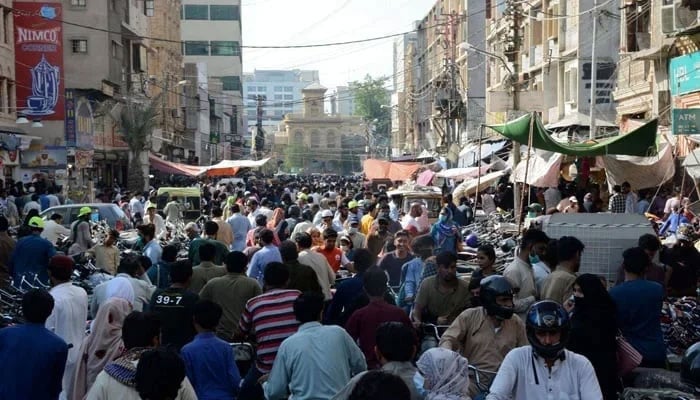
LAHORE: Health experts and policymakers Wednesday warned that Pakistan’s population could double from 250 million to 500 million within the next 25 years if rapid population growth was not effectively controlled, stressing that family planning was essential for ensuring a strong, safe and prosperous future.
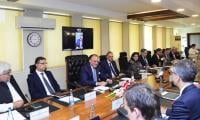
The views were expressed at a consultative workshop, organised by the Directorate General Population Welfare, Health & Population Department Punjab, in collaboration with Mir Khalil-ur-Rahman Foundation (MKRF), here.
Provincial Health and Population Welfare Minister Khawaja Imran Nazir was the chief guest at the event, which was also attended by MKRF Managing Director (MD) Shahrukh Hasan Khan, former federal minister and Coordinator to the Chief Minister on Population Dr Saira Afzal Tarar, Asma Naaz Abbasi, Parliamentary Secretary to Health and Population Department, Kanwal Liaqat, Parliamentary Secretary of Environment Department, Uzma Kardar, Coordinator for Polio, Rushda Lodhi, Parliamentary Secretary for Specialized Health, Zakia Shahnawaz Khan, Motia Begum, Malik Khalid Khokhar, Malik Shahbaz Khokhar, Nargis Faiz Malik, Sultan Ahmad Bajwa, along with more than 40 parliamentarians and renowned media personality Muneeza Hashmi.
Addressing the workshop, Khawaja Imran Nazir said effective implementation of family planning policies was indispensable for improving maternal and child health and ensuring sustainable development. He said collective efforts were needed to maintain balance between population growth and available resources.
He warned that poverty, unemployment, climate change, lack of education and inadequate healthcare facilities were becoming more severe due to rapid population growth. The minister said the Punjab government was pursuing the vision of ‘Balanced Family, Prosperous Pakistan’ and implementing Chief Minister Maryam Nawaz Sharif’s ‘Healthy Punjab’ initiative.
He added that awareness programmes on family planning had been strengthened with the support of development partners, while ensuring quality healthcare and awareness for women remained a top government priority.
MKRF MD Shahrukh Hasan delivered an insightful presentation on the ‘Waqfa’ campaign, focusing on promotion of family planning and healthy family practices through strategic media engagement.
He highlighted the collaborative efforts of the MKRF in partnership with Geo and Jang Group in creating widespread public awareness regarding the importance of birth spacing, maternal and child health, and responsible parenthood. The presentation highlighted the role of mass media in shaping positive social behaviours and addressing misconceptions surrounding family planning in Pakistan.
He shared the campaign’s communication strategies, outreach activities, and success stories that have helped engage diverse segments of society through television, print, and digital platforms. He stressed that the ‘Waqfa’ campaign is not only an awareness initiative but also a social movement aimed at encouraging informed decision-making for healthier and more prosperous families.
He said the Foundation and the Jang/Geo Group had previously played an active role in public awareness campaigns on peace (Aman Ki Asha), polio eradication, rehabilitation of displaced persons and promotion of education.
Coordinator to the Chief Minister on Population Saira Afzal Tarar said challenges such as health, education and population growth were major obstacles to development. She said during her tenure as federal health minister, significant efforts were made to eradicate polio and strengthen routine immunisation programmes, but social indicators in the country remained alarming.
She noted that while most countries in the world had eliminated polio, Pakistan and Afghanistan were still among the few nations where the disease persisted. According to her, rapid population growth, lack of awareness and widespread social and religious misconceptions were among the key reasons behind the continued presence of the virus.
Saira Tarar acknowledged that several social challenges had emerged in Pakistan over the past decades, particularly after the Afghan war, where issues related to health and family planning were often given religious and cultural dimensions, making open discussion difficult.
Recalling past public awareness campaigns such as ‘Bachay Do He Achhay’ (Two Children Enough), she said such initiatives had once helped create awareness among the public, but later propaganda negatively affected those efforts. She stressed the need for a serious and realistic national dialogue on issues related to population, health and education.
Director Health and Population Department Capt (retd) Usman Ali Khan said the government was taking large-scale measures to address issues related to population growth, maternal and child health and family planning. He said these challenges were not confined to the health sector alone but were also linked to education, the economy, equitable distribution of resources and overall social development.
Greenstar Chief Executive Officer (CEO) Dr Syed Aziz-ur-Rab stressed that there should be at least a three-year gap between births for the health and wellbeing of mothers and children. He urged parliamentarians, ministers, media and all segments of society to play an effective role in controlling population growth and reducing maternal and child mortality. He described population management as a difficult and long-term struggle that could not be accomplished by a single individual alone.
He stressed that all segments of society, especially the media, youth and social leaders, would have to play a collective role in spreading awareness and delivering accurate information to the public.
Dr Aziz said that despite limited resources, providing quality healthcare, education and basic facilities to the public remained a shared responsibility of both the government and society, but rapid population growth had become a major obstacle.
Expressing concern over maternal and child health conditions, he said malnutrition, particularly calcium and protein deficiency, was causing severe complications during childbirth, including excessive bleeding that often resulted in maternal deaths.
He warned that poor maternal health also increased the risk of mental and physical weakness among newborns, while thousands of children in Pakistan died each year before reaching the age of five due to diarrhoea and waterborne diseases.
According to officials, Punjab’s population growth rate currently stands at 3.82 per cent. The use of modern family planning methods is recorded at 29.5 per cent, while 8.8 per cent of couples rely on traditional methods. Nearly 21 per cent of individuals or couples willing to adopt family planning still lack access to medicines and services.
Officials further said that around 15 per cent of married couples in Punjab wished to maintain birth spacing but were unable to do so due to the shortage of doctors, staff and healthcare facilities.
To address these challenges, the Punjab government has merged the Population Welfare Department with the Primary Health Department to establish a unified “Health and Population Department” aimed at expanding service delivery points and improving public access to healthcare and family planning services.
Authorities said sustainable development was directly linked to balanced population growth, adding that equitable resource distribution, healthcare planning, education and workforce management could only be achieved through effective population control.
Under the newly launched ‘Dastak’ programme, health workers are visiting homes to assess maternal and child health, provide medical guidance and offer healthcare facilities where required.
Experts said family planning was not merely about controlling births but also about improving maternal and child health. They warned that lack of proper birth spacing often led to malnutrition and medical complications among women, contributing to rising maternal and infant mortality.
Punjab’s child mortality rate has been recorded at 45 deaths per 1,000 births, with maternal malnutrition and inadequate healthcare facilities identified as major contributing factors.
At the conclusion of the ceremony, honorary shields were distributed among the participants.