ISLAMABAD: Health authorities on Wednesday formally launched the Prime Minister’s National Programme for the Elimination of Hepatitis C from the Islamabad Capital Territory, aiming to screen 1.6 million people in the federal capital within six months and eventually test more than 164 million people across the country in phases as part of an ambitious drive to eliminate hepatitis C by 2030.
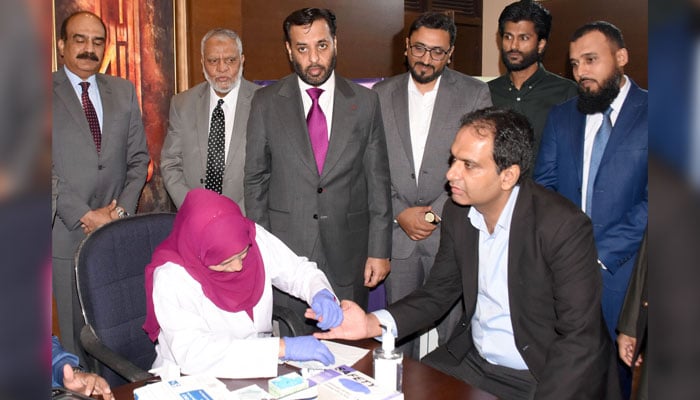
Federal Health Minister Syed Mustafa Kamal and World Health Organisation (WHO) Representative in Pakistan Dr Luo Dapeng jointly launched the initiative in Islamabad, describing it as a major public health intervention aimed at tackling one of Pakistan’s deadliest but curable diseases.
Pakistan currently carries the world’s heaviest hepatitis C burden, with nearly 10 million people estimated to be living with the infection out of around 50 million cases globally. Health authorities said around 110,000 new infections occur annually in the country, largely due to unsafe medical injections, unsafe blood transfusions and injection drug use.
Speaking at the launch ceremony, Mustafa Kamal termed the initiative a “historic and revolutionary” step for Pakistan’s healthcare system, adding the programme had finally materialised after nearly a decade of efforts.
“Elimination of hepatitis C in Pakistan is not optional. We must do it. Launching this programme in Islamabad is a paradigm shift. Health is a national security issue and an economic issue,” the minister said. “The country needs to shift from a ‘sick-care’ model to a preventive healthcare system,” he added.
The minister warned that nearly 80 per cent of hepatitis C patients in Pakistan remained unaware of their infection and continued spreading the disease unknowingly. He said hepatitis C could ultimately lead to liver failure and liver cancer if left untreated.
Under the programme, hepatitis C screening tests and complete treatment courses lasting three to six months would be provided free of cost. Kamal said screening, which otherwise costs around Rs7,000, would be conducted using integration with the National Database and Registration Authority to maximise outreach and transparency.
Initially, 12 hepatitis C screening counters have been established at federal hospitals in Islamabad for diagnosis and facilitation of patients, while the initiative would gradually be expanded nationwide.
The programme, being implemented under the Ministry of National Health Services with technical support from the WHO, is expected to generate major economic benefits in addition to reducing deaths and infections.
According to estimates shared at the launch cerempny, the initiative could save around Rs1.3 billion in treatment costs and more than Rs2 billion in hospitalisation expenses over the next five years, with total savings reaching approximately Rs3.3 billion. By 2030, authorities estimate the programme could generate a return of US$8 for every US$1 invested.
WHO Representative Dr Dapeng said the programme could help avert around 850,000 deaths and prevent 1.1 million new hepatitis C infections by 2050 if implemented effectively.
“The Prime Minister’s Programme is a major step towards achieving the 2030 global goal of eliminating hepatitis C as a public health threat,” he said, stressing that prevention through safe injections, safe blood transfusions, harm reduction measures and prevention of mother-to-child transmission remained critical for controlling the disease.
Drawing inspiration from Egypt, which successfully eliminated hepatitis C through nationwide mass screening campaigns, Kamal said Pakistan could achieve similar success through collective effort, political commitment and public cooperation.
“If Egypt can eliminate hepatitis C, why can’t Pakistan?” he asked, urging citizens to undergo timely screening before the disease reaches irreversible stages.