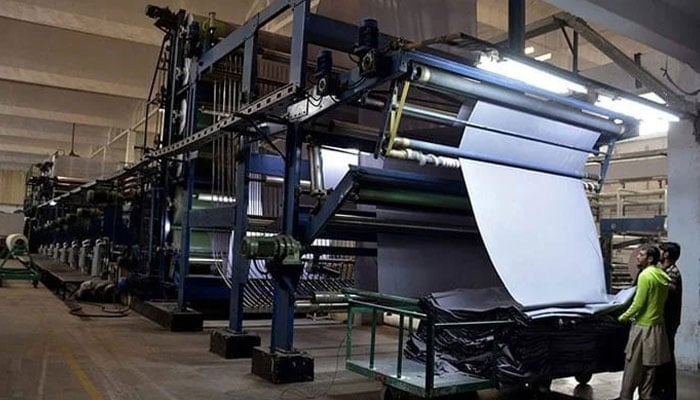
ISLAMABAD: The All Pakistan Textile Mills Association (Aptma) has strongly opposed the Punjab Infrastructure Development Cess (Amendment) Bill 2026, warning that the newly imposed levy could trigger widespread industrial decline, damage exports and accelerate deindustrialisation in the country’s largest industrial province.
In a detailed letter addressed to Punjab Chief Minister Maryam Nawaz Sharif, Aptma Chairperson Kamran Arshad described the legislation, passed on May 6, as a deeply troubling development that has sent “a wave of shock, dismay and distress” across Punjab’s business and industrial community.
The bill’s 0.9 percent cess on the total value of all goods manufactured, produced, consumed, imported into Punjab, or exported out of Punjab has sparked controversy. According to Aptma, the levy would significantly raise operational costs for industries already struggling under high energy tariffs, inflationary pressures, shrinking global demand and an increasingly difficult business environment.
Aptma warned that exporters operate in highly competitive international markets where prices are dictated by global buyers and profit margins remain extremely thin. Under such conditions, manufacturers would be unable to pass the additional cost burden onto foreign customers.
The association also raised serious concerns over what it termed “unbridled enforcement powers” granted to cess officers under the amended law. The bill reportedly authorises the establishment of pickets, check posts, monitoring stations, electronic surveillance systems and the deployment of enforcement personnel with powers to inspect and monitor goods movement.
Aptma warned that these provisions could create an atmosphere of fear and uncertainty within the business community, while also exposing industrialists, transporters, and traders to harassment, intimidation, and bureaucratic overreach.
Particular concern was expressed over provisions allowing penalties of up to 10 times the amount of cess, which industry representatives say could become a source of coercive enforcement and operational disruption.
Business leaders further argued that the legislation places Punjab-based industries at a structural disadvantage compared to businesses operating in Sindh. Since the majority of Pakistan’s imports and exports move through Karachi ports, industries in Punjab would effectively face a dual burden — paying Punjab cess as well as existing levies in Sindh.
In contrast, Sindh-based industries would generally pay the cess only once, creating what APTMA described as an “unequal cost structure” that unfairly penalises manufacturers operating in Punjab.
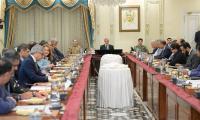
Separately, Finance Minister Senator Muhammad Aurangzeb held talks with representatives of textile and apparel sector, who presented budget proposals for 2026-27 aimed at improving export competitiveness and industrial growth.
The delegation, comprising representatives from leading industry associations, chambers and exporters, called for taxation reforms, lower energy costs, export facilitation measures and improved liquidity support for businesses.
Industry representatives said the textile sector remained a key contributor to exports, employment and foreign exchange earnings, and stressed the need for a stable and competitive policy environment amid rising regional competition.
The proposals included measures to reduce production costs, improve refund mechanisms, encourage technological upgrades and ease compliance requirements for exporters. The delegation also highlighted the importance of supporting value-added manufacturing, small and medium-sized enterprises and industrial diversification to strengthen Pakistan’s position in global supply chains.
Aurangzeb said the government would continue consultations with the business community through the finance ministry’s Tax Policy Office to support more consistent and transparent economic policymaking.
He also discussed the government’s efforts to expand digital monitoring systems across key sectors to improve transparency, documentation and tax compliance. The finance minister invited the textile sector to cooperate in the gradual implementation of similar digital monitoring mechanisms within the industry. Representatives of the sector agreed to continue discussions with the government and the Federal Board of Revenue on the matter.
Aurangzeb said the recommendations presented by the industry would be reviewed as part of the budget formulation process.The meeting was attended by representatives of major textile associations, including APTMA, PTEA, PHMA, PRGMEA and APBUMA.