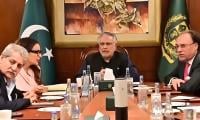
Pakistan has gone to the IMF 25 times. Twenty-five programmes since 1950. Twenty-five prescriptions. Twenty-five promises of stability, reform and recovery. Yet the patient keeps returning to the same doctor, with the same illness, carrying a larger debt burden, a weaker industrial base, higher energy prices and a more exhausted middle class.
In 1950, Pakistan’s official debt number was Rs2.3 billion. Today, total debt and liabilities stand at Rs97 trillion. Pakistan began with billions. It now borrows in trillions. In 1950, per capita debt was Rs63. Today, it is Rs375,000.
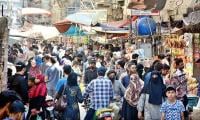
In 1950, electricity was 1.8 annas per kWh. Today, it is Rs50 per kWh. In 1950, the middle class was poor but lightly billed. Today, the middle class is more educated, more urban, more connected — but heavily billed, heavily taxed and heavily indebted.
Cold truth: the IMF has not cured Pakistan. Pakistan has learned to live on the IMF. Red alert: If a medicine must be repeated 25 times, the doctor must also be examined. Here is where the IMF is going wrong — drastically wrong. The IMF keeps mistaking Pakistan’s symptoms for Pakistan’s disease. The IMF demands higher taxes, higher tariffs and tighter budgets.
Lo and behold, Pakistan’s real disease is not low taxation. Pakistan’s real disease is a state that spends without productivity. Pakistan’s real disease is a state that borrows without reform. Pakistan’s real disease is a state that prices energy without efficiency. And Pakistan’s real disease is a state that protects privilege while taxing survival.
Colder truth: the IMF is treating the fever. The infection is the state itself. The reality: after 25 IMF arrangements, Pakistan is not short of IMF prescriptions. Pakistan is short of transformation.
Pakistan must learn from economic history: More taxes will not save Pakistan. More petroleum levies will not produce growth. More withholding taxes will not build industry. More electricity surcharges will not create exports.
Remember: taxing survival is not reform. It is extraction. Now what is the way out? Pakistan must stop outsourcing reform to the IMF. Pakistan must build a domestic reform contract.
The most important: Pakistan must impose expenditure reform before revenue reform. This means a ban on unfunded political schemes. This means a hard ceiling on federal current expenditure. This means a freeze on non-essential hiring. This means a sunset review of subsidies. This means a pension reform plan. This means a forensic review of loss-making SOEs. This means a real audit of government vehicles, perks, plots, procurement and privileges.
The IMF must learn this: if the patient returns 25 times, the prescription is not working. If every programme ends in another programme, the programme has become part of the problem. If stability expires every three years, it was never stability. It was sedation.
Pakistan must learn this: if reform must be imported 25 times, the state has stopped reforming itself. If the patient survives only on oxygen, someone must ask why the lungs are failing. If the IMF has become Pakistan’s recurring hospital, Islamabad must examine its own lifestyle.
The hard truth is obvious: if the state needs a lender of last resort every few years, the state has become a borrower of first resort. If the treatment is always austerity for citizens and protection for privilege, the treatment is not neutral. If the IMF keeps treating the fever, and Islamabad keeps feeding the infection, the patient will keep collapsing. Bottom line: The IMF can keep on prescribing. Only Pakistan can reform.
The writer is an Islamabad-based columnist.