LAHORE: For decades, Pakistan’s middle class, largely comprising educated professionals, senior managers, consultants, bureaucrats and service-sector experts, remained an integral beneficiary of an unequal economic structure but no more.
Over the years, the professional middle class also became a silent partner in a system built on privilege, weak accountability, selective taxation and state patronage. Many enjoyed subsidised lifestyles, untaxed perks, speculative gains in real estate and opportunities created by a poorly documented economy.
Today, however, the same middle class finds itself under unprecedented pressure. As the state struggles to raise revenue under IMF-driven fiscal tightening, salaried professionals and documented individuals have become the easiest targets for taxation. In many cases, educated salaried groups now pay tax rates comparable to, or even higher than, segments of the corporate sector, while large sections of wholesale trade, agriculture, retail, and informal businesses continue to operate outside the effective tax net.
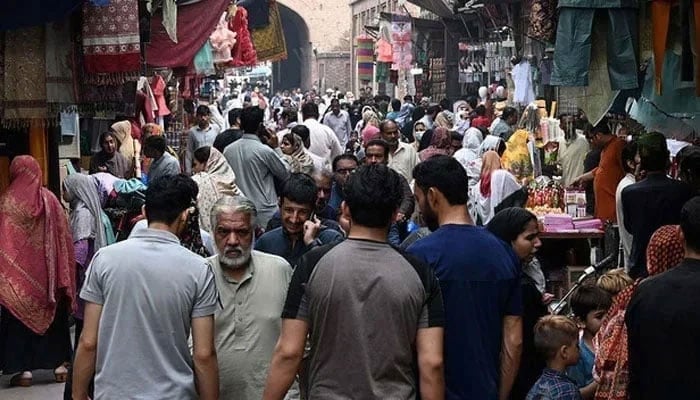
This has created a deep sense of frustration within urban middle-income households. The old alliance between the powerful business-political nexus and the professional middle class has weakened. Those who once enjoyed influence through connections, institutional power or economic stability are steadily losing ground. The ladder of upward mobility that once allowed middle-class families to improve their lives through education and professional competence is becoming increasingly fragile.
Young professionals entering the workforce today face stagnant salaries, shrinking job opportunities, rising taxation and rapidly increasing living costs. Many families that once considered themselves financially secure are now struggling merely to maintain basic standards of living. Lifestyle downgrading has become common: families are cutting educational expenses, postponing healthcare, reducing recreational spending, and limiting energy consumption to survive mounting inflation and utility costs.
Pakistan’s broader economic crisis, which sharply intensified over the last decade, has pushed the masses into severe distress. Despite periodic claims of macroeconomic stabilisation and improvements in official indicators, ordinary citizens have seen little tangible benefit. Whatever gains were recorded in the documented economy largely failed to trickle down to the wider population. Instead, inflation, currency depreciation, unemployment and declining purchasing power have eroded household incomes across all income groups.
The regional geopolitical environment has further worsened the situation. The economic fallout of the US-Iran confrontation and instability in the Middle East has directly affected Pakistan through higher oil prices, rising import costs and increased external vulnerabilities. Energy-dependent economies like Pakistan suffer immediately when geopolitical tensions disrupt global fuel markets.
As a result, Pakistan today sells some of the most expensive electricity and petroleum products in the region despite having significantly lower average incomes than many neighboring countries. High fuel prices increase transportation costs, raise food inflation and reduce industrial competitiveness. Expensive electricity has crippled manufacturing, weakened exports and made survival difficult for both households and businesses.
Despite imposing such heavy burdens on consumers and documented taxpayers, the state still struggles to meet its fiscal and financial targets. This exposes the structural weakness of Pakistan’s economic model. The country continues to rely excessively on taxing the visible and compliant sectors while politically connected and undocumented segments remain largely protected.
The deeper problem is the persistence of an extractive governance structure. Successive governments have preferred short-term revenue extraction over long-term structural reform. Instead of broadening the tax base, improving productivity, reducing leakages, formalising undocumented sectors, and promoting competitive industry, policymakers repeatedly resort to indirect taxation, utility price hikes, and borrowing.
As a consequence we have a weakened middle class with reduced economic dynamism, lower consumption and accelerated brain drain. Societies cannot progress sustainably when educated and productive segments lose hope in upward mobility.
Pakistan urgently needs a new economic compact based on fairness, productivity and documentation. Taxation must become equitable across all sectors. Untaxed wealth and protected economic cartels must be brought into the formal system. Energy pricing requires serious structural correction. Productive sectors must receive incentives instead of punishment. Most importantly, governance must shift from protecting privileged groups towards enabling broad-based economic participation.