ISLAMABAD: Citing rising threats to regional fuel supply routes from the escalating US-Iran conflict, the Pakistan government on Monday pushed to break a years-long stalemate over refinery upgrades, warning that the country’s dependence on imported fuel and external supply chains has become a major energy security vulnerability.
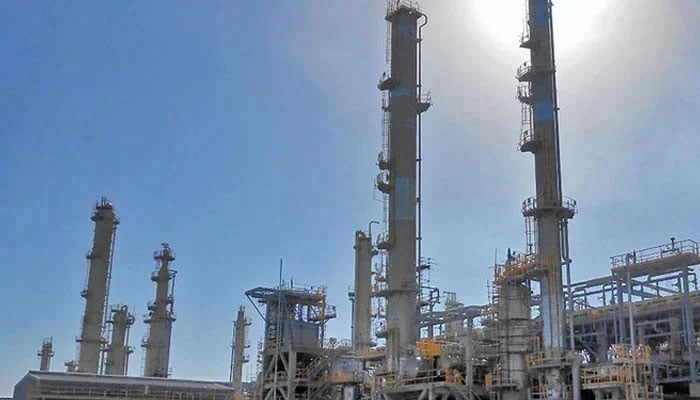
Petroleum Minister Ali Pervaiz Malik said domestic refineries were “critical national assets” and stressed the need to rapidly expand local refining capability to ensure uninterrupted fuel supplies amid growing regional uncertainty.
Malik convened an emergency high-level meeting on Monday here with the chief executives of Pakistan’s five major oil refineries, delivering this message.
“The ongoing regional situation has further highlighted the urgency of reducing reliance on external supply chains and ensuring maximum domestic refining flexibility and capability,” Malik said.
He said that despite the government having issued the Brownfield Upgradation Refinery Policy in 2023, implementation has remained almost entirely stalled for nearly three years. He observed that progress had been blocked by persistent bottlenecks and stressed that removing those obstacles was now critical.
The non-exemption of sales tax on petroleum products, which refinery CEOs identified as the single most factor undermining the commercial viability of upgradation investments. Without resolution, executives warned, long-term private investment in Pakistan’s refining infrastructure will remain out of reach.
The intensifying US-Iran standoff has sent tremors through regional energy markets, disrupting established supply routes and raising the spectre of prolonged fuel import uncertainty for countries, like Pakistan which remain heavily reliant on external petroleum sources.
Pakistan’s inability to produce Euro V-compliant fuels, the cleaner, more efficient fuel standard now widely adopted internationally.Current domestic refineries, operating on aging infrastructure, cannot meet that benchmark. The consequences are threefold, Pakistani consumers and industries burn dirtier fuel, vehicle engines suffer reduced performance and longevity, and the country’s carbon emissions remain unnecessarily elevated.
The CEOs of Pakistan Refinery Limited, Cynergico and National Refinery Limited; managing director of Pak-Arab Refinery Company (Parco); and EO of Attock Refinery Limited attended the meeting.