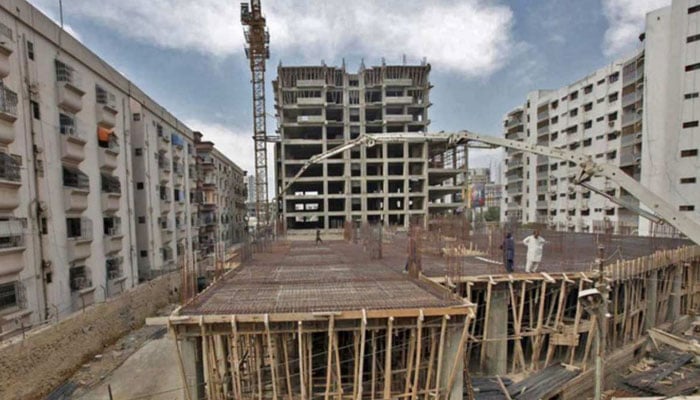
KARACHI: The real-estate sector of Pakistan has emerged as a surprising and unpredictable beneficiary of the US-Israeli war on Iran and the subsequent uncertainty it created in the Middle East, according to experts.
DHA Phase 8 in Karachi has witnessed a strong resurgence in activity, with property prices rising by 30-40 per cent over the past two months. This momentum appears to be largely driven by emerging challenges in the Dubai real estate market, according to CEO of Topline Securities Mohammed Sohail.
Capital that has quietly snaked its way into the country’s property market would have previously been parked in the UAE, especially in Dubai’s real estate. According to an investigative report published in 2024, Pakistanis had invested billions of dollars in Dubai real estate and were among the largest foreign investor groups there. This trend was due to political uncertainty, inflation, weak business confidence and concerns about law and order.
But the sense of stability and security long associated with the UAE was jolted in the wake of the US-Israeli war on Iran. Drone and missile attacks on the UAE stripped away the layer of security the country has long advertised. Dubai’s property market began to show early signs of weakening nearly three weeks into the war, Reuters reported. Real-estate transaction volumes in the UAE fell 37 per cent year-on-year (YoY) in the first 12 days of March, and 49 per cent month-on-month (MoM), Goldman Sachs analysts estimated.
For Pakistani investors, however, the immediate concern is not necessarily a decline in property prices, but the possibility of stricter financial and regulatory measures emerging from the geopolitical fallout. The UAE’s reported consideration of steps such as freezing Iranian-linked assets has amplified anxieties among investors here. Many Pakistanis fear that capital parked abroad could become exposed to tighter compliance checks, restrictions or sudden policy shifts.
According to Chairperson Southern Region of the Association of Builders and Developers of Pakistan (ABAD) Ahmed Owais Thanvi, real estate in Dubai has long been seen as a safe haven by Pakistani investors. Now that the geopolitical situation has become challenging, that money is now being parked in Karachi’s DHA Phase 8.
According to Zameen[dot]com, Pakistan’s leading property portal, interest in DHA Phase 8 accounted for 46.49 per cent of all searches within DHA Defence in April, a 0.69 per cent decrease compared to March.
Thanvi also agreed that there is no significant interest in other sectors, indicating that the market in the sector is deliberately inflated. “A 100-sq yard plot that was priced at Rs80 million some time back is now being sold for around Rs160 million. Those who sat on their property are now finally reaping the benefits of an inflated market.”
Google Trends data for ‘DHA Phase 8 Karachi’ over the past three months shows that public interest has shifted from short-term, event-driven searches to more consistent engagement. In mid April, search activity spiked briefly before quickly falling back. This was around the time people searched for a possible Dubai property market crash. However, since late April and early May, search interest has remained relatively steady, suggesting growing and sustained attention from investors and potential buyers tracking prices and project updates regularly.
Financial experts suggest that current geopolitical events are “positive” for the real-estate sector here and will bring real estate activity in limelight again. They also agree that a spike in the interest rate (the State Bank of Pakistan increased the rate by 100 basis points to 11.5 per cent) compounded by uncertainty in the Middle East has stimulated the property market in Pakistan.
Shankar Talreja, director of research at Topline Securities, said that the additional tax burden is now reduced and buyers can again look back to real estate. When asked if this surge would be temporary, Talreja disagreed and shared that according to him, the measure will remain in place to facilitate investment in the country.
One industry insider, who cannot be named since he is not authorised to speak to the media, however, did not show optimism and shared that while the UAE market is shaky at the moment, investors are now looking towards Cyprus to park their money instead of choosing Pakistan.