WASHINGTON: President Donald Trump announced that he will withdraw 5,000 US troops from Germany as a rift over the Iran war widens between the Republican’s administration and Nato allies and other partners in Europe.
Can the US president decide on his own to downsize the decades-long US presence in Germany?
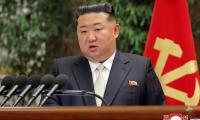
The US Department of Defence announced its plans for the troop withdrawal on May 1. A senior Pentagon official told Reuters Trump was reacting to German Chancellor Friedrich Merz saying Iran was humiliating the US in the two-month-long war and that he did not see what exit strategy Washington was pursuing.
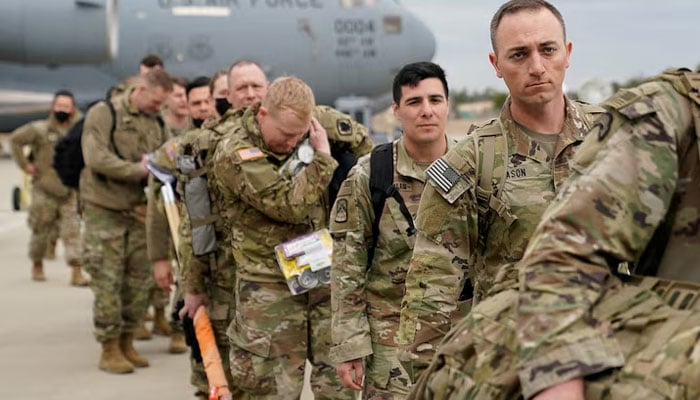
The Pentagon said the withdrawal was expected to be completed over the next six to 12 months. Germany is home to some 35,000 active-duty US military personnel, more than anywhere else in Europe.
The official said the drawdown would bring U.S. troop levels in Europe ?back to roughly pre-2022 levels, before Russia’s invasion of Ukraine triggered a buildup by then-President Joe Biden, a Democrat and frequent target of Trump’s criticism.
The US president, as commander-in-chief, has extensive power over the armed forces. However, Congress controls the military budget and thus can set priorities of its own.
Alarmed by Trump’s criticism of Nato, lawmakers from both parties last year backed a provision in the National Defence Authorization Act, or NDAA, barring troop levels in Europe from falling below 76,000. Trump signed the measure into law in December.
However, the administration has some leeway. The NDAA provision allows the president to cut troop levels below 76,000 if he certifies that he has consulted with Nato allies and provides independent assessments of how it would affect US security, the alliance and deterrence of Russian aggression.
“There’s a lot of flexibility baked in here. There’s ways you can see the Trump administration moving around troops within these constraints,” said Scott Anderson, a senior fellow in governance studies at the Brookings Institution.
Late last year, there were about 85,000 US troops in Europe, meaning Trump could withdraw as many as 9,000 before reaching the 76,000 limit.
Opposition Democrats spoke out against removing the troops. Representative Adam Smith, the top Democrat on the House of Representatives Armed Services Committee, said it “is not grounded in any coherent US national security policy, strategy or even analysis,” and would embolden Russia.
Some of Trump’s fellow Republicans also reacted. Senator Roger Wicker and Representative Mike Rogers, who head committees that oversee the military, said they were “very concerned” and suggested that the forces be moved further east, not out of Europe.
“Prematurely reducing America’s forward presence in Europe ... risks undermining deterrence and sending the wrong signal to Vladimir Putin,” they said in a joint statement.
Congress has leverage. Trump announced his plans to cut the troop levels shortly after his administration asked lawmakers to approve a huge increase in the military budget, to $1.5 trillion from about $1 trillion this year. The Pentagon is also expected to soon ask Congress for $80 to $200 billion more to pay for the Iran war Trump started alongside Israel on February 28.
“Having a very annoyed Congress, in particular annoying the armed services committees in both houses, is not a path to getting what it wants on defense,” said Kristine Berzina, a senior fellow at the German Marshall Fund.
“Congress has made very clear that this is a priority, and a priority in a bipartisan way,” Berzina said.
Trump has long been a critic of US allies in Europe, accusing them of relying too much on US taxpayer funds for their defense rather than paying for their own forces. Ironically, Germany is one of the countries that has increased its military spending the most.