TEHRAN/ WASHINGTON: Iran accused the United States of violating a ceasefire by targeting two ships at the Strait of Hormuz and attacking civilian areas, the country’s top joint military command said early on Friday.
The US targeted “an Iranian oil tanker traveling from Iran’s coastal waters near Jask toward the Strait of Hormuz, as well as another vessel entering the Strait of Hormuz near the Emirati port of Fujairah,” a spokesperson for Iran’s Khatam al-Anbiya Central Headquarters said in a statement carried by state media.
“At the same time, with the cooperation of some regional countries, they carried out air attacks on civilian areas along the coasts of Bandar Khamir, Sirik, and A Fox News reporter said in a post on X, citing a senior US official, that the US military Thursday carried out strikes on Iran’s Qeshm port and Bandar Abbas,
The official said the strikes do not mean a restarting of the war or an end to the ceasefire announced on April 7, according to the post.
The strikes took place as the US awaited Iran’s response to a US peace proposal.
The United States and Iran are edging towards a temporary agreement to halt their war, sources and officials told Reuters on Thursday, with Tehran reviewing a proposal that would stop the fighting but leave the most contentious issues unresolved.
Iran’s foreign ministry spokesperson said Tehran had not yet reached a conclusion on the emerging plan, which according to the sources centres on a short-term memorandum rather than a comprehensive peace deal, underscoring deep divisions between the two sides.
Hopes that even a partial deal could lead to the reopening of the Strait of Hormuz have already moved markets, with oil prices sliding again on bets that supply disruptions could ease and global stocks largely holding onto record highs.
Tehran and Washington have scaled back ambitions for a sweeping settlement as differences persist, particularly over Iran’s nuclear programme—including the fate of its highly enriched uranium stockpiles and how long Tehran would halt nuclear work.
Instead, they are working towards a temporary arrangement set out in a one-page memo aimed at preventing a return to conflict and stabilising shipping through the strait, the sources and officials said.
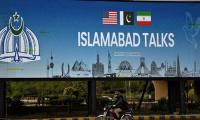
“Our priority is that they announce a permanent end to war and the rest of the issues could be thrashed out once they get back to direct talks,” a senior Pakistani official involved in mediation between the two sides told Reuters.
The proposed framework would unfold in three stages: formally ending the war, resolving the crisis in the Strait of Hormuz and launching a 30-day window for negotiations on a broader agreement, according to the sources and officials.
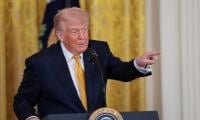
US President Donald Trump—who has repeatedly played up the prospect of a breakthrough since the war began on February 28 with US-Israeli strikes on Iran—has also struck an optimistic tone.
“They want to make a deal... it’s very possible,” he told reporters at the White House on Wednesday, adding later that “it’ll be over quickly”.
The proposal would formally end the conflict in which full-scale warfare was paused by a ceasefire announced on April 7. But it leaves unresolved key US demands that Iran suspend its nuclear work and reopen the Strait of Hormuz, the sources said.
In a sign of the US keeping up pressure, it imposed sanctions on Thursday on Iraq’s deputy oil minister and three militia leaders over what it said was their support for Iran.
Israel, which has also been fighting Iran-backed Hezbollah in Lebanon, said on Thursday it had killed a Hezbollah commander in an airstrike on Beirut a day earlier, the first Israeli attack on the Lebanese capital since a ceasefire there was agreed last month.
Hezbollah triggered its latest conflict with Israel by opening fire in support of Iran on March 2. A halt to Israeli strikes in Lebanon is another key Iranian demand in negotiations with Washington.
Iranian officials signalled scepticism over the US proposal to end the wider war. A foreign ministry spokesperson said Tehran would respond in due course, while lawmaker Ebrahim Rezaei described the proposal as “more of an American wish list than a reality”.
Iran’s parliament speaker Mohammad Baqer Qalibaf appeared to mock reports that indicated the two sides were close, writing on social media that “Operation Trust Me Bro failed” and portraying the talks as US spin after its failure to reopen the strait. President Trump predicted a swift end to the war with Iran. “They want to make a deal. We’ve had very good talks over the last 24 hours, and it’s very possible that we’ll make a deal,” Trump told reporters in the Oval Office on Wednesday, saying later “it’ll be over quickly.”
Trump has claimed that Iran´s leadership is divided, in the wake of the deaths of many senior figures in US and Israeli strikes. But President Masoud Pezeshkian said Thursday he had met with the country´s supreme leader Mojtaba Khamenei, who has not been seen in public since his appointment in early March.
“What struck me most during this meeting was the vision and the humble and sincere approach of the supreme leader of the Islamic revolution,” Pezeshkian said, in a video broadcast by state television.
Khamenei, reportedly wounded in strikes on the first day of the Middle East war that claimed the life of his father and predecessor Ali Khamenei, has released only written statements since his appointment.
Around 1,500 ships and 20,000 international crew are now trapped in the Gulf region because of the conflict, the secretary general of the UN´s International Maritime Organization, Arsenio Dominguez, told a Maritime Convention of the Americas meeting in Panama. Trump on Tuesday paused a two-day-old naval mission aimed at reopening the blockaded strait, citing progress in talks. NBC News, citing two unnamed U.S. officials, said Trump decided on the pause after Saudi Arabia suspended the US military’s ability to use a Saudi base for the operation. Saudi officials were surprised and angered by Trump’s announcement that the US would help escort ships through the Strait, leading them to tell Washington they would deny the US permission to fly military aircraft out of a Saudi base or through Saudi airspace, NBC reported.
US news outlet Axios, citing two officials, reported that both Tehran and Washington were close to agreement on a one-page memorandum of understanding to end the war and set a framework for negotiations on Iran´s nuclear programme.
A Saudi source on Thursday rejected US media report saying President Trump announced a pause in an American military operation to guide stranded ships through the Strait of Hormuz following an intervention by Riyadh.
Oil prices fell again, tumbling by five percent Thursday—having fallen around 10 percent over the previous two days. International benchmark, Brent North Sea crude, shed 5.1 percent to $96.06 a barrel. The main US contract, West Texas Intermediate, lost 5.5 percent to $89.87.
A US State Department official confirmed on Thursday that the new Israel-Lebanon talks would take place on May 14 and 15.
Tehran´s embassy in Seoul said it “firmly rejects and categorically denies” allegations that its armed forces were behind a blast aboard the Panama-flagged HMM Namu, which caught fire on Monday while transiting the strategic waterway with 24 crew members on board.
The United Arab Emirates will form a committee to document Iran´s attacks during the Middle East war to support legal action, state media said Thursday, after earlier calling for reparations.
Bahrain´s parliament on Thursday expelled three MPs who opposed a royal decree on citizenship cases, after dozens were stripped of nationality for backing Iran during the Middle East war.
The United States on Thursday imposed sanctions on Iraq´s deputy oil minister over support to Iran, as Washington puts intense pressure on the incoming government to sever links.
Left-wing Democratic lawmakers have called on the United States to break its silence on Israel´s suspected nuclear weapons program, shattering a decades-long bipartisan reticence in Washington on the sensitive issue.
US Secretary of State Marco Rubio approved the sale of hundreds of air-defense interceptors and other weapons to Middle East partners in deals worth $25.8 billion, Bloomberg News reported on Thursday. Reuters could not immediately verify the report.
The United States and its Gulf allies pressed the United Nations on Thursday to demand Iran end its blockage of shipping through the Strait of Hormuz, as a resolution on the issue faced a veto threat.
Diplomatic sources said veto-holding Russia, a key ally of Iran, had warned on Wednesday it was prepared to block the UN Security Council resolution.
”We believe in some basic fundamental principles, namely the freedom of navigation for the entire world´s economies. That´s what´s at stake here, nothing less than a cornerstone of worldwide stability and commerce,” US ambassador Mike Waltz said, surrounded by his counterparts from Bahrein, Saudi Arabia, the United Arab Emirates, Qatar and Kuwait.
Meanwhile, Saudi Arabia and Kuwait have lifted restrictions on the US military’s use of their bases and airspace imposed after the start of the American operation to reopen the Strait of Hormuz, according to US and Saudi officials, removing a hurdle that had tripped up President Trump’s effort to move ships through the vital waterway, The Wall Street Journal reported.
The Trump administration is now looking to restart the operation to guide commercial ships with naval and air support that it had paused after 36 hours this week, US officials said. It isn’t clear when that could happen though Pentagon officials gave a timeline of as early as this week.
The US operation to force open the strait relied on an enormous fleet of aircraft to protect commercial ships from Iranian missiles and drones, making Saudi and Kuwaiti bases and airspace critical to its execution.
But the mission set off biggest dispute in Saudi-American military relations in recent years, triggering a spate of high-level phone calls between Trump and the kingdom’s crown prince and raising the risk of a breakdown of a long-held security deal between Washington and Riyadh.
Saudi Arabia and Kuwait blocked the US military’s use of their bases and airspace after senior American officials played down Iranian attacks on the Persian Gulf in reaction to the operation in the strait, Saudi officials said. The Saudis and other Gulf states were also concerned that the US wouldn’t protect them amid the escalation in fighting, they said.
Trump had suspended the effort, called Project Freedom, on Tuesday evening, after a phone call with the kingdom’s Crown Prince Mohammed bin Salman in which the de facto Saudi leader conveyed his concerns and advised the president of the decision about base and airspace restrictions, the Saudi officials said. The president tried to get the Gulf leader to back down, they said. Trump said on social media that he had agreed to pause the initiative at the request of Pakistan and other countries.
Saudi Arabia and Kuwait didn’t immediately comment. The Pentagon referred questions to the White House. The White House said the US notified America’s Gulf allies in advance of launching Project Freedom, but it didn’t respond to questions about discussions over basing access.
The restrictions on US access to basing and overflight in Saudi Arabia were earlier reported by NBC News.
A confidential CIA analysis delivered to administration policymakers this week concludes that Iran can survive the US naval blockade for at least three to four months before facing more severe economic hardship, four people familiar with the document said, a finding that appears to raise new questions about President Donald Trump’s optimism on ending the war, the Washington Post reported.
The analysis by the US intelligence community, whose secret assessments on Iran have often been more sober than the administration’s public statements, also found that Tehran retains significant ballistic missile capabilities despite weeks of intense US and Israeli bombardment, three of the people familiar with it said.
Iran retains about 75 percent of its prewar inventories of mobile launchers and about 70 percent of its prewar stockpiles of missiles, a US official said. The official said there is evidence that the regime has been able to recover and reopen almost all of its underground storage facilities, repair some damaged missiles and even assemble some new missiles that were nearly complete when the war began.
Trump painted a rosier picture in Oval Office remarks on Wednesday, saying of Iran: “Their missiles are mostly decimated, they have probably 18, 19 percent, but not a lot by comparison to what they had.”
Three current and one former US official confirmed the outlines of the intelligence analysis, speaking on the condition of anonymity to discuss the sensitive matter.
Asked for comment, a senior US intelligence official emphasized the blockade’s impact. “The President’s blockade is inflicting real, compounding damage — severing trade, crushing revenue, and accelerating systemic economic collapse. Iran’s military has been badly degraded, its navy destroyed, and its leaders are in hiding,” the official, who was not authorized to speak on the record, said in a statement. “What’s left is the regime’s appetite for civilian suffering — starving its own people to prolong a war it has already lost.” US military says Iran launched ‘unprovoked’ attacks as US navy destroyers transited strait.