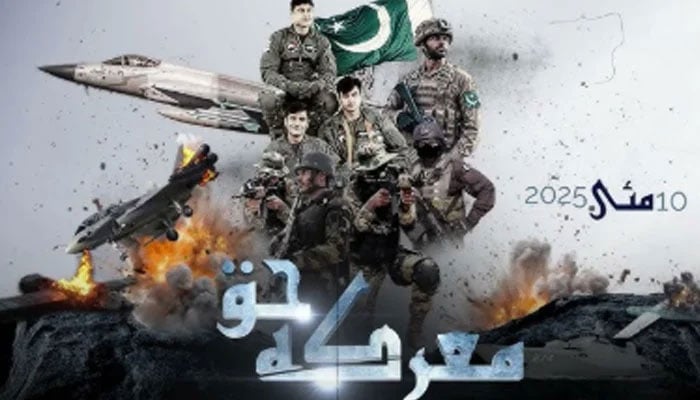
IN the long and bitter chronicle of South Asian rivalry, India has never missed a single opportunity to humiliate Pakistan and push it to its knees. From the very birth of the two nations, New Delhi s strategy has been relentless: isolate, weaken, and, whenever possible, dismember. Yet history records that every such attempt has ultimately recoiled upon its architect. And in the crucible of Marka-e-Haq the Battle for Truth Pakistan has not merely survived; it has rewritten the script of regional power.
The darkest chapter remains 1971. While the world watched, India engineered the breakup of Pakistan with clinical precision. It armed, trained, and unleashed the Mukti Bahini, turning East Pakistan into a battlefield of secession and betrayal. Millions were displaced, families shattered, and a sovereign Muslim nation was vivisected before the eyes of the international community. That wound still bleeds in the collective memory of Pakistan. But even then, the spirit of resilience refused to die.
By 1987, India once again attempted to deliver a knockout blow. It mobilised its forces along the border in a menacing show of strength under Operation Brasstacks, hoping to catch Pakistan unprepared and off-balance. Yet Pakistan did not crumble. President General Zia-ul-Haq responded with one of the most audacious masterstrokes in diplomatic history cricket diplomacy.
On the pretext of an invitation from an Indian cricket club (not the government), General Zia flew into Delhi and proceeded to Jaipur to watch the India-Pakistan Test match. Rajiv Gandhi, though initially reluctant, was compelled by protocol and advice from his own circle to receive the Pakistani leader and see him off. During their meetings, General Zia conveyed a message of steel wrapped in velvet. He made it crystal clear: if Indian troops were not withdrawn, the first response from Pakistan would be fire. That was the moment Pakistan unambiguously signalled to India that it too had become a nuclear state.
As later recounted by Behramnam, special adviser to Rajiv Gandhi, in his powerful article, the Indian Prime Minister was left in no doubt about the catastrophic consequences of any misadventure. Wisdom prevailed. The crisis de-escalated, and cricket had done what conventional diplomacy could not it changed the entire scenario and averted war.
Then came the ultimate equaliser Pakistan s nuclear facility. The day Pakistan became a nuclear power, the rules of the game changed forever.
India s dream of perpetual dominance through conventional superiority was shattered. No longer could New Delhi threaten Pakistan with impunity. The bomb became the shield of the weak against the strong, the ultimate deterrent that forced even the most arrogant neighbour to think twice.
Yet India persisted with its favourite tactic: enormous false-flag operations, each meticulously designed to paint Pakistan as the villain. For decades, every incident on Indian soil was instantly blamed on Islamabad, and the world, often swayed by Indian diplomacy and media, nodded along. Until Pahalgam. This time, despite its frantic efforts, India failed to convince the world. The narrative collapsed under the weight of its own contradictions. Global opinion refused to buy the familiar script. And when India, in its rage and frustration, unjustly targeted Pakistani civilians, the mask slipped completely.
It was in that moment of naked aggression that the Pakistan Air Force wrote a new chapter of glory. The PAF played the most crucial role, delivering a masterclass in aerial warfare. Indian jets fell from the skies. The numbers may vary, but the truth does not: Pakistan s pilots and technicians turned the tide in real time. Even President Donald Trump could not resist acknowledging the reality. Time and again he has reminded the world: Pakistan shot down Indian planes seven to eleven of them. His repeated references were not mere commentary; they were validation from the highest pulpit of global power.
The architect of this extraordinary reversal was Chief of Defence Forces Field Marshal General Syed Asim Munir. His military strategy was nothing short of brilliant precise, visionary, and executed with surgical finesse. Where others might have seen only crisis, he saw opportunity. He turned defence into deterrence and retaliation into redemption. Under his command, the armed forces did not merely respond; they redefined the battlefield. At the same time, Prime Minister Shehbaz Sharif displayed statesmanship of the highest order calm under pressure, resolute in diplomacy, and unyielding in defence of national honour. Together, they proved that when the sword and the pen march in unison, no adversary can prevail.
The final, decisive blow came in Chief of Defence Forces Field Marshal General Syed Asim Munir s first meeting with President Trump. In that encounter, the tables turned completely. Chief of Defence Forces Field Marshal General Syed Asim Munir s clarity, conviction, and command of facts convinced the American leader. From that moment, the relationship between Pakistan and the United States entered a new, robust phase. Today, Pakistan is not merely a participant in regional affairs; it is playing a massive, pivotal role on the global stage respected, listened to, and courted once again.
Meanwhile, India s own missteps have cost it dearly. By rushing into an open embrace of Israel and abandoning even the pretence of neutrality, New Delhi has isolated itself in the Muslim world and beyond. Its spokesmen, once careful with language, now speak with reckless abandon. Prominent Indian voices have spoken with reckless abandon, openly calling to rain dozens of bombs on Gaza and hundreds on Iran exposed the dangerous new face of Indian policy. A nation that once positioned itself as a voice of the Global South has aligned itself with aggression against Iran and the Palestinian cause, shedding the last remnants of its claimed moral high ground. Marka-e-Haq was never just a military engagement. It was the moment when truth triumphed over propaganda, when strategy triumphed over arrogance, and when Pakistan s unity of purpose triumphed over decades of calculated subversion. India came seeking humiliation. It left humbled. Pakistan, bloodied but unbowed, has emerged stronger, prouder, and more respected than at any time in recent memory.
This is not the end of the story. It is the beginning of a new chapter one written not by the victors in New Delhi, but by the defenders in Islamabad and Rawalpindi. History will record that in the spring of Marka-e-Haq, Pakistan did not merely defend itself. It reclaimed its destiny. And the world, finally, took notice.
The author is President PMLZ and Member National Assembly. He can be reached at