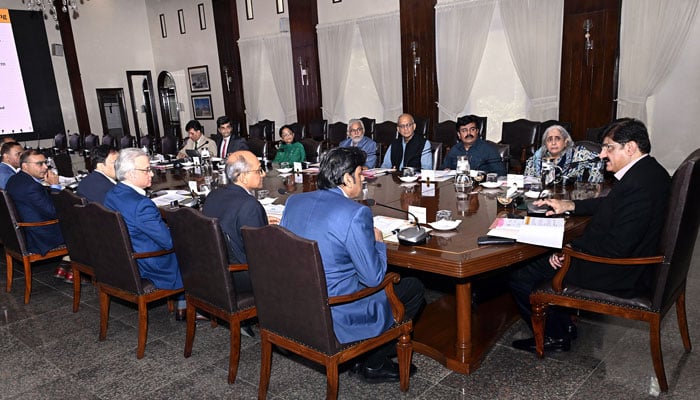
Sindh Chief Minister Syed Murad Ali Shah on Wednesday presided over the 3rd board meeting of the Sindh Social Protection Authority (SSPA), in which he approved a series of major initiatives aimed at expanding the province’s social safety net, improving maternal and child welfare, and providing income support to vulnerable rural women.
Sindh Labour Minister Saeed Ghani, who is also the vice chairman of the board, Health Minister Dr Azra Fazal Pechuho, Education Minister Syed Sardar Shah, Chief Secretary Asif Hyder Shah, Principal Secretary to CM Agha Wasif, board members Haris Gazdar, Sono Khan, Shireen Narejo and Amar Habib Khan, Planning & Development Board Chairman Najam Shah, Finance Secretary Fayaz Jatoi, Social Protection Secretary Khadim Channa and SSPA CEO Irshad Sodhar attended the meeting, which approved a new early childhood development (ECD) programme for 885,000 children, seasonal cash support for women agricultural workers and major improvements to the Mamta programme for maternal health under the Strengthening Social Protection Delivery System in Sindh (SSPDSS).
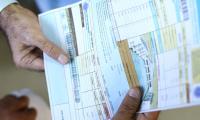
The board reviewed progress in the Mamta project currently operational in 22 districts with a budget of Rs56 billion, benefitting more than one million registered beneficiaries. To improve predictability and ease financial pressure on poor households, the board approved a hybrid predictable payment model (PPM) under which mothers would receive cash disbursements on a fixed schedule, even if a health visit was slightly delayed.
In a further pro-poor measure, the board approved full cash payments for a mother’s pregnancy or her youngest child, along with 75 per cent of the conditional cash transfer amount for an older child under two years, ensuring that no vulnerable child was excluded from support.
The CM also approved two new interventions designed to break the cycle of poverty and strengthen long-term human development. The Rs14 billion ECD project would support children aged 0.1 to five years with eligible caregivers receiving Rs3,000 every quarter for growth monitoring, nutrition counselling and school readiness.
The board also approved a programme for women agricultural workers to provide monthly cash transfers to rural women during lean periods for two to four months a year. The initiative aims to help women workers cope with seasonal income loss, reduce debt and improve food security in farming households.
To extend the reach of the Mamta programme, the board approved a feasibility study in collaboration with the Gates Foundation for expansion into underserved urban union councils and high-risk areas of Karachi and Hyderabad.
The board also ratified an addendum to include health facilities managed by the health department in seven newly selected expansion districts with district headquarters and taluka headquarters hospitals serving as central Mamta programme desks.
For better governance and oversight, the board authorised the formation of specialised committees on audit, human resources, legal affairs and research, and also approved a budget of Rs2.29 billion for the financial year 2026–27.
The CM said the provincial government was committed to building a more reliable and predictable system of support for Sindh’s poorest families. “Our goal is to create a predictable and reliable safety net that empowers the most vulnerable women and children of Sindh,” he said. “By integrating health, nutrition and financial stability, we are investing in the future of our province.”
The CM said that social protection was not only a welfare obligation but also a long-term investment in human capital. “Protecting mothers, supporting young children and assisting rural women during difficult seasons means strengthening families and building a healthier, more resilient Sindh,” he asserted.