RAWALPINDI: The military’s top leadership on Tuesday underscored that regional peace and stability remain fundamentally tied to collective restraint, responsible conduct and respect for sovereignty, according to a statement issued by the Inter-Services Public Relations (ISPR).
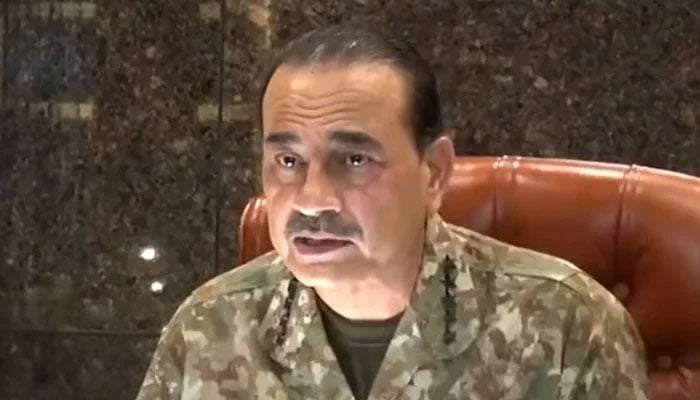
The statement came during the 275th Corps Commanders’ Conference at the General Headquarters (GHQ) in Rawalpindi, chaired by Chief of Army Staff (COAS) and Chief of Defence Forces (CDF), Field Marshal Asim Munir. The military leadership’s remarks come amid ongoing tensions in the Middle East, which began after US-Israeli strikes on Iran in late February and led to a war now under a fragile ceasefire.
The Corps Commanders’ Conference, while deliberating on the broader regional security environment, noted that emerging geopolitical developments carry significant implications for regional stability. The ISPR said that the top brass, while underscoring the importance of restraint and avoidance of escalation, acknowledged Pakistan’s continued responsible role in advocating stability and supporting efforts aimed at preventing further deterioration of the situation. “It reiterated that peace and stability in the region are intrinsically linked to collective restraint, responsibility and respect for sovereignty,” the statement added. Chairing the meeting, the field marshal expressed his satisfaction over the high standards of operational preparedness, professionalism and combat readiness of the Pakistan Armed Forces. He commended commanders and formations for their unwavering commitment, vigilance and success in ongoing intelligence-based counter-terrorism operations across the country. The forum undertook a comprehensive review of the prevailing internal and external security environment and expressed its resolve to maintain the current operational tempo to decisively dismantle terrorist networks, disrupt their support infrastructure and deny them any operational space within Pakistan, the ISPR statement said.
On Operation Ghazab lil-Haq, the military’s top brass acknowledged the continued degradation of terrorists and their support infrastructure. It noted that the irrational and perverted policy of the Afghan Taliban regime to provide safe havens to Khawarij and other terrorist organisations, with total disregard for the interests of Afghan people, is increasingly backfiring and stands fully exposed. The forum took note of the ongoing propaganda campaign by the Taliban regime to falsely portray Pakistan as targeting civilians inside Afghanistan and rejected misleading narratives as part of a coordinated disinformation strategy by the Taliban regime. “Such misleading narratives are part of a coordinated disinformation strategy by the regime to distract attention from their internal failures and play the victim card,” the statement added.
The forum categorically rejected these frivolous allegations and reaffirmed that Pakistan’s defensive actions remain focused, precise and directed solely against infiltrators, terrorist hideouts and support infrastructure.
The forum also congratulated the nation and armed forces on the first anniversary of Marka-e-Haq, recognising it as a defining moment reflecting national unity, collective resolve and an unyielding commitment to safeguard Pakistan’s sovereignty at all costs.
The forum underscored that the national commemoration of Marka-e-Haq serves as a clear message to the Indian hubristic political mindset that the Pakistani nation stands united, resilient and fully prepared. “It signifies the unshakeable harmony between people, government and the armed forces, which stands together as ‘Bunyanum Marsoos’, against all internal and external challenges,” the statement read.
The forum also strongly condemned ongoing atrocities, extrajudicial killings, and demographic changes in IIOJK, reaffirming Pakistan’s unwavering diplomatic, political and moral support for the just struggle of the Kashmiri people.
In his concluding remarks, CDF Asim Munir directed commanders to maintain the highest levels of vigilance, operational readiness and adaptability in the face of evolving threats. He emphasised the need for continued focus on professional excellence, integrated response mechanisms and proactive measures to counter both conventional and non-conventional challenges.
Meanwhile, the ISPR said that the forum offered Fateha for the martyrs of armed forces, law enforcement agencies, and innocent civilians who laid down their lives in defence of the motherland. Paying profound tribute to their unmatched sacrifices, the forum reaffirmed that the enduring legacy of the martyrs continues to serve as the bedrock of Pakistan’s national security, unity and resilience.
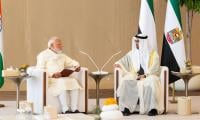
In a related development, Prime Minister Shehbaz Sharif has strongly condemned reported missile and drone attacks targeting civilian infrastructure in the United Arab Emirates, expressing full solidarity with the Emirati leadership and people.
The statement comes a day after a drone strike on an energy facility in Fujairah injured three Indians, with the UAE blaming Iran for the attack. Iranian state TV said the Islamic republic had “no pre-planned programme” to attack oil facilities in the UAE.
In a statement on X, the prime minister conveyed Pakistan’s support for the UAE and extended solidarity to President Mohamed bin Zayed Al Nahyan. “Pakistan stands firmly with our Emirati brothers and sisters as well as with the Government of the United Arab Emirates at this difficult time,” he said. The prime minister also emphasised the importance of respecting the ceasefire, warning that any escalation would undermine regional stability. He urged all parties to preserve diplomatic space and prioritise dialogue to achieve lasting peace and stability in the region. “It is absolutely essential that the ceasefire be upheld and respected, to allow necessary diplomatic space for dialogue leading to enduring peace and stability in the region.”
Alongside this, Iranian Foreign Minister Abbas Araghchi said talks with the United States were making progress with Pakistan’s “gracious effort,” while cautioning Washington against being drawn into further escalation amid a standoff over the Strait of Hormuz. The Iranian FM further said Monday’s events showed there was no military solution to the crisis. He said peace talks were progressing with Pakistan’s mediation while warning the US and the UAE against being drawn into a “quagmire by ill-wishers”.
In a parallel development, Saudi Arabia’s foreign ministry backed Pakistan’s mediation and diplomatic efforts to reach a political solution to the US-Iran conflict, as tensions increased between the two over the Strait of Hormuz blockade and Tehran’s fresh attacks targeting the UAE, Arab News reported.
“The Ministry of Foreign Affairs expresses the Kingdom of Saudi Arabia’s concern regarding the current military escalation in the region, and calls for the necessity of de-escalation, refraining from further escalation, exercising restraint and supporting the Pakistani mediation and diplomatic efforts to reach a political solution that prevents the region from sliding into further tension, undermining security and stability, which does not serve the interests of the region and the world,” the Saudi foreign ministry said.
In the same context, Polish Ambassador Maciej Pisarski praised Pakistan’s diplomatic engagement on global crises, especially its mediation efforts in the current US-Iran tensions, saying he is optimistic about the success of Pakistan-led dialogue initiatives aimed at de-escalation and peace in the Middle East.
The remarks came at a reception held by the embassy to mark Poland’s National Day. Referring to Pakistan’s role in facilitating dialogue in the US-Iran conflict, he noted that, “In this case, Pakistan has stepped in as a mediator, working with the concerned parties to find a solution to the conflict through diplomacy and dialogue.” He added that the Islamabad Process had already contributed to the de-escalation. “We sincerely keep our fingers crossed for the success of the mediation effort led by Pakistan,” he said. The envoy reiterated Poland’s commitment to upholding the UN Charter and international law as foundations for global stability. Despite global instability, the ambassador said Pakistan and Poland had significantly strengthened bilateral relations.
Meanwhile, Deputy Prime Minister/Foreign Minister Ishaq Dar expressed the hope that Pakistan’s efforts to mediate an end to the US-Iran conflict will succeed at the earliest, calling it a necessity for the region and the wider world. “Whatever has happened so far, it has already dented a global GDP to a great degree,” he told foreign ambassadors and the diplomatic corps in Islamabad, saying an end to the conflict in the Middle East was Pakistan’s “goal and aim” as facilitator and mediator.
Dar said that Islamabad was actively working to engage the US and Iran to negotiate a peaceful settlement to their disputes, adding that the country has consistently supported stability and restraint in the Middle East. He noted Islamabad’s global diplomatic outreach for a resolution to the conflict, saying he has discussed the matter with around 120 counterparts worldwide since the start of the war. The interactions, he said, reflected Pakistan’s seriousness in its efforts to get the US and Iran to reach a truce and put an end to the conflict.
In his address, DPM Dar said that the Islamabad Talks, held between April 10 and 11, reached an advanced level. “We still hope that it [Islamabad Talks] will eventually and hopefully very soon conclude,” he added. Recalling Islamabad’s peace efforts, DPM Dar said that Pakistan has continuously engaged Iran and the US to negotiate for a lasting truce since brokering the ceasefire. He added that Islamabad managed to bring the US and Iran to the table for direct talks for the first time in 47 years.
DPM Dar said that the country’s mediation efforts had been acknowledged internationally, and that Pakistan remained in constant contact with global stakeholders as part of its responsibilities in promoting peace. The entire consultative process was aimed at ending the conflict in the Middle East, DPM Dar said, adding that Pakistan continued to act as a bridge between the two sides. “The objective is common… that this conflict ends in a dignified manner. It should be a win-win,” he said. However, DPM Dar stressed that Islamabad could not get into details of its efforts as a mediator and facilitator due to the sensitive nature of the matter.