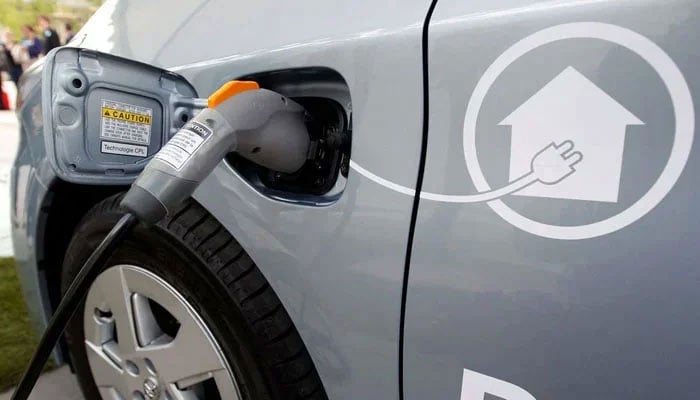
Islamabad: Pakistan must undertake structural reforms, ensure policy consistency and offer competitive incentives to attract Chinese private sector investment, particularly in emerging sectors such as renewable energy, electric vehicles (EVs) and green manufacturing.
Experts expressed these views at a consultation on “How Pakistan can compete for China’s Green Manufacturing FDI” organised here by Sustainable Development Policy Institute (SDPI). Mustafa Hyder Sayed, Executive Director, Pakistan-China Institute, said that while China-Pakistan Economic Corridor (CPEC) made significant progress through Chinese state-owned enterprises (SOEs), future growth depends on attracting Chinese private sector firms relocating abroad.
Rooftop solarisation offers a viable entry point for such engagement, he said and suggested that Pakistan must compete with ASEAN economies like Vietnam and Malaysia, which provide better infrastructure, streamlined procedures and investor-friendly policies. He called for joint planning with Chinese investors, provision of subsidised land, tax holidays and duty exemptions on imported machinery along with an effective one-window facilitation system.
Xiaokang Xue, researcher at the Net Zero Industrial Policy Lab, Johns Hopkins University, highlighted a surge in Chinese overseas investments in clean technology manufacturing, particularly in ASEAN and Central Asia. He said host countries must ensure market access, raw material availability and long-term policy clarity to attract such investments.
He added that Pakistan has potential in solar and EV sectors but must offer fiscal incentives comparable to countries like Indonesia, Thailand, and Malaysia. Prof Stella Hong Zhang from International Studies, Hamilton Lugar School of Global and International Studies, Indiana University Bloomington, compared ASEAN, Middle East and North Africa models, stating that ASEAN countries successfully integrated into global manufacturing through strong industrial policies, special economic zones and export-oriented strategies.
She noted that Indonesia leveraged its nickel reserves to attract Chinese investment in EV and battery manufacturing, while Pakistan lacks a clear industrialisation roadmap and continues to rely on imports of Chinese solar technologies instead of developing domestic capacity.