LAHORE: Pakistan’s textile sector, long celebrated as the backbone of its exports, suffers from a structural imbalance that policymakers have chosen to ignore for decades. It is a classic case of strength at the wrong end of the value chain.
While the country has built considerable capacity in spinning and basic textiles, it has failed to move into higher-value segments where real profits, resilience, and global influence lie. The result is stark: Pakistan remains a ‘cotton-to-cloth’ economy in a ‘design-to-brand’ world.
Globally, the textile and apparel industry has undergone a quiet but decisive transformation. Value is no longer created merely by producing yarn or fabric. It is captured through innovation, design, branding, finishing and retail presence. Pakistan, despite having a strong raw material base, has failed in this.
The first fault line appears right at the beginning of the chain. Cotton, Pakistan’s traditional strength, is no longer a competitive advantage in its current form. Yields remain low, contamination levels high, and seed technology outdated. More importantly, the world is steadily shifting towards man-made fibres (MMF) such as polyester and viscose, which now dominate global textile trade. Pakistan’s policy framework, however, continues to favour cotton while penalising MMF through higher duties and inconsistent taxation.
Pakistan has overinvested in spinning, producing yarn that is often exported with minimal value addition. This is the least profitable segment of the textile chain, yet it has enjoyed the most policy support. Meanwhile, the processing and finishing segment, which determines product quality and market value, remains underdeveloped. Outdated dyeing units, poor environmental compliance, and high energy costs have prevented the industry from moving into premium fabric categories.
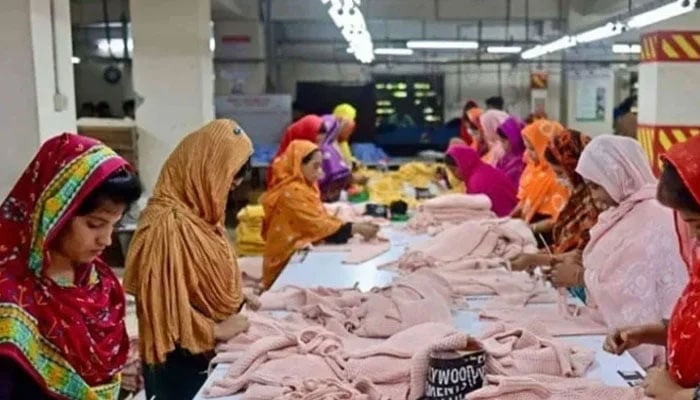
The garment sector, often cited as a success story, is also constrained by limited ambition. Most exporters operate as contract manufacturers for foreign brands, producing low-margin, and standardized items. There is minimal investment in product development, fashion design, or brand creation. As a result, Pakistan captures only a fraction of the final retail price, while global brands reap the bulk of the profits. Not a single Pakistani apparel brand has achieved meaningful global presence. The country exports products, not identities. In today’s market, that is a fundamental disadvantage.
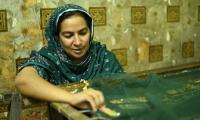
The value chain remains split between large formal mills and a vast informal sector of small stitching units. This fragmentation leads to inconsistent quality, weak compliance with international standards, and an inability to scale efficiently. At a time when global buyers demand traceability, sustainability, and speed, Pakistan’s supply chain appears outdated and opaque.
Successive governments have focused on short-term incentives, subsidised energy, export rebates, and concessional financing, without addressing the deeper structural gaps. These measures may boost exports temporarily, but they do not change the composition of exports. Pakistan continues to sell low-value goods in a high-value market.
Policy must decisively shift from volume to value. Incentives should be linked to value-added exports such as garments, technical textiles, and branded products, not yarn and grey fabric. This requires a reorientation of subsidies, tax policies and export support schemes.
Pakistan must also urgently develop a competitive MMF ecosystem. This means rationalising import duties on synthetic fibres, encouraging domestic production, and integrating petrochemicals with textiles. Without this shift, the industry will remain locked out of the fastest-growing segments of global demand.
The government should promote integrated textile clusters where spinning, weaving, processing, and stitching operate in close proximity. Such clusters reduce costs, improve coordination, and enhance productivity, an approach successfully adopted by regional competitors.
Pakistan needs world-class fashion institutes, industry-academia linkages, and targeted support for firms willing to build global brands. Exporting finished garments is not enough; exporting brands is where the real value lies. The state must enforce environmental and labour compliance while supporting firms in meeting these standards. Sustainability is no longer optional; it is a prerequisite for market access.
Pakistan’s textile sector does not lack potential, it suffers from policy inertia and strategic misalignment. The choice is clear: continue exporting low-value intermediates and remain vulnerable to global price shocks, or climb the value chain and secure a more profitable, resilient future.