LAHORE: Workplace safety in Pakistan is often treated as a regulatory formality. In reality, it is a deep economic and human crisis that continues to erode productivity, strain healthcare systems and quietly claim lives.
Global estimates by the International Labor Organisation (ILO) offer a sobering benchmark. Each year, nearly 2.93 million workers die due to work-related causes, while around 395 million suffer non-fatal injuries. More than 2.4 billion workers are exposed to excessive heat -- an increasingly relevant threat for countries like Pakistan, where rising temperatures are fast becoming a structural economic risk.
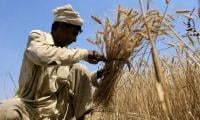
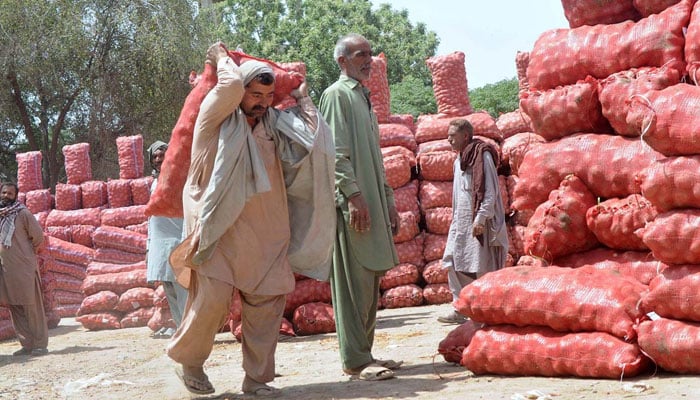
These figures are not abstract. They mirror Pakistan’s own ground realities, particularly in construction, agriculture, textiles and small manufacturing, where safety standards remain weak, enforcement inconsistent, and worker awareness minimal.
Heat exposure alone carries a heavy economic cost. The ILO estimates that improved workplace safety measures could save the global economy up to $361 billion annually by reducing heat-related injuries. For Pakistan, where a large portion of economic activity takes place outdoors or in poorly ventilated environments, the cost of inaction is far greater than the cost of prevention.
Yet physical hazards are only part of the story. A more invisible, and perhaps more damaging, threat lies in the psychosocial working environment. Globally, over 840,000 deaths each year are linked to psychosocial risk factors such as excessive workloads, job insecurity, long working hours, workplace harassment, and imbalance between effort and reward. These factors also result in the loss of nearly 45 million disability-adjusted life years (DALYs) annually and reduce global GDP by an estimated 1.37 per cent.
Pakistan’s workforce operates squarely within this high-risk zone. Informality, weak labour protections, and economic uncertainty have normalized long working hours, low job security, and limited worker autonomy. In many sectors, particularly among small and medium enterprises, workplace stress is not even recognised as a legitimate risk.
Scientific evidence now clearly links such psychosocial stressors to serious health outcomes, including heart disease, stroke, mental illness, and even suicide. This transforms what is often dismissed as a “soft” issue into a hard economic reality: reduced productivity, higher absenteeism, increased healthcare costs, and eventual loss of human capital.
The challenge is further compounded by structural changes in the nature of work. Digitalisation, evolving employment arrangements, and the gradual integration of automation are reshaping workplaces globally. While Pakistan lags in formal digital transformation, the shift toward informal gig work, contractual employment, and fragmented labour arrangements is already underway, often without any accompanying safeguards.
At its core, the psychosocial working environment is shaped by how work is designed and managed. Factors such as workload, working hours, clarity of roles, degree of autonomy, and fairness in organizational processes determine whether work enhances human potential or degrades it. When poorly managed, these factors become hazards.
This is where Pakistan’s policy failure becomes evident. Occupational safety and health (OSH) is still narrowly viewed through the lens of compliance, focused on avoiding accidents rather than building productive workplaces. Labour inspections remain limited, enforcement selective, and data systems weak. More critically, there is little recognition that worker well-being is directly linked to economic efficiency.
Policymakers must expand the definition of workplace safety to include psychosocial risks alongside physical hazards. Enforcement mechanisms need strengthening, particularly in high-risk sectors such as construction, textiles, and agriculture. Incentives, not just penalties, should be introduced to encourage firms to invest in safer and healthier work environments.
Equally important is the role of employers. Forward-looking businesses globally now view worker well-being as a productivity strategy, not a cost burden. Pakistani firms that continue to ignore this shift risk falling further behind in competitiveness, particularly in export-oriented sectors where compliance standards are increasingly stringent. Finally, there is a need to build awareness among workers themselves.
At its essence, occupational safety and health is about more than preventing accidents, it is about ensuring dignity at work. For Pakistan, improving workplace conditions is not just a social obligation; it is an economic necessity. Ignoring it will continue to impose hidden costs on growth, productivity and human development, costs the country can no longer afford.