ISLAMABAD: President Human Rights Cell of the Pakistan Peoples Party (PPP), former Senator Farhatullah Babar, has called for the immediate operationalisation of the law establishing the Minorities Commission, which received presidential assent in December last year.
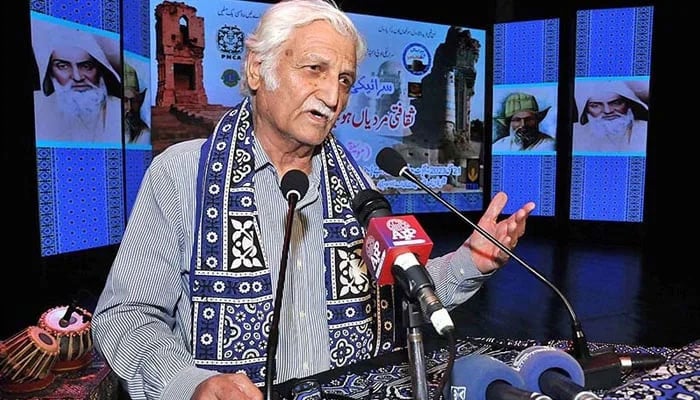
Speaking at a seminar on “Inclusive Democracy” at the Christian Study Centre, Rawalpindi, on Monday, Babar said the Commission, once made functional, could become the first credible institutional forum for minorities to raise and seek redressal of their concerns—ranging from forced conversions and under-representation in parliament to job quotas and the misuse of blasphemy laws.
He observed that the foundations of inequality were laid early in the country’s history. Referring to the adoption of the Objectives Resolution in March 1949, the PPP leader said it tilted the balance against minorities by undermining the principle of separation between religion and the state, as envisioned by Quaid-e-Azam Muhammad Ali Jinnah in his historic address of 11th August 1947 to the then Constituent Assembly.
He pointed to structural impediments in the realisation of minority rights, including constitutional restrictions that bar minority members from becoming president or prime minister, indirect electoral mechanisms, and the imposition of majority religious curricula on minority children.
Highlighting the issue of religious freedom, he said that while Muslims effectively cannot change their religion in Pakistan, there are persistent allegations of young Hindu and Christian girls being coerced or induced into conversion and marriage.
“A true democracy rests on two pillars—social justice and inclusivity,” he said, adding: “An inclusive democracy must ensure that the voices of all segments of society, particularly the marginalised, are heard and respected.”
He lamented that Pakistan continues to function as a majoritarian state, where both economic and political powers were distributed primarily on the basis of population. “Whether in the allocation of resources under the NFC Award or representation in parliament, numerical strength determines outcomes, often to the detriment of smaller communities,” he said.
Babar urged Christians and all minority communities to collectively raise their voice for the immediate establishment of the Minorities Commission under the new law. While acknowledging the commendable work of the one-man commission constituted by the Supreme Court and headed by Shoaib Suddle, he stressed that a statutory, institutional commission must now be put in place without delay. He further suggested that the existing commission should transfer its knowledge, experience, and insights to the new parliamentary body to ensure continuity and effectiveness.
“Structures dependent on individuals are inherently fragile,” he remarked. The seminar was also addressed by Shoaib Suddle, chairman of the one-man Minorities Commission, Prof Charles Amjad Ali, Manzoor Masih, former member of the National Commission for Human Rights, and Bishop Samuel Azariah.