LAHORE: Gujranwala District has taken a decisive lead in Punjab’s development race, driven by an ambitious portfolio of mega projects exceeding Rs110 billion and backed by what officials describe as the focused leadership and policy direction of Chief Minister Maryam Nawaz. The district’s strong performance, reflected in both financial utilisation and physical progress, has positioned it as a model for accelerated development across the province.
According to the official data available with Daily Jang, the district’s development portfolio spans transport, sanitation, rural uplift, urban regeneration and intercity connectivity, reflecting a coordinated policy push to upgrade both municipal infrastructure and basic public services. Officials say the pace of implementation distinguishes Gujranwala from other districts, where similar schemes have yet to achieve comparable momentum.
At the forefront is the Rs62,738 million mass transit system in Gujranwala, conceived as a modern urban mobility solution for the industrial hub. The project formally commenced on February 15, 2026, with a completion deadline of December 5 this year. Against a budgetary allocation of Rs30,000 million for the current fiscal year, Rs10,000 million have been released and fully utilised, reflecting 100 per cent financial consumption of released funds. Physical progress has reached 15pc within a short span, indicating rapid mobilisation. Once operational, the system is expected to significantly reduce congestion, streamline commuter movement and support industrial productivity.
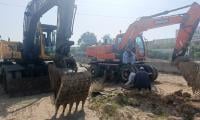
A major portion of the development outlay is directed towards sanitation through the Rs30,129 million programme being implemented by the Water and Sanitation Agency. Launched on February 20, 2026, and scheduled for completion by June 30, 2027, the project includes rehabilitation of existing disposal stations, construction of new units, laying of trunk and lateral sewer lines, development of wastewater treatment plants, pavement works and procurement of machinery. Out of Rs3,350 million allocated for 2025-26, Rs3,126m has been released, of which Rs547 million has been utilised so far, translating into 18pc financial utilisation and 31pc physical progress. Officials note that physical work has moved ahead of spending, suggesting accelerated onsite activity.
In Wazirabad, a Rs4,042 million sanitation project launched on March 16, 2026, is scheduled for completion by December 31, 2027. The scheme covers rehabilitation of disposal stations, construction of two new facilities, sewer networks and treatment systems. Against an allocation of Rs420 million, the full amount has been released and Rs343 million utilised, indicating 82pc financial utilisation, though physical progress remains at 3pc, reflecting its early construction phase.
The Rs2,731 million Alipur sanitation project, initiated on February 23, 2026, also targets sewerage expansion and rehabilitation of the Hafizabad Road disposal station. Out of Rs420 million allocated, the entire amount has been released and Rs308m utilised, showing 73pc financial utilisation, while physical progress stands at 2pc. Similarly, the Rs6,020 million Kamoke scheme, launched on April 10, 2026, includes construction of two new disposal stations and sewer networks. With Rs620 million allocated and fully released, Rs183m has been utilised so far, representing 30pc financial utilisation and 2pc physical progress.
Rural development initiatives under the “Misali Gaon” programme represent a parallel thrust. In Gujranwala, a Rs2,057m scheme covers 14 villages across Kamoke, Nowshera Virkhan and Saddar tehsils, focusing on water supply systems, drainage networks, septic tanks, overhead reservoirs and street paving. Though financial details are yet to be fully reported, officials describe the project as central to extending urban-standard services to rural populations.
A similar initiative in Wazirabad, costing Rs1,010 million and launched on March 1, 2026, covers six villages including Bharoke Cheema, Aziz Chak and Dilawar Cheema. Out of Rs81 million allocated, the entire amount has been released and Rs51m utilised, resulting in 15pc financial utilisation and 6pc physical progress. The project is expected to be completed by December 31, 2026.
Urban regeneration schemes are among the most advanced. The Rs1,768 million Gujranwala beautification project, covering major commercial centres such as Androon Bazar, Eminabad, Kamoke, Nowshera Virkan and Satellite Town, was launched on August 20, 2025, and is nearing completion with 69pc physical progress. The entire allocation has been released and Rs658 million utilised. The project is scheduled for completion by May 31, 2026.
Likewise, the Rs307.5 million beautification scheme for Wazirabad and Alipur, initiated on September 21, 2025, has achieved 45pc physical progress, with Rs54 million utilised out of fully released funds. Both projects aim to upgrade commercial streets, improve pedestrian facilities and revitalise business districts.
Transport infrastructure is further supported by the Rs2,398m dualised flyover at Kangnewala, designed to eliminate a major bottleneck on the eastern bypass by separating traffic flows at a busy crossing. In addition, Phase I of the 66 kilometre road project from Awan Chowk to the M-2 motorway via Nowshera Virkan, costing Rs1,953 million, is expected to strengthen regional connectivity and provide a direct link to the national motorway network, facilitating movement of goods and passengers.
Officials emphasise that the combination of high release to utilisation ratios, adherence to timelines and visible physical progress has placed Gujranwala at the forefront of Punjab’s development agenda. With key projects scheduled for completion between late 2026 and mid-2027, the district is set to undergo a substantial transformation in transport systems, sanitation coverage, rural infrastructure and economic integration.