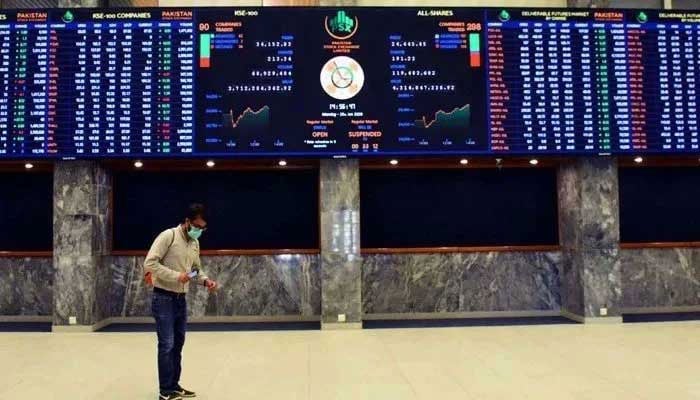
KARACHI: Pakistan’s stock market ended the week lower as geopolitical tensions between the United States and Iran rattled investor confidence, though analysts say a constructive resolution remains the key catalyst for a recovery in the near term.
The benchmark KSE-100 Index shed 3,267 points, or 1.9 per cent week-on-week (WoW), to close at 170,672 points. AKD Research noted that despite the decline, the market continues to trade at attractive valuations, with a current price-to-earnings ratio of 7.2x. The brokerage said any positive developments over the weekend could act as a trigger for renewed buying.
“The KSE-100 Index recorded a WoW decline of 1.88 per cent, primarily driven by heightened geopolitical tensions between the United States and Iran,” said Nabeel Haroon, Vice President of International Equity Sales at Topline Securities. “The escalating deadlock between the two nations weighed heavily on investor sentiment, triggering broad-based selling across key sectors, including banking, fertilisers, and oil and gas exploration.”
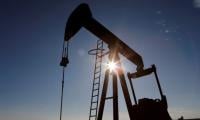
Syed Danyal Hussain, analyst at JS Research, said persistent uncertainty surrounding US-Iran ceasefire negotiations kept sentiment subdued throughout the week. He added that Brent crude crossed the $100 per barrel mark again following continued closure of the Strait of Hormuz, while the Iranian seizure of two container vessels reignited supply disruption fears. Oil prices ended the week up 3.2 per cent WoW at $104.8 per barrel.
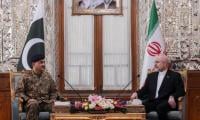
Market momentum had partially returned during the second half of Friday’s session after Iran’s foreign minister confirmed his arrival in Pakistan over the weekend. Earlier in the week, US President Donald Trump extended the ceasefire indefinitely on Tuesday, hours before its expiry and at Pakistan’s request, which helped prevent a deeper selloff.
Average daily traded volume rose sharply to 1.2 billion shares during the week, up 31.7 per cent WoW, while daily traded value stood at Rs46 billion. Individuals were the largest net buyers, purchasing equities worth $14.6 million, while foreign corporates and insurance companies were the biggest sellers, offloading $12.5 million and $11.9 million respectively.
Among sectors, textile weaving, refinery and synthetic and rayon led gains, rising 26 per cent, 7.9 per cent, and 6.1 per cent respectively. Jute, Pharmaceuticals, and cement were the worst performers, falling 9.3 per cent, 6.1 per cent, and 5.7 per cent. At the company level, YOUW topped gainers with a 68.4 per cent rise, followed by ATRL at 11.2 per cent and GADT at 8.9 per cent. PIOC led decliners with a 10.3 per cent fall, with DGKC and ISL also posting losses of 9.4 per cent and 8.8 per cent respectively.
On the macroeconomic front, the IMF executive board is expected to consider approval of the fourth tranche of Pakistan’s 37-month programme in May 2026. JS Research reported that the government and IMF are discussing 11 additional programme conditions, while the government has committed to a fiscal primary surplus of Rs2.8 trillion and tax revenues of Rs15.56 trillion in FY27. The government also repaid $1 billion to the UAE, bringing total repayments to $3.45 billion, and received the final US$1 billion tranche of Saudi Arabia’s US$3 billion support package. Pakistan also raised $750 million from international capital markets through a Eurobond, its first such issuance in four years, exercising a greenshoe option to expand the deal from $500 million.
AHL Research noted that the World Bank reclassified Pakistan from the South Asia grouping to the MENAAP region, covering the Middle East, North Africa, Afghanistan, and Pakistan, with effect from fiscal year 2026. State Bank of Pakistan reserves rose $18 million week-on-week to $15.1 billion, while the rupee firmed slightly to Rs278.85 per US dollar. AHL Research said it sees the KSE-100 trading at a price-to-earnings ratio of 8.3x with a dividend yield of around 6.3 per cent, and flagged OGDC, PPL, FFC, LUCK, NBP, HUBC, PSO and ATRL as top picks.